

Custom T-Shirt Design Ideas for 2026: A Creative Guide
Custom t-shirt design ideas are creative concepts that let you express personal identity, promote a brand, or mark a memorable event through wearable art. The custom apparel industry calls this practice “custom graphic tee design,” and it covers everything from DIY t-shirt design sketched on paper to professional print-ready files built in Canva or Printful. In 2026, three forces shape what works: personalized identity themes, vintage aesthetics, and a sharp focus on readability. Whether you are an individual wanting a one-of-a-kind shirt or a small business owner building branded merchandise, the right design concept makes all the difference.
What custom t-shirt design ideas are trending right now?
The strongest t-shirt design inspiration in 2026 comes from one clear principle: designs that act as identity markers convert better than generic graphics. A shirt that says “Baseball Mom” or “Plant Lady” tells the world exactly who the wearer is. That specificity is what drives sales and repeat orders.
Here are the top niche categories producing the most demand this year:
- Personalized identity themes: Pet parents, sports moms, family reunion shirts, and profession-based humor lead this group. A “Soccer Mom Est. 2019” tee with a child’s name printed below is a proven seller. The vintage-style team mom shirt format has become a staple for school sports seasons.
- Vintage and retro aesthetics: Sunset arcs, silhouette subjects, synthwave grids, and 1970s-inspired palettes like mustard and olive have topped design sales for over five years. Retro fonts like distressed serifs and worn textures add authenticity.
- Hobby and fandom concepts: Gardening, hiking, true crime, and pop culture fandoms generate loyal buyers. A “Fungi Enthusiast” shirt with a detailed mushroom illustration speaks directly to a tight community.
- Seasonal and event-led designs: Holiday shirts, graduation tees, bachelorette party designs, and fundraiser apparel all spike at predictable times. Planning these 6–8 weeks ahead gives you time to refine the concept.
- Statement and humor designs: Funny t-shirt ideas work when the humor is specific, not broad. “I Survived Another Meeting That Could Have Been an Email” lands because it targets a real frustration.
Pro Tip: Before you commit to a design concept, search that niche phrase on Etsy or Amazon. If you see 500+ listings, the demand is real. If you see fewer than 50, you may be too early or too niche.
Seasonal event shirts and personalized tees share one trait: they solve a specific identity problem for the buyer. High conversion happens when the design represents a role the wearer is proud of, not just a pattern they find attractive.
How do typography, color, and layout shape a great tee?
Design principles are not optional extras. They are the difference between a shirt someone wears every week and one that sits in a drawer. The fundamentals below apply whether you are creating creative shirt designs for personal use or building a product line.
Typography rules that actually matter
- Pass the three-step test. Typography must be legible from three steps away with strong contrast between text and garment. If you squint to read it, the buyer will too.
- Limit your fonts. Use no more than two typefaces per design. Pair a bold display font for the headline with a clean sans-serif for supporting text.
- Watch your letter spacing. Tight tracking on all-caps text improves readability. Loose tracking on lowercase text creates an airy, modern feel.
- Size hierarchy matters. The most important word should be the largest element. Supporting text should be noticeably smaller, not just slightly smaller.
Color and contrast
Effective design layout uses color and contrast to direct the viewer’s eye immediately to the shirt’s core message. Dark text on a light garment and light text on a dark garment are the two reliable combinations. Avoid mid-tone text on mid-tone fabric. The contrast disappears at a distance.
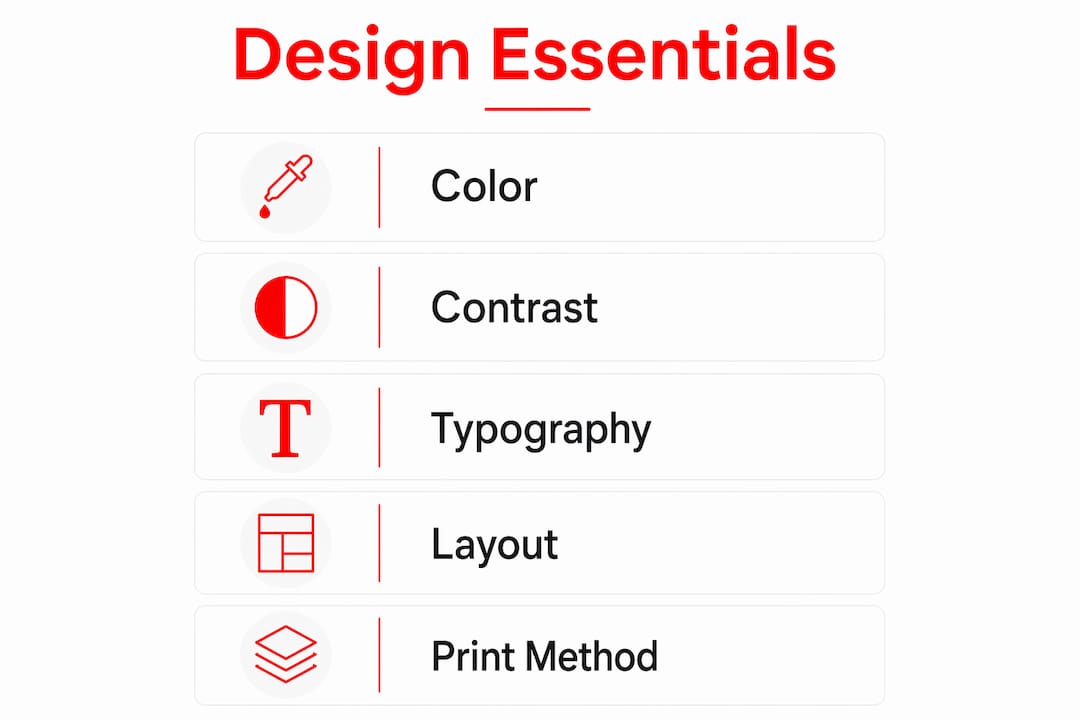
Color palettes work best when limited to three colors or fewer. Earth tones (terracotta, sage, cream) read as premium. Neon combinations read as bold and youthful. Match your palette to the identity your buyer wants to project.
Pro Tip: Print a test version of your design on plain paper and tape it to a shirt. Hold it at arm’s length. If the message is not immediately clear, simplify before you order.
Print method and garment color
| Print Method | Best For | Garment Color Consideration |
|---|---|---|
| DTF Transfer | Full-color detail, photos | Works on any garment color |
| Screen Print | Bold graphics, large runs | Best on light or dark solids |
| Embroidery | Premium, textured look | Works on most fabrics |
| UV DTF Decal | Accent graphics, small runs | Applied to finished garment |
Pre-production planning including print location, image quality, and garment color is the step most beginners skip. Skipping it causes color shifts, blurry prints, and wasted money.
What steps and tools do you need to design a custom tee?
The process from concept to finished shirt follows a clear sequence. Skipping steps creates problems that are expensive to fix after printing.
- Choose your design software. Tools like Canva and Printful simplify the process with templates and drag-and-drop customization. Canva works well for text-heavy designs. Adobe Illustrator or Affinity Designer give you full control for complex graphics. Printify offers a built-in mockup generator so you can preview the shirt before ordering.
- Set up your file correctly. Export artwork at 300 DPI minimum. Use PNG files with a transparent background for most print methods. Convert colors to the correct color format your printer requires (RGB for DTF, CMYK for screen print).
- Choose your print placement. Front chest center is the default, but it is not always the best choice. Small accents on sleeves or pocket areas make shirts feel premium and more wearable in everyday settings. Left chest logos read as professional. Full-back prints work for event and team apparel.
- Select your garment style. Unisex crew necks fit the widest audience. Fitted styles appeal to fashion-forward buyers. Heavyweight cotton (6 oz and above) holds prints better and feels more substantial.
- Review quantities and pricing. Many local printers, including Handmadeohiocrafts, require no minimum order. That means you can order a single shirt to test a design before committing to a larger run.
Common pitfalls to avoid:
- Uploading low-resolution artwork (anything under 150 DPI will print blurry)
- Using too many colors in a screen print design (each color adds cost)
- Ignoring garment shrinkage (pre-shrunk blanks reduce sizing surprises)
- Placing text too close to seams (printing distorts near edges)
The gang sheet builder tool from Handmadeohiocrafts helps you arrange multiple DTF transfer designs on a single sheet, which cuts cost per print significantly for small batches.
Which design layouts perform best for retail and gifting?
Market data points to a clear winner in 2026: personalized and custom t-shirts dominate consumer demand on major marketplaces, especially photo tees, name-based variations, and event apparel. Pet memorial shirts, graduation photo tees, and family vacation designs are among the top trending categories. These are not generic fashion items. They are keepsakes.
| Design Category | Best Layout | Why It Works |
|---|---|---|
| Photo memorial tees | Full front, centered | Emotional impact requires visual space |
| Sports mom shirts | Left chest + back name | Wearable daily, not just at games |
| Event and reunion shirts | Full front graphic | Group identity, worn once or twice |
| Branded business tees | Left chest logo | Professional, versatile, everyday wear |
| Funny statement shirts | Center chest, bold type | Message is the product |
For retail and gifting, the most effective unique t-shirt concepts balance emotional resonance with wearability. A pet memorial shirt with a photo and the pet’s name printed below is a gift that gets worn. A generic “Dog Mom” shirt in a crowded font gets forgotten.
Subtle prints have gained ground as buyers seek versatile apparel they can wear beyond a single occasion. A small left-chest design with a meaningful phrase or icon works for work, errands, and casual outings. Full-front prints are powerful for events but limit everyday use.
For personalized game day apparel, the most popular layout combines a bold team name or sport graphic on the front with a player’s name or number on the back. That combination serves both identity and function.
Key takeaways
The most effective custom t-shirt designs combine a clear identity message, strong contrast, and deliberate placement to create apparel people actually wear.
| Point | Details |
|---|---|
| Identity beats aesthetics | Designs tied to specific roles like “sports mom” or “pet parent” convert better than generic graphics. |
| Readability is non-negotiable | Typography must pass the three-step legibility test with strong contrast between text and garment color. |
| Placement drives wearability | Small accent prints on sleeves or left chest feel premium and get worn more often than full-front designs. |
| File quality determines print quality | Submit artwork at 300 DPI minimum with a transparent background to avoid blurry or distorted results. |
| Niche specificity sells | Personalized and event-specific tees dominate marketplace demand in 2026 over broad, trend-chasing designs. |
What i’ve learned after seeing hundreds of shirt designs come through
Most people overthink the concept and underthink the execution. I have seen genuinely clever design ideas fail because the file was low resolution or the text was too small to read from five feet away. The shirt looked great on a screen and terrible in person.
The designs that hold up are almost always the simple ones. One strong graphic. One clear message. Two colors maximum. The temptation to add more is real, especially when you are excited about a concept. Resist it. Busy designs confuse rather than attract customers, and that is true whether you are selling on Etsy or handing out shirts at a company event.
The other thing I push back on is the assumption that full-front prints are always the boldest choice. Some of the most memorable shirts I have seen use a small, precise graphic on the left chest and nothing else. That restraint signals confidence. It says the design is good enough to stand alone without filling every inch of fabric.
My honest advice: print one test shirt before you order twenty. Wear it for a day. See how people react. See how it holds up after a wash. That single step saves more money and frustration than any design software tutorial ever will.
— Aaron
Bring your t-shirt ideas to life with Handmadeohiocrafts
Ready to turn your concept into a finished shirt? Handmadeohiocrafts produces custom apparel in-house at their Waverly, Ohio facility, with no minimum order requirements and nationwide shipping. That means you can order one shirt to test a design or fifty for a team event without hitting a quantity wall.
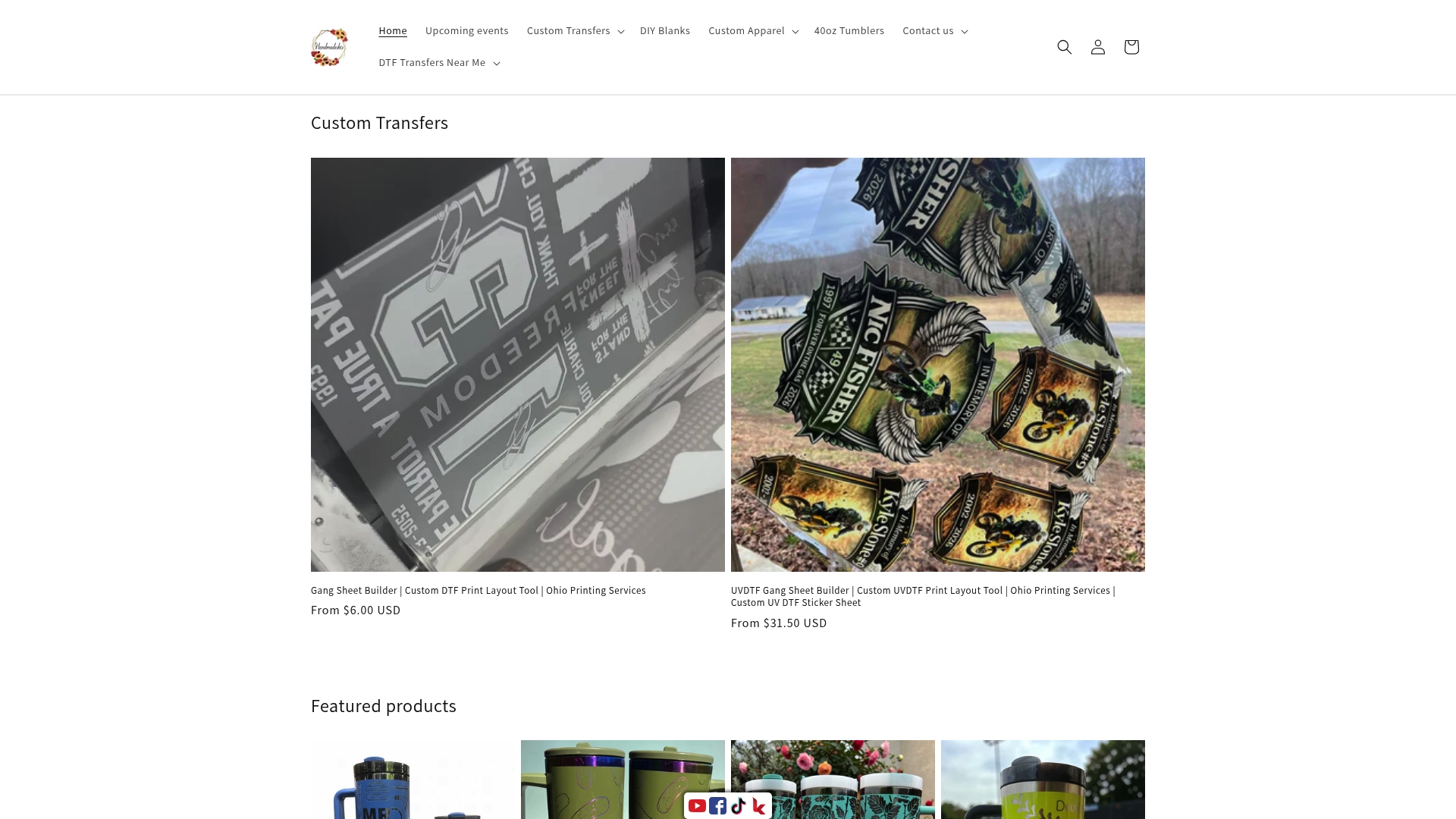
From personalized game day sweatshirts to DTF transfers and UV DTF decals, every product is designed and printed in-house for consistent quality and fast turnaround. If you have a concept but need help with layout or file preparation, the team at Handmadeohiocrafts works directly with you to get it right. Start with one great idea and let the printing handle the rest.
FAQ
What makes a custom t-shirt design idea actually sell?
Top-selling designs serve as identity markers tied to specific roles, hobbies, or events rather than generic graphics. Niche-specific and personalized apparel consistently converts better than broad, trend-chasing concepts.
What file format should i use for custom t-shirt printing?
Submit artwork as a PNG file with a transparent background at 300 DPI minimum. This format works with DTF, screen print, and most other print methods without quality loss.
How do i choose between a full-front print and a smaller accent design?
Full-front prints work best for event and group apparel worn on specific occasions. Small accent prints on sleeves or the left chest create a premium feel and produce shirts people wear more often in everyday settings.
What are the most popular custom t-shirt themes in 2026?
Pet memorial tees, sports mom shirts, graduation photo tees, and family vacation designs are among the top trending categories on major marketplaces. Vintage and retro aesthetics remain strong performers across all niches.
Do i need design experience to create a custom t-shirt?
No prior experience is required. Platforms like Canva and Printify offer templates and mockup tools that let beginners build print-ready designs quickly. For more complex artwork, working directly with a printer like Handmadeohiocrafts gives you access to in-house design support.