

What Is Small Batch Printing? A Small Business Guide
Small batch printing is the process of producing limited quantities of printed materials, typically between 1 and 500 units, using digital printing technology that delivers fast turnaround and full customization without the high setup costs of traditional print runs. The industry term for this approach is short-run printing, and the two phrases are used interchangeably across the trade. If you run a small business, sell handmade goods, or need personalized products without committing to thousands of units, short-run digital printing is the most practical and cost-effective method available. Technologies like Direct to Film (DTF), inkjet, and laser printing have made this possible at a scale that offset lithography simply cannot match for low volumes.
What is small batch printing and who does it serve?
Small batch printing is defined as production runs between 1 and 500 units, sometimes extending to 1,000 depending on the product type. Digital printing makes these runs feasible by eliminating the expensive setup plates required by traditional offset lithography. With offset, you pay for plate creation, press calibration, and ink mixing before a single finished piece rolls off the line. With digital short-run printing, the file goes directly to output. That “file to output” speed is what makes short runs viable for marketing materials, apparel, labels, and new product SKUs.
The people who benefit most from this method are clear: individuals ordering personalized gifts, startups testing a new product line, small businesses running seasonal promotions, and creators selling limited-edition merchandise. Swift Printing identifies these groups as the niche markets that gain the most from digital short-run capabilities. A band selling 50 custom hoodies before a tour, a boutique ordering 100 branded tote bags for a pop-up event, or a crafter producing 25 personalized ornaments for the holidays all fit squarely in this category.

What are the key benefits of small batch printing?
Short-run printing delivers advantages that bulk printing simply cannot offer at low volumes. Here is what makes it worth your attention:
- Lower financial risk. Ordering 50 units instead of 5,000 means you are not sitting on thousands of dollars of unsold inventory. Avoiding overproduction costs and storage needs reduces waste significantly, especially for designs that may become outdated.
- Full customization. Digital printing supports variable data, meaning each piece in a run can carry a different name, number, or design. This is the foundation of personalized product businesses.
- Fast turnaround. Short-run digital jobs often complete in 1–3 business days, compared to weeks for traditional bulk printing. Speed matters when you are responding to a seasonal trend or a last-minute event.
- Brand agility. Businesses can quickly update materials or run seasonal and limited-edition jobs without heavy financial loss. Swift Printing specifically recommends this approach for startups refining brand identity who need to iterate frequently.
- Minimal storage burden. You print what you need, when you need it. No warehouse space required.
Pro Tip: Order slightly more than your immediate need, but never more than you can sell within 90 days. This keeps your per-unit cost reasonable while protecting you from dead stock.
The financial logic here is straightforward. The total investment and carrying cost of excess inventory often outweigh the per-unit savings of a large print run. Unused stock becomes obsolete when branding or pricing changes, and that loss is real money. Short-run printing removes that risk entirely.
How does small batch printing work technically?
Understanding the mechanics helps you make smarter decisions when working with a print partner. Here is the typical process for a short-run digital print job:
- File preparation. You submit a print-ready design file, usually in PDF, PNG, or AI format. The printer checks resolution, color profiles, and bleed settings.
- Digital output setup. Unlike offset printing, there are no plates to create. The file loads directly into the digital press or DTF printer.
- Print run. The machine prints each unit individually or in a sheet layout. DTF printing, for example, prints designs onto a film that is then heat-transferred onto fabric.
- Finishing. Depending on the product, finishing steps include cutting, pressing, curing, or laminating.
- Quality check and shipping. Small batch runs allow for per-unit inspection, which is harder to do at scale.
The contrast with offset lithographic printing is significant. Offset uses setup plates and ink mixing that make it cost-effective only at high volumes, typically above 1,000 units. Below that threshold, digital short-run printing wins on both cost and flexibility.
Small batch vs. traditional long-run printing: a direct comparison
| Factor | Small Batch (Digital) | Long-Run (Offset) |
|---|---|---|
| Minimum quantity | 1–500 units | Usually 1,000+ units |
| Setup cost | None or minimal | High (plates, calibration) |
| Per-unit cost | Higher at low volumes | Lower at high volumes |
| Turnaround time | 1–3 business days | 1–3 weeks |
| Customization | Full variable data support | Limited without reprinting |
| Inventory risk | Low | High |
| Best for | Personalized, seasonal, test runs | Established, high-volume products |
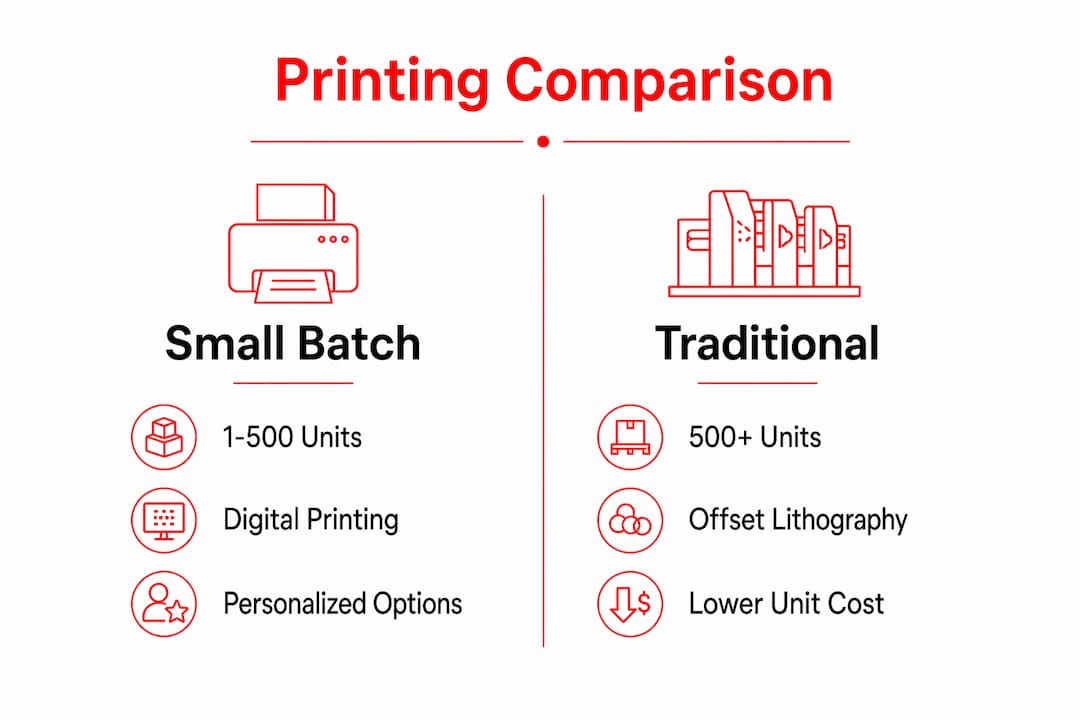
Digital short-run printing is cost-effective for volumes under 500 units and supports variable data and personalization that traditional offset printing cannot efficiently handle. Offset printing has a lower per-unit cost at high volumes, but the setup costs and inflexibility make it a poor fit for small businesses testing new ideas.
How can small businesses use small batch printing effectively?
Translating the technical advantages into real business results requires a clear strategy. Here is how individuals and small businesses get the most from custom short-run printing:
- Promotional items and branded merchandise. Businesses order small runs of branded pens, tumblers, or apparel for trade shows, client gifts, or team events. Products like custom sublimation pens or personalized drinkware are ideal for this use case.
- Limited-edition and seasonal products. Holiday ornaments, seasonal packaging, and event-specific gear sell better when they feel exclusive. A run of 50 custom engraved ornaments for a holiday market is a perfect short-run application.
- Test runs for new SKUs. Before committing to 1,000 units of a new product, print 50 and test the market. This is one of the smartest uses of short-run printing for any small business.
- Personalized gifts and custom orders. Individuals ordering one-of-a-kind gifts, wedding favors, or sports team apparel rely entirely on short-run digital printing to make personalization affordable.
Small batch printing also plays a strategic role in brand storytelling by enabling frequent, customized print updates that keep marketing materials fresh and relevant. A business that updates its promotional materials every quarter stays more visible than one locked into a two-year supply of outdated brochures.
Pro Tip: When selecting a small batch printing service, ask specifically about their minimum order quantity, turnaround time, and whether they support variable data printing. These three factors determine whether the service actually fits your needs.
Scaling is also straightforward. You start with 25 units, validate demand, and increase your next order to 200. You never overcommit, and you never waste money on stock that does not move.
Key takeaways
Small batch printing is the most practical print method for individuals and small businesses that need personalized, flexible, and low-risk production runs between 1 and 500 units.
| Point | Details |
|---|---|
| Definition and scale | Short-run printing covers 1–500 units using digital technology with no plate setup costs. |
| Financial advantage | Avoiding overproduction eliminates inventory risk and storage costs that often exceed bulk savings. |
| Speed to market | Digital short-run jobs complete in 1–3 business days, far faster than traditional offset runs. |
| Customization capability | Variable data printing allows each unit in a run to carry unique names, numbers, or designs. |
| Best use cases | Seasonal products, test runs, personalized gifts, and branded promotional items all benefit most. |
Why “printing with intention” is the real competitive advantage
I have watched a lot of small business owners make the same mistake: they chase the lowest per-unit price and end up with a garage full of outdated inventory. The math feels right at the time. Five hundred units at $1.20 each looks better than 50 units at $2.80 each. But that calculation ignores the cost of the 400 units you never sell.
Industry experts describe this as “printing with intention”, and it is the mindset that separates businesses that use printing as a tool from those that treat it as a sunk cost. The goal is not the lowest unit price. The goal is the highest return on every dollar you spend on print.
What I find genuinely underappreciated is how short-run printing changes your relationship with your own brand. When you can update your materials every season without financial pain, you start making bolder creative decisions. You test a new color scheme. You run a limited-edition product for a local event. You print 30 custom pieces for a fundraiser instead of skipping it because the minimums were too high.
For startups especially, this agility is not a nice-to-have. It is a real competitive edge. The businesses that win in personalized products are the ones that move fast, stay relevant, and never get stuck holding obsolete stock.
— Aaron
Bring your ideas to life with Handmadeohiocrafts
Handmadeohiocrafts specializes in exactly this kind of work. Based in Waverly, Ohio, the team produces custom apparel, personalized drinkware, DTF transfers, UV DTF decals, laser engraving, and promotional products entirely in-house. There are no minimum order requirements, which means you can order one piece or one hundred without a penalty.
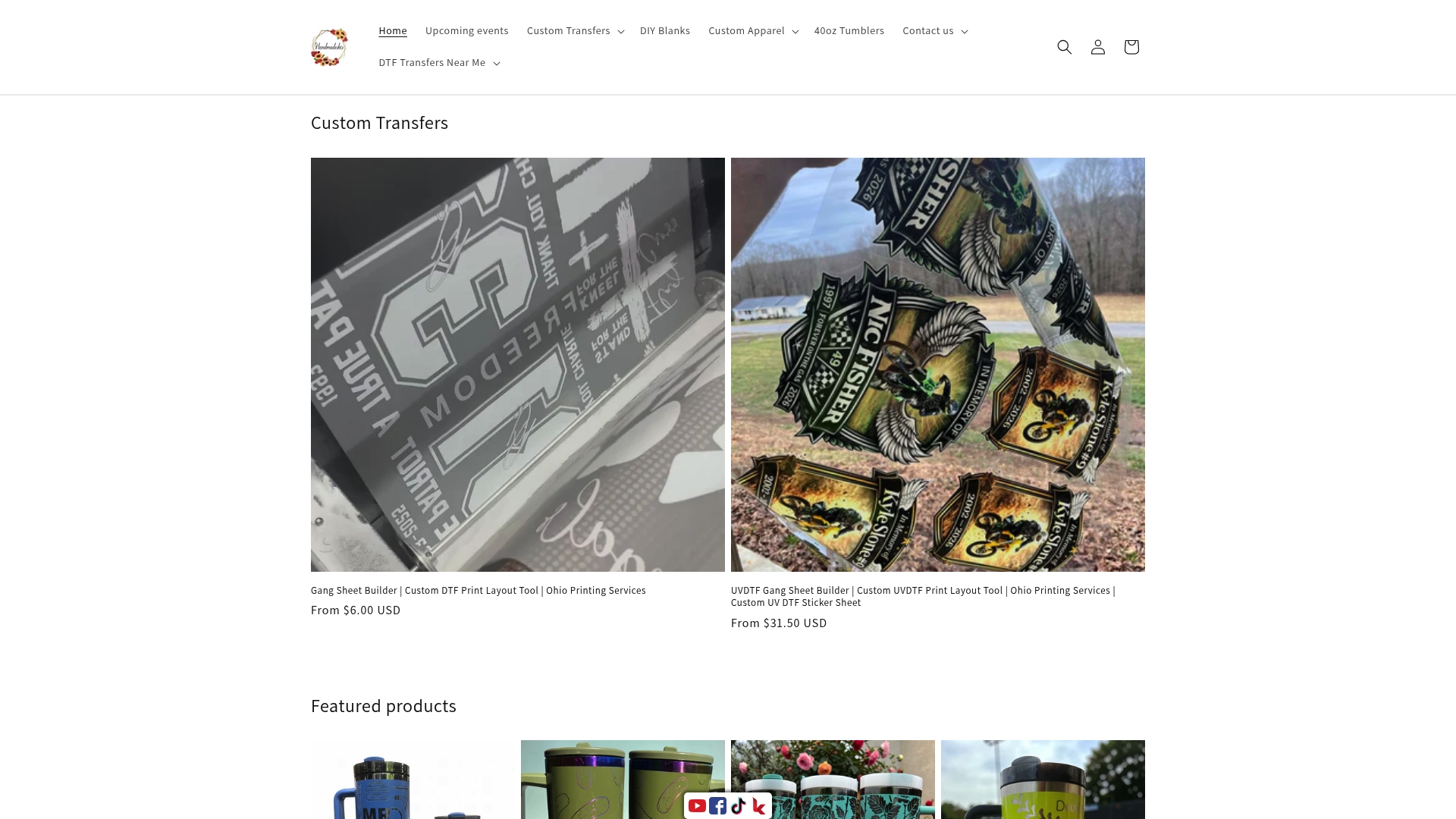
Whether you need a personalized game day sweatshirt for a sports fan, a custom tumbler for a client gift, or branded merchandise for your next event, Handmadeohiocrafts delivers professional quality with fast turnaround and real customer service. Browse the full product selection at Handmadeohiocrafts and start your custom order today.
FAQ
What is small batch printing in simple terms?
Small batch printing is the production of a limited number of printed items, typically between 1 and 500 units, using digital printing technology. It requires no expensive plate setup, making it affordable and fast for individuals and small businesses.
Is small batch printing cost-effective for small businesses?
Yes, for low volumes it is more cost-effective than traditional offset printing. The total investment, including inventory risk and storage, often makes small batch runs more economical even though the per-unit price is higher.
What printing methods are used in small batch production?
The most common small scale printing techniques include DTF (Direct to Film), inkjet, laser, and sublimation printing. These digital methods support variable data and personalization that offset lithography cannot efficiently deliver at low volumes.
How fast is small batch printing turnaround?
Short-run digital print jobs typically complete in 1–3 business days. Traditional offset printing for bulk orders can take one to three weeks, making digital short-run printing the clear choice for time-sensitive projects.
What are the best examples of small batch printing products?
Common examples include custom apparel, branded promotional items, personalized tumblers, holiday ornaments, business cards, event flyers, and limited-edition packaging. Any product that benefits from personalization or seasonal relevance is a strong candidate for short-run printing.