

Best Inkish.com Alternatives for Custom Apparel in 2026
What are the best inkish.com alternatives right now?
The strongest inkish.com alternatives in 2026 are Printful, OnPrintShop, PrintPLANR, PitchPrint, and Printbox, each built for a different slice of the print and custom apparel market. Whether you need pure print-on-demand fulfillment, a full Web2Print storefront, or an embeddable design engine, there is a platform on this list that fits your workflow without forcing you to buy features you will never use.
| Platform | Best For | Key Features | Target Segment | Free Trial / Demo |
|---|---|---|---|---|
| Printful | Pure print-on-demand fulfillment | Global fulfillment, eCommerce integrations, branded packaging | Small to mid-size eCommerce brands | Free to start |
| OnPrintShop | Full-stack Web2Print with B2B and B2C storefronts | Corporate portals, packaging, large format, product configurator | Mid to large print businesses | Demo available |
| DocketManager | Print shop floor management | Order tracking, job scheduling, quoting, invoicing | Print shops of all sizes | Demo available |
| B2C PrintShop | Straightforward online print ordering | User-friendly storefront, versatile product catalog | Small to medium businesses | Contact sales |
| Rocketprint | Integrated ordering for promotional products | Ordering and supply chain integration | Promotional product businesses | Contact sales |
| Click2Mail | Print and direct mail combined | Postal automation, print-on-demand marketing | Businesses needing mail fulfillment | Free account |
| Printbox | Enterprise online print with API-first architecture | Broad product catalog, API integrations, high-volume personalization | Large and enterprise print providers | Contact sales |
| PrintPLANR | Modular Print MIS plus Web2Print combined | Modular SaaS subscriptions, CRM, quoting, dispatch, invoicing | Print shops, brokers, promo companies | Demo available |
| PitchPrint | Embeddable design studio for existing websites | Customer-facing product personalization, design engine | Businesses with existing web storefronts | Free plan available |
| Catfish | End-to-end online ordering for small print shops | E-commerce, design, and order management combined | Small to medium print businesses | Contact sales |
The table above captures the core split: some platforms handle fulfillment and shipping, others manage the shop floor, and others power the customer-facing design experience. Picking the wrong category is the most common mistake small business owners make when searching for sites like inkish.com.
A closer look at each platform and how they compare
Printful is the default choice for anyone running an eCommerce store who wants to sell custom apparel without touching inventory. It connects natively to Shopify, WooCommerce, Etsy, and several other major platforms, handling printing, packing, and shipping on your behalf. The tradeoff is margin: you pay per item, so volume sellers often find the unit cost adds up faster than a licensed platform would.
OnPrintShop sits at the opposite end of the spectrum. It is a full Web2Print system with B2B corporate portals, packaging support, and large-format product configurability built in. Print businesses that serve corporate clients with branded merchandise programs will find it covers almost every workflow in one place. The learning curve is steeper than Printful, but the depth is there when you need it.

DocketManager is not a storefront. It is shop management software, purpose-built for tracking orders through a production floor, scheduling jobs, and handling quoting and invoicing. If your primary pain point is operational chaos inside the shop rather than customer-facing ordering, DocketManager addresses that directly. Pair it with a separate storefront tool if you also need online ordering.
B2C PrintShop keeps things simple: an online print ordering storefront with a clean interface and a solid product catalog. It suits small to medium businesses that want customers to place print orders online without a complicated setup. There is nothing exotic here, which is exactly the point for operators who do not need enterprise features.
Rocketprint focuses on promotional products and decorated merchandise, with ordering and supply chain integration as its core pitch. Businesses that run high volumes of branded merchandise for events or corporate clients will find the ordering workflow fits their model well.
Click2Mail occupies a niche that most Web2Print platforms ignore: combining print production with postal delivery. If your business sends direct mail campaigns alongside printed materials, Click2Mail handles both in one workflow rather than forcing you to manage two separate vendors.
Printbox is built for scale. Its API-first architecture suits large online print providers that need to connect their storefront to production equipment, shipping systems, and accounting software without custom development work. Pricing is not publicly listed and requires direct contact with their sales team.
PrintPLANR takes a modular approach: you subscribe only to the modules you actually need, whether that is the Print MIS, the Web2Print storefront, or both together. Fixed monthly subscriptions include backups, support, and future updates. For print brokers and promotional companies that want one system covering quoting through fulfillment, the modular structure avoids paying for features that do not apply to their business.
PitchPrint solves a specific problem: you already have a website, and you want to add a product design tool without rebuilding everything. Its embeddable design engine drops into an existing storefront and lets customers personalize products directly on your site. It is the right call when you need design capability without a full platform migration.
Catfish combines e-commerce, design, and order management into one platform aimed squarely at small to medium print shops. It covers the end-to-end process without requiring separate tools for each step, which keeps overhead low for operators who do not have a dedicated IT team.
Pro Tip: Before requesting demos, map out which part of your workflow is actually broken. A shop struggling with production tracking needs DocketManager, not a new storefront. A shop losing customers because they cannot design online needs PitchPrint or OnPrintShop. Matching the platform category to the actual problem saves months of migration pain.
How to select the right inkish.com alternative for your business
The single most useful question to ask is: what does your current technical setup already handle well? Choosing software based on your existing architecture rather than a feature checklist prevents you from buying redundant systems and wasting budget on capabilities you already have.
Start by identifying which category of platform you actually need:
- Print MIS: DocketManager or PrintPLANR, for shop floor management, job tracking, and production workflow
- Web2Print storefront: OnPrintShop, B2C PrintShop, or Catfish, for customer-facing online ordering
- Embeddable design engine: PitchPrint, for adding personalization to an existing site
- Print-on-demand fulfillment: Printful, for hands-off inventory and shipping
- Combined MIS plus Web2Print: PrintPLANR, for businesses that need both without two vendors
- Mail and print combined: Click2Mail, for direct mail alongside print production
Pricing model fit matters as much as features. A per-order fee structure like Printful’s works at low volume but erodes margin at scale. A flat monthly subscription like PrintPLANR’s modular model works better for high-volume shops. The best web-to-print platform depends on whether you need an embeddable design engine or a full MIS-bundled system. Choosing incorrectly leads to software bloat and painful migrations later.
SaaS platforms offer operational ease and automatic updates. Licensed self-hosted systems give you more control but require IT expertise and ongoing maintenance. If your team does not have dedicated technical staff, SaaS is almost always the lower-risk path.
Integration with your existing e-commerce setup is another deciding factor. Native app integrations with platforms like Shopify or WooCommerce outperform iframe embeds in both performance and user experience. If a platform connects to your storefront via iframe, expect slower load times and a less polished customer interface.
Pro Tip: A staged approach to automating print workflows prevents disruption and gives your team time to adapt. Start with one process, such as job validation or order routing, before rolling out a full system change.
Evaluate alternatives systematically by working through these steps:
- Audit your current workflow and identify the three biggest friction points
- Shortlist platforms that address those specific friction points, not the longest feature list
- Request demos from two or three finalists and test them against a real order scenario
- Confirm integration compatibility with your existing e-commerce, accounting, and shipping tools
- Check support availability and response times before signing any contract
Expert insights on print software trends shaping platform choices in 2026
The clearest shift in the print software market right now is the move toward open API connectivity, allowing businesses to connect their storefront, production equipment, shipping carriers, and accounting systems into a single automated workflow. Platforms that still rely on manual data entry between systems are losing ground fast to those that offer end-to-end automation out of the box.
Key trends shaping platform selection in 2026:
- API-first architecture is now a baseline expectation, not a premium feature, for any platform serving mid-size or larger print operations
- Integrated platforms that combine Web2Print and Print MIS in one system reduce vendor management overhead and eliminate data silos that cost time and money
- Native integrations with Shopify, WooCommerce, and similar platforms consistently outperform iframe-based embeds in load speed and customer satisfaction
- Modular SaaS pricing is gaining traction because it lets businesses pay for only the capabilities they use, rather than absorbing the cost of a fully bundled system
- White-label architecture is increasingly important for print businesses that manage multiple branded client storefronts from a single backend
Integrated platforms reduce vendor overhead by combining Web2Print and Print MIS capabilities, cutting both cost and complexity for businesses that previously ran separate systems for each function. The businesses that waste the most budget are typically those running two or three disconnected tools when one well-chosen platform would cover all three needs.
Businesses often buy fully bundled systems when only a design studio component is needed, resulting in high costs and migration complexity. The fix is straightforward: match the platform’s scope to the actual business need before signing, not after.
Handmadeohiocrafts: a practical alternative for custom apparel and promotional products
If the platforms above feel like more software than your business actually needs, Handmadeohiocrafts offers a direct alternative. Rather than managing a Web2Print platform yourself, you get custom apparel, DTF transfers, laser engraving, tumblers, and promotional products produced in-house by a team that handles design, printing, and quality control for you.
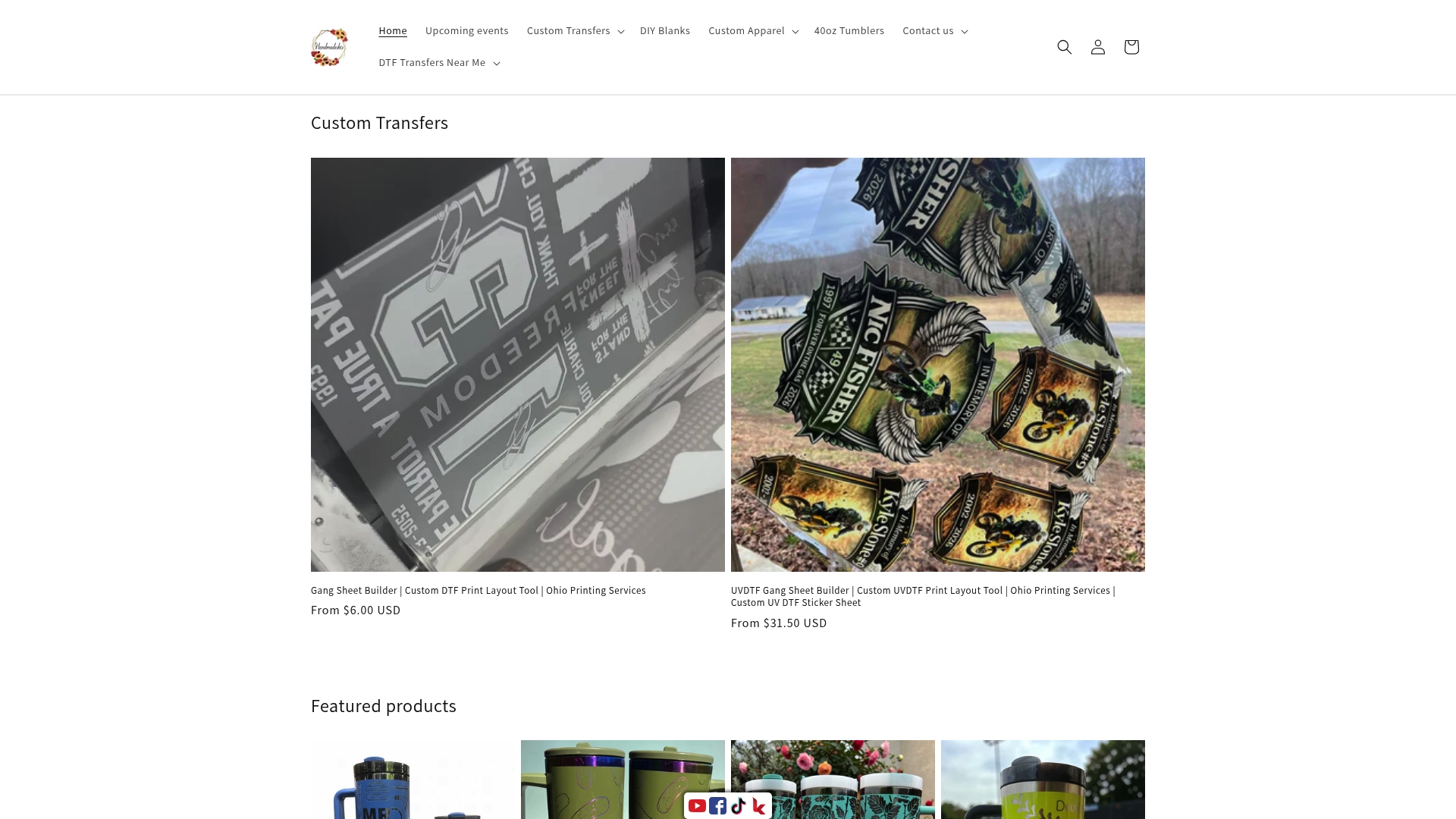
Handmadeohiocrafts works with businesses, schools, sports teams, nonprofits, and individuals across the country, with no minimum order requirements and nationwide shipping. Fast turnaround times come from keeping everything in-house rather than routing orders through a third-party fulfillment network. For a small business owner who wants professional-quality custom apparel without the overhead of running a print platform, that is a meaningful difference. You can also explore custom apparel alternatives to see how Handmadeohiocrafts compares across the broader market.
Key Takeaways
The right inkish.com alternative depends entirely on which part of your workflow needs fixing, not on which platform has the longest feature list.
| Point | Details |
|---|---|
| Match platform category first | Identify whether you need a Print MIS, Web2Print storefront, design engine, or fulfillment service before comparing features. |
| Native integrations outperform iframes | Platforms with native Shopify or WooCommerce connections deliver better load speed and customer experience than iframe-based embeds. |
| Modular pricing fits most small businesses | PrintPLANR’s modular SaaS model lets you pay only for the modules your workflow actually requires. |
| Stage your automation rollout | Start with one automated process before a full system migration to reduce disruption and help your team adapt. |
| Handmadeohiocrafts skips the platform entirely | For custom apparel and promotional products without managing software, Handmadeohiocrafts produces everything in-house with no order minimums and nationwide shipping. |