

Small Shops: When to Pick UV DTF or Vinyl and Use a Gang Sheet
UV DTF wins for premium hard-surface decals, small-batch runs, and jobs where full-color detail has to survive scratches and glass cleaner. Vinyl wins for flexible surfaces, apparel, and bulk orders where cost per unit matters more than a glossy, printed-on finish. The real decision comes down to three tradeoffs: texture and permanence versus flexibility and price, plus how fast you need product in hand. The comparison below breaks down exactly where each method earns its keep.
TL;DR:
- UV DTF is ideal for small batches, full-color photorealistic designs, and surfaces that require scratch and fade resistance, but it is more expensive per piece.
- Vinyl offers a cost-effective solution for large-volume runs, flexible surfaces, and outdoor durability of 3 to 5 years, especially on curved or textured materials.
- Surface preparation and testing adhesion are crucial for UV DTF to prevent peeling, whereas vinyl application is straightforward with peel-and-stick or heat press methods.
- Cost-per-unit favorability shifts significantly at higher quantities, with vinyl becoming cheaper for thousands of units, while UV DTF makes sense for limited or premium applications.
- Proper surface and durability needs should guide method selection, as UV DTF excels on hard, indoor, or scratch-prone surfaces, while vinyl is better for flexible, outdoor, or high-volume jobs.
Table of Contents
- UV DTF vs. Vinyl at a Glance
- What Is UV DTF Printing and When Should You Use It?
- What Are Vinyl Stickers and When Do They Work Better?
- How Do You Choose the Right Method for Your Project?
- How Handmadeohiocrafts Helps You Get It Right the First Time
- Why the “Which Is Better” Debate Misses the Point
- Ready to Order? Start With the Gang Sheet Builder
- Sources
- FAQ
UV DTF vs. Vinyl at a Glance
Both methods can put a design on a surface, but they get there differently, and that difference shows up in the finish, the price tag, and how long the piece survives outdoors.
- Finish and texture: UV DTF sits slightly raised with a glossy, printed-on look. Vinyl lays flatter and can show a visible edge or halo around the design.
- Surface compatibility: UV DTF handles glass, metal, powder-coated tumblers, and plastic well. Vinyl works better on flat, flexible, or curved surfaces like cars, windows, and fabric (as heat-transfer vinyl).
- Color and detail: UV DTF prints full CMYK plus white ink, so photographic gradients and fine detail hold up. Vinyl is cut or printed in solid colors and struggles with photorealism.
- Durability outdoors: Quality vinyl stickers typically last 3 to 5 years outdoors depending on sun exposure, while UV-cured prints resist fading and scratching well in sheltered or indoor settings.
- Cost and batch size: Vinyl gets cheaper fast at volume, which makes it the default for large runs. UV DTF costs more per piece but makes far more sense for one-off or small-batch orders.
- Tooling and workflow: UV DTF transfers apply by hand, peel-and-stick, with no heat press required. Vinyl needs either careful peel-and-stick application or, for apparel, a heat press.
- Turnaround: UV DTF cures instantly under UV light, so small runs move fast. Vinyl printing and cutting is quick too, but large-format jobs add setup time.
Here’s the shorthand: if you’re printing 5,000 promotional stickers for a trade show handout, vinyl’s per-unit cost makes the call for you. If you’re making 50 branded tumblers for a client gift, UV DTF’s finish and durability are worth the extra cost.
What Is UV DTF Printing and When Should You Use It?
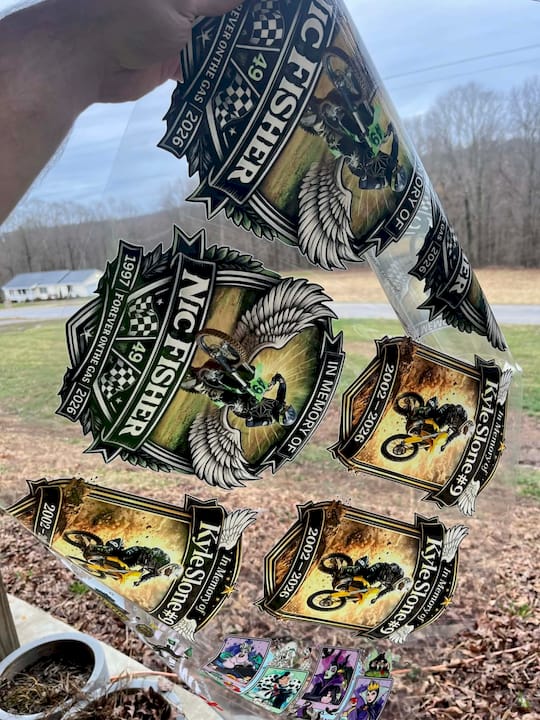
UV DTF stands for UV direct-to-film. A printer lays UV-curable ink and a white base layer onto a clear film, then cures it instantly under ultraviolet light instead of letting it air-dry. That instant cure is what gives UV DTF its signature glossy, slightly raised texture, and it’s also why production waste drops compared to solvent-based printing methods. The cured design transfers from the film onto the final surface, applied like a sticker rather than pressed with heat.
The appeal for small shops and makers comes down to a few things:
- Full CMYK plus white ink means photo-quality gradients print clean, not muddy.
- The cured finish resists scratching and fading far better than a basic printed vinyl decal.
- No heat press is required, so application is fast and doesn’t damage heat-sensitive items.
- Curing happens instantly, which keeps small-batch turnaround quick.
The tradeoffs are real too. UV DTF costs more per piece than vinyl, and it doesn’t flex well on stretchy fabric, which rules it out for most apparel. Textured or powder-coated surfaces sometimes need a quick adhesion test and occasionally a primer before you commit to a full order, since peeling failures almost always trace back to skipped surface prep.
Pro Tip: If you’re ordering multiple small designs, lay them out on a single gang sheet instead of ordering separate transfers. It cuts wasted film space and often lowers your per-unit cost significantly on small runs.
What Are Vinyl Stickers and When Do They Work Better?
“Vinyl sticker” actually covers two different products. Printable vinyl gets full-color designs printed directly onto a vinyl sheet, then laminated and cut to shape. Cut vinyl (and its apparel cousin, heat-transfer vinyl or HTV) starts as a solid-color film that’s cut into a shape and either peeled onto a surface or heat-pressed onto fabric.
Vinyl’s strengths line up almost opposite to UV DTF’s:
- It flexes easily, so it wraps around curved bottles, car panels, and laptop lids without cracking.
- It handles direct weather exposure well, which is why most car decals and yard signs use vinyl rather than UV DTF.
- Large runs get genuinely cheap. Once you’re ordering in the thousands, vinyl’s per-unit cost drops well below UV DTF’s.
- Application is simple: peel and stick for decals, or a basic heat press for apparel-grade HTV.
The limits show up in the details. Vinyl’s finish sits flat, and printed or cut edges can create a visible border or halo effect that UV DTF avoids. Photographic detail and complex gradients don’t translate well to cut vinyl, and even printed vinyl loses some sharpness compared to UV-cured ink. For apparel work specifically, HTV is faster for simple logos and text, while DTF-style printing wins when the design has photo-level detail.
The economics flip depending on volume: a 25-piece order often favors UV DTF for its finish, while a 2,500-piece order almost always favors vinyl on price alone.
How Do You Choose the Right Method for Your Project?
Start with five questions before you request a quote: What finish do you want (glossy and raised, or flat and simple)? What’s the surface (glass, metal, fabric, or something curved)? How much wear will it take (indoor display versus daily outdoor exposure)? What’s your batch size? And what’s your actual budget per unit?
Once you know those answers, ask any supplier these four things directly:
- “Can you show adhesion test results on a surface similar to mine?”
- “What file formats and color profiles do you require for print-ready art?”
- “Do you offer any warranty or a test proof before a full production run?”
- “What’s the per-unit price at my specific quantity, not just your listed starting price?”
Watch for red flags in the answers. Vague durability claims with no real numbers, no sample photos on a substrate close to yours, and no clear file specification are all signs a supplier hasn’t run enough volume to know their own limits. A shop that can’t run a basic adhesion test on request usually can’t back up their durability claims either.
A quick real-world example: ordering 50 branded tumblers for a corporate gift points straight to UV DTF for the glossy, scratch-resistant finish. Ordering 5,000 promotional stickers for a conference giveaway points straight to vinyl, where the cost-per-unit gap between the two methods becomes the deciding factor.
How Handmadeohiocrafts Helps You Get It Right the First Time
Getting a UV DTF or vinyl order right on the first try usually comes down to file prep and knowing what a design will actually look like on your surface before you commit to a full batch. Orders are produced in-house, allowing control over quality and turnaround times rather than splitting production across vendors.
A few resources make the process easier for small shops and first-time buyers:
- The UV DTF gang-sheet builder lets you lay out multiple designs on one sheet, which trims waste and simplifies ordering small batches.
- Artwork setup guidance covers what makes UV DTF work for small businesses preparing print-ready files.
- Durability and care documentation walks through realistic lifespan expectations so you know what to expect before you order in volume.
Together, those resources cut down on the back-and-forth that usually slows down a first order.
Why the “Which Is Better” Debate Misses the Point
The internet loves framing this as UV DTF versus vinyl like one has to lose. That framing sells clicks, but it doesn’t help someone to try to decide how to package 200 units of a new product launch. The honest answer is that these two methods barely compete for the same jobs. UV DTF earns its cost on hard, visible surfaces where a design needs to survive scratches and look premium under store lighting. Vinyl earns its keep on flexible or high-volume work where price per unit decides the order.
What gets underrated in most comparisons is surface prep. A UV DTF transfer applied to a powder-coated tumbler without testing adhesion first is where most peeling complaints originate, not the ink or film itself. Suppliers who skip that step and just ship a glossy sample photo are setting buyers up for returns.
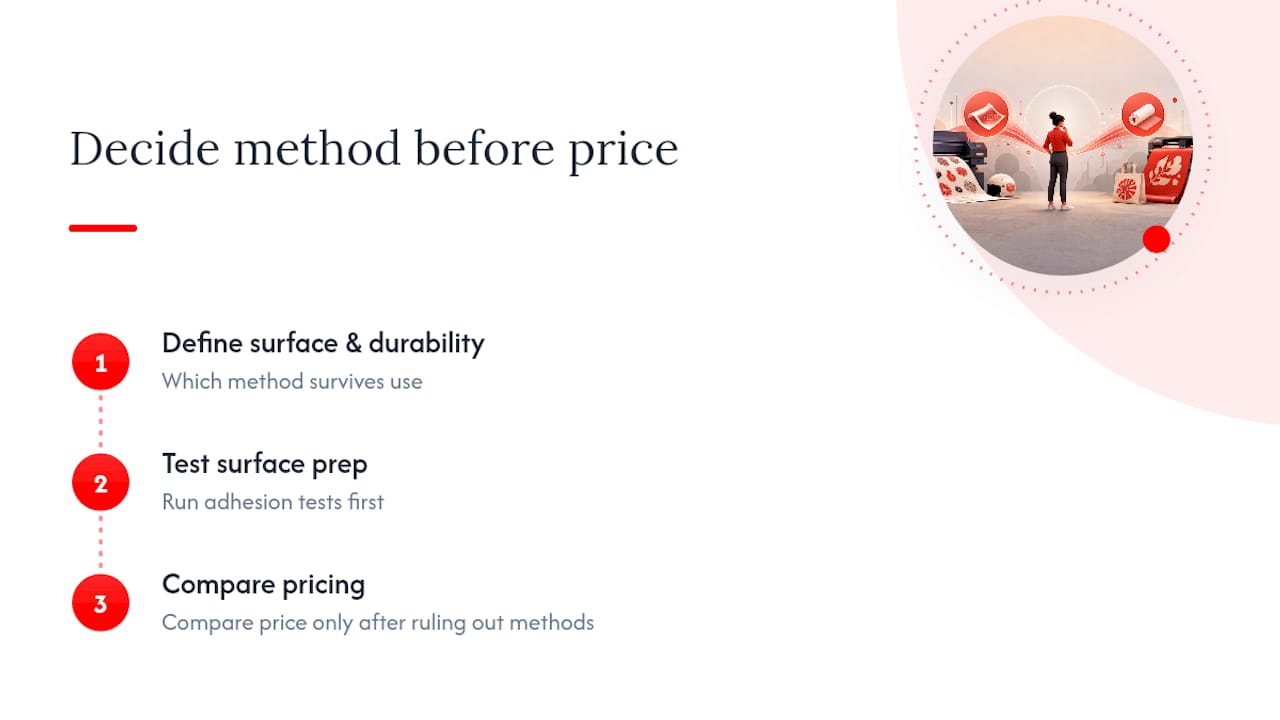
My advice: decide your surface and durability needs before you touch a price sheet. Cost comparisons only mean something once you’ve ruled out the method that can’t survive your actual use case. Get that order right, and the pricing conversation gets a lot simpler.
— Aaron
Ready to Order? Start With the Gang Sheet Builder
If you already know UV DTF is the right call for your project, the fastest path from idea to finished decal is Handmadeohiocrafts’s own layout tool. It’s built specifically for small-batch orders, so you’re not paying setup fees designed for someone printing thousands of identical labels.
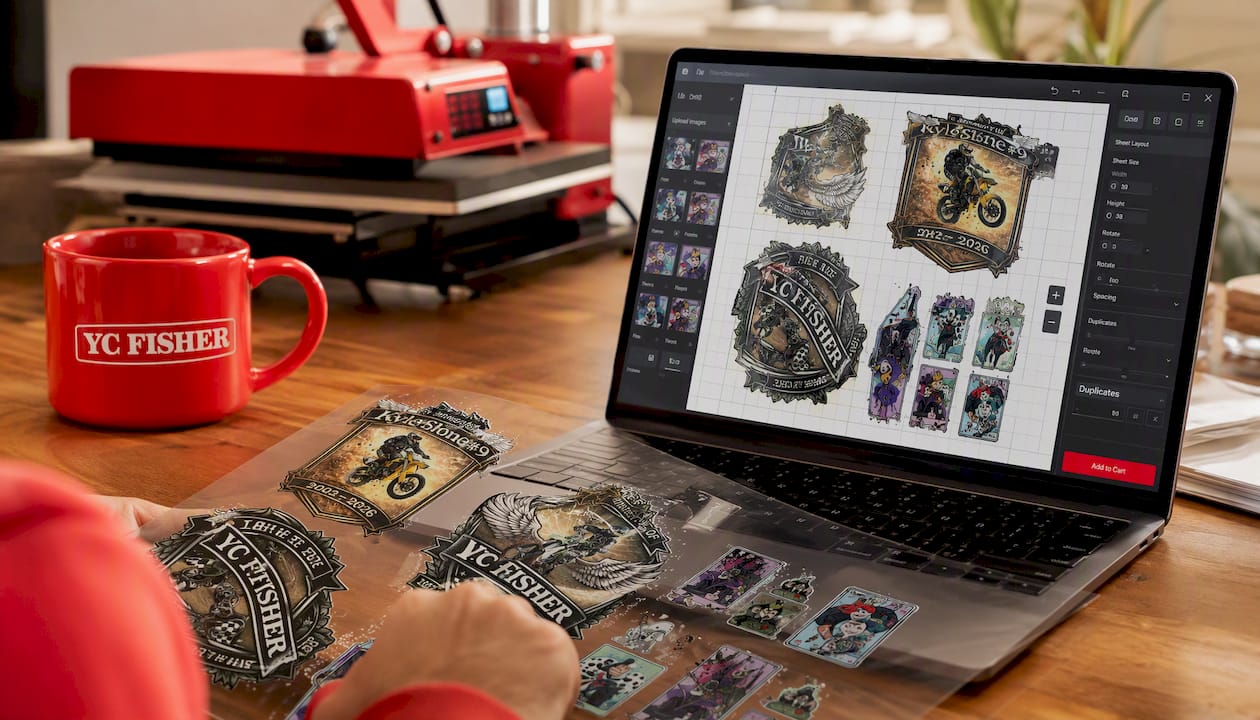
The UVDTF Gang Sheet Builder lets you arrange multiple designs, sizes, and quantities on a single sheet before you check out, which cuts wasted film and reduces the layout errors that come from ordering transfers one at a time. Upload your art, size each piece, and see your full sheet before it prints, no back-and-forth emails required. If you’ve got a mixed order of logos, tumbler wraps, or seasonal designs, this is the fastest way to get them into production without hiring out a design step you can do yourself in minutes.
Sources
- 5 benefits of printing with UV curable inks - Troy Group
- HTV vs DTF: What’s the Difference? - Stahls’ Blog
- UV DTF vs. Vinyl Printing: Key Differences - AIPrinter
- UV DTF vs Vinyl Stickers: Which is Better? - eufyMake
FAQ
Are DTF Transfers Better Than Vinyl?
For full-color, photo-detailed designs, DTF and UV DTF typically produce sharper results than vinyl. Vinyl still wins on cost for large runs and on flexibility for apparel and curved surfaces.
Is UV Printing Better Than DTF?
UV DTF is a specific type of DTF printing, so the comparison usually means UV DTF versus standard DTF or vinyl. UV DTF cures instantly and holds up well on hard surfaces, while standard DTF is generally the stronger choice for fabric because it flexes with the material.
What Are the Disadvantages of Using a UV DTF Printer?
UV DTF costs more per unit than vinyl, doesn’t flex well on stretchy fabric, and can require surface prep like adhesion testing or primers on textured or powder-coated items before a full production run.
Can a Cricut Make UV DTF Transfers?
No. A Cricut cuts vinyl and other craft materials, but it can’t print full-color UV-cured ink or cure it under UV light, so UV DTF transfers require dedicated UV printing equipment.
How Long Do UV DTF and Vinyl Stickers Last?
Quality vinyl stickers typically hold up for 3 to 5 years outdoors depending on sun exposure, while UV DTF transfers are generally more scratch and fade resistant indoors or in sheltered outdoor use.