

What Is Band Merch Printing? A Guide for Musicians
Band merch printing is the process of applying a band’s custom designs onto apparel and goods using methods like screen printing, direct-to-film (DTF) transfers, and direct-to-garment (DTG) printing. The industry term for this practice is custom merchandise printing, and it covers everything from T-shirts and hoodies to hats and tote bags. For musicians and band managers, merch is not just a product. It is a direct revenue stream, a branding tool, and a way for fans to carry your identity into the world. Understanding how band merchandise printing works gives you real control over quality, cost, and the story your merch tells.
What is band merch printing and which methods are used?
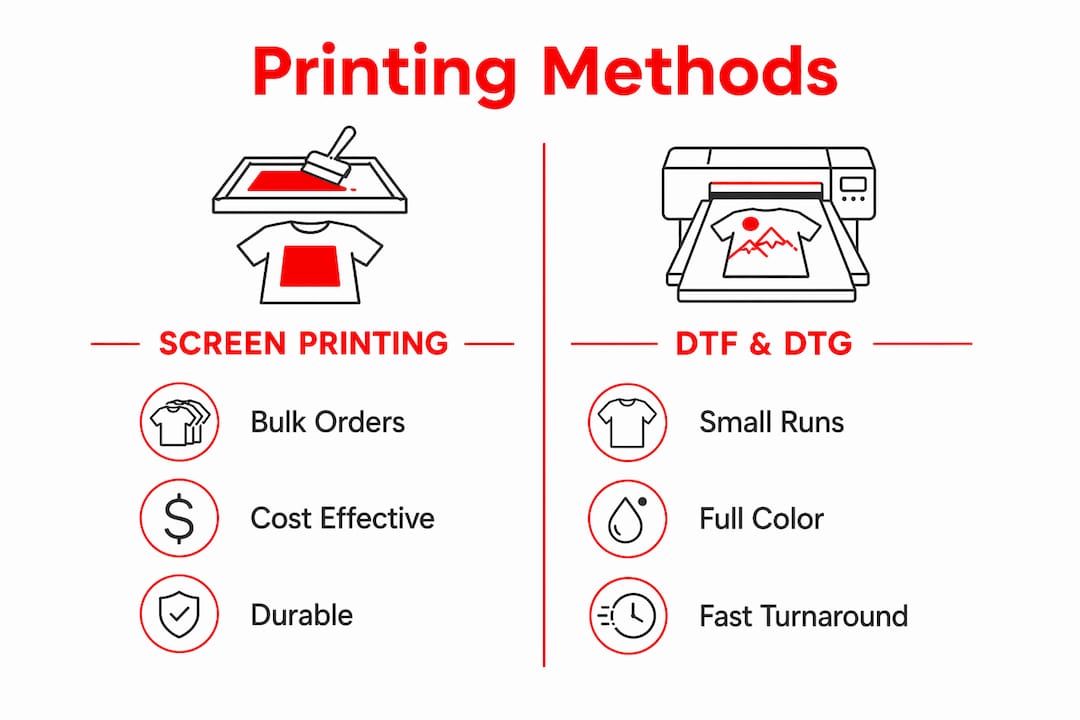
Band merch printing covers three primary techniques: screen printing, DTF printing, and DTG printing. Each method produces different results depending on your design complexity, order size, and the fabric you are printing on. Choosing the wrong method for your situation wastes money and produces inferior merchandise.
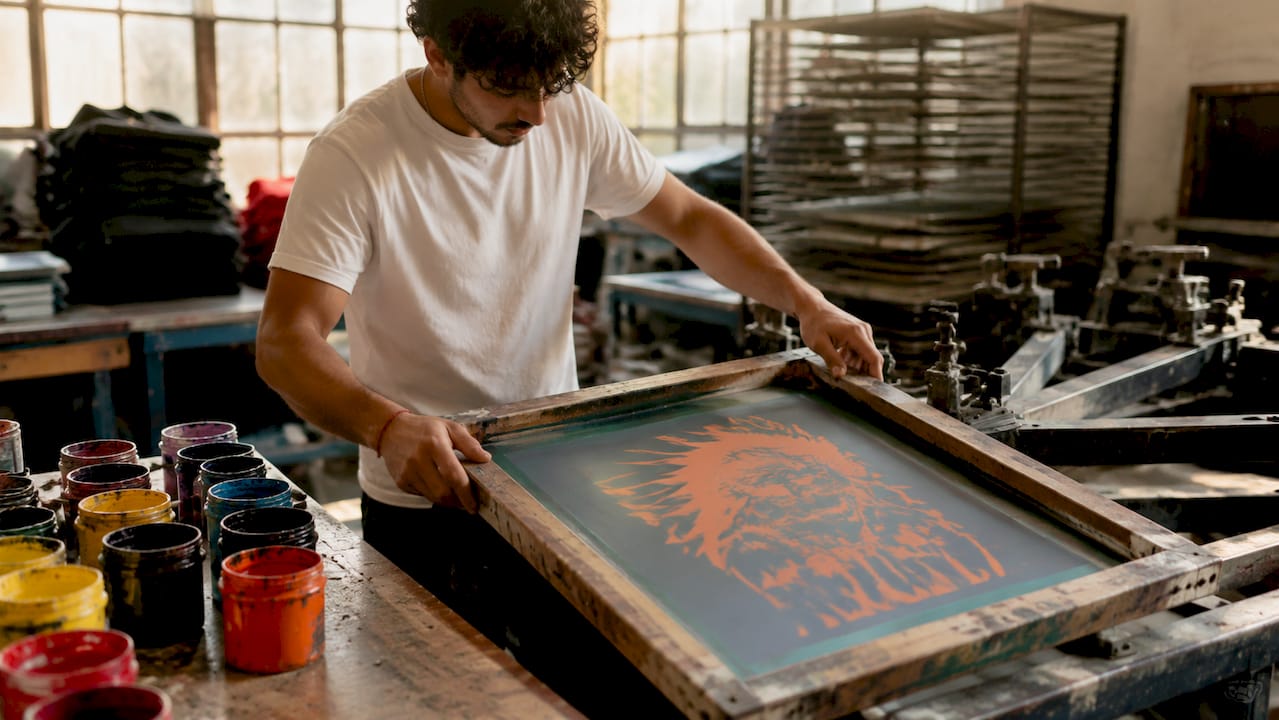
Screen printing is the oldest and most cost-effective method for bulk orders. The process pushes ink through a mesh stencil screen directly onto the fabric. Screen printing works best for large runs with fewer colors, making it the standard choice for tour T-shirts and uniform band apparel. The ink bonds into the fabric fibers, producing prints that hold up through years of washing.
Direct-to-film (DTF) printing is a heat-transfer process where a design is printed onto special PET film, coated with adhesive powder, cured, then heat-pressed onto the garment. DTF ink sits on top of the fabric rather than penetrating it, which produces vibrant colors across a wide range of fabric types including polyester, cotton, and blends. DTF pressing typically occurs at 160–170°C for 10–15 seconds. This method handles complex, multicolor designs and small batch orders without the setup cost of screen printing.
DTG printing sprays ink directly onto the garment using a modified inkjet process. It works well for photographic or highly detailed artwork on cotton-heavy fabrics. DTG requires pre-treatment on dark garments and has slower output than DTF for larger runs.
Printing method comparison
| Method | Best for | Color range | Minimum order | Durability |
|---|---|---|---|---|
| Screen printing | Bulk orders, simple designs | Limited per run | Usually 12+ pieces | Very high |
| DTF printing | Small runs, complex designs | Full color | No minimum | High |
| DTG printing | Detailed artwork, cotton fabrics | Full color | No minimum | Moderate to high |
One key advantage of DTF is production flexibility. DTF transfers can be printed, cured, stored, and pressed later, which lets you manage inventory without committing to a full press run upfront. For bands that sell merch at shows and online, that flexibility is a practical advantage.
How to prepare artwork for band merch printing
Artwork preparation is where most band merch projects go wrong. A design that looks sharp on a phone screen can print blurry, misaligned, or color-shifted if the file is not set up correctly. Getting this right before you send files to a printer saves time and money.
Print-ready files require CMYK color mode, at least 300 DPI resolution, bleed for trimming, embedded fonts, and PDF/X compliance. These standards exist because commercial printers calibrate to CMYK, not the RGB color space your monitor uses. A design built in RGB will shift in color when converted at the printer’s end.
Key file preparation rules for band merch:
- Use vector artwork for logos and text. Vector files scale to any size without losing sharpness. Adobe Illustrator AI files and EPS formats are the standard.
- Set raster images to 300 DPI at actual print size. A logo that is 72 DPI at screen size will print blurry at 12 inches wide. Small raster logos look crisp on screen but print blurry if not sized to effective print DPI.
- Embed all fonts or convert them to outlines. Printers who do not have your font installed will see a substitution, which breaks your layout.
- Use CMYK color mode throughout. Build your file in CMYK from the start rather than converting at the end.
- Add bleed for edge-to-edge designs. Bleed is the extra artwork that extends beyond the cut line, preventing white edges on trimmed pieces.
For DTF printing specifically, your artwork should have a transparent background so the transfer applies cleanly to any garment color. For screen printing, each color in your design requires a separate screen, so simplifying your palette reduces setup costs significantly.
Pro Tip: Send your artwork to a test print on a scrap garment or order a single sample before committing to a full production run. Color and scale surprises are far cheaper to fix at one piece than at 100.
What are the critical technical steps for curing and pressing?
Curing is the step that determines whether your band merch survives 50 washes or falls apart after five. Applying ink or a DTF transfer is only half the process. The heat and time used to cure the print lock in durability, elasticity, and resistance to cracking.
In screen printing, proper ink curing prevents cracking and fading. Under-cured prints crack because the ink film never fully cross-links. Over-cured prints scorch the fabric and lose elasticity. Curing equipment includes heat guns for small jobs, flash dryers for between-color curing during production, and conveyor dryers for high-volume runs. Each ink type has a specific cure temperature and dwell time specified by the manufacturer.
For DTF printing, the pressing process requires precise control of three variables:
- Temperature. DTF pressing occurs at 160–170°C. Too low and the adhesive does not bond fully. Too high and the transfer scorches or the film warps.
- Pressure. Even pressure across the full transfer area is critical. Uneven pressure creates sections that peel after washing.
- Dwell time. The standard window is 10–15 seconds. Shorter dwell times produce weak adhesion. Longer times can damage heat-sensitive fabrics.
DTF pressing variables such as pressure evenness, temperature consistency, and dwell time must be tested on scrap fabrics because garment composition differences affect results. A 100% cotton T-shirt and a 50/50 polyester blend require different settings even at the same nominal temperature.
The wash test is the definitive check for a properly cured print. Washing printed garments harshly tests durability and guides curing adjustments. Run a freshly printed garment through a hot wash and high-heat dry cycle before approving a production run. If the print cracks, peels, or fades, adjust your cure settings before printing the full order.
Pro Tip: Always press a test transfer on the same fabric blend you will use for the full order. Fabric weight and fiber content change how heat conducts through the garment, which affects adhesion.
For pressing guidance specific to DTF, Handmadeohiocrafts publishes detailed DTF pressing instructions covering temperature, time, and pressure settings by fabric type.
How to choose the right merch items and printing method for your band
The right merch item and printing method depends on your band’s budget, design style, and how you plan to sell. Getting this decision right means your merch looks great, holds up, and does not drain your cash flow.
Merch revenue gives bands a direct fan engagement channel, supplements income, and strengthens brand identity. Fans buy merch to express identity and support their favorite artists. That means the quality of your print directly affects how your brand is perceived.
Popular merch categories and their printing compatibility:
- T-shirts and hoodies. The core of any band merch line. Screen printing works for large runs with simple artwork. DTF handles full-color or photographic designs on any run size.
- Hats and caps. Embroidery is the standard for structured hats. DTF works on flat-brim styles and soft caps.
- Tote bags. DTF and screen printing both work well. Tote bags are low-cost items that fans use daily, giving your brand consistent visibility.
- Long-sleeve shirts and crewnecks. Same printing compatibility as T-shirts. These sell well in colder climates and at fall and winter shows.
Order quantity is a major cost driver. Screen printing requires setup fees for each color and each screen, so the per-unit cost drops significantly at higher quantities. DTF has no setup fees, which makes it the better choice for orders under 24 pieces or for designs with many colors. If you are testing a new design or selling through an online store with no inventory, DTF transfers let you press on demand without holding stock.
Turnaround time matters for tour merch. DTF transfers can be printed and stored in bulk, then pressed as orders come in. That production model works well for bands that sell through their own website and need to ship quickly after a show announcement.
Key Takeaways
Band merch printing requires matching your printing method to your design complexity, order size, and fabric type to produce durable, high-quality merchandise.
| Point | Details |
|---|---|
| Match method to order size | Use screen printing for bulk orders and DTF for small runs or complex designs. |
| Prepare print-ready files | Set artwork to 300 DPI, CMYK color mode, with embedded fonts and vector logos. |
| Cure prints correctly | Test temperature, pressure, and dwell time on scrap fabric before full production runs. |
| Run a wash test | Wash a sample garment harshly before approving any production run to confirm durability. |
| DTF offers flexibility | DTF transfers can be stored and pressed on demand, which suits online and tour merch sales. |
What I’ve learned from watching band merch go wrong
The most common failure I see in band merch printing is not a bad design. It is a good design sent as the wrong file. A band spends weeks on artwork, sends a 72 DPI JPEG, and gets back a blurry print that looks nothing like what they approved on screen. The fix is simple, but it requires knowing the rule before you send the file.
The second most common failure is skipping the sample run. Bands order 200 shirts for a tour, skip the test press, and discover on the road that the transfers are peeling after one wash. That is a curing problem, and it is entirely preventable. One test garment and one wash cycle would have caught it.
The printing technology worth watching right now is DTF. The ability to decouple image creation from garment printing means a band can have transfers ready weeks before a show and press them on the day of the event. That is a real operational advantage for smaller acts without a dedicated merch team. Choose a printing partner who understands musicians’ timelines and can guide you through file setup. The technical side of merch printing is learnable, but a good partner makes the whole process faster and less expensive.
— Aaron
Custom band merch printing from Handmadeohiocrafts
Handmadeohiocrafts specializes in DTF transfers and custom apparel for bands, with no minimum order requirements and nationwide shipping from Waverly, Ohio. Every transfer is produced in-house, which means faster turnaround and direct quality control on every order.
Bands can submit artwork directly through the site, and Handmadeohiocrafts provides clear DTF file requirements so your designs print exactly as intended. Whether you need 5 shirts for a local show or 500 for a national tour, the process is the same: print-ready file in, high-quality merch out. Handmadeohiocrafts also offers DTF transfer printing for bands who press their own garments, giving you full control over your merch production timeline.
FAQ
What is band merch printing?
Band merch printing is the process of applying a band’s custom artwork onto apparel and merchandise items using methods like screen printing, DTF printing, or DTG printing. It covers T-shirts, hoodies, hats, and other fan goods.
Which printing method is best for small band merch orders?
DTF printing is the best choice for small orders because it has no setup fees and handles full-color designs on any fabric type. Screen printing becomes more cost-effective at larger quantities, typically 24 pieces or more.
What file format should I use for band merch printing?
Print-ready files should be in CMYK color mode at 300 DPI minimum, with vector artwork for logos and text. PDF/X, AI, and EPS formats are preferred; always embed fonts or convert them to outlines before submitting.
How do I know if my band merch print will last?
Run a wash test on a sample garment before approving a full production run. Wash the printed item on a hot cycle and dry on high heat. If the print cracks or peels, the cure settings need adjustment before production begins.
Can DTF transfers be made in advance for tour merch?
DTF transfers can be printed, cured, and stored for later pressing, which makes them practical for tour merch planning. Bands can prepare transfers weeks ahead and press garments on demand as orders come in.