

What Is UV Resistant Ink? Properties and Uses
UV resistant ink is a specialized printing ink that cures instantly when exposed to ultraviolet light, converting from liquid to solid in seconds without heat or solvent evaporation. Unlike standard inks that take minutes or hours to dry, UV inks cure immediately through a photochemical reaction, making them faster, more durable, and far more versatile. The result is a print that resists scratching, water, chemicals, and prolonged sun exposure. For businesses printing on signage, packaging, or custom products, understanding what UV resistant ink delivers is the difference between prints that last years and prints that fade in months.
What is UV resistant ink and how does it cure?
UV resistant ink, also called UV curable ink in the printing industry, is defined by one core behavior: it solidifies the moment ultraviolet light hits it. Traditional solvent or dye-based inks rely on evaporation or heat to dry. UV ink skips that process entirely. A UV lamp or LED source triggers a photochemical reaction inside the ink, turning it from a liquid film into a hard, bonded layer in seconds.
This process is called polymerization. The ink contains photoinitiators, which are light-sensitive molecules that absorb UV energy and kick off a chain reaction. That reaction links the ink’s chemical building blocks into a solid polymer network. The print is dry, scratch-resistant, and ready to handle the moment it leaves the UV lamp.
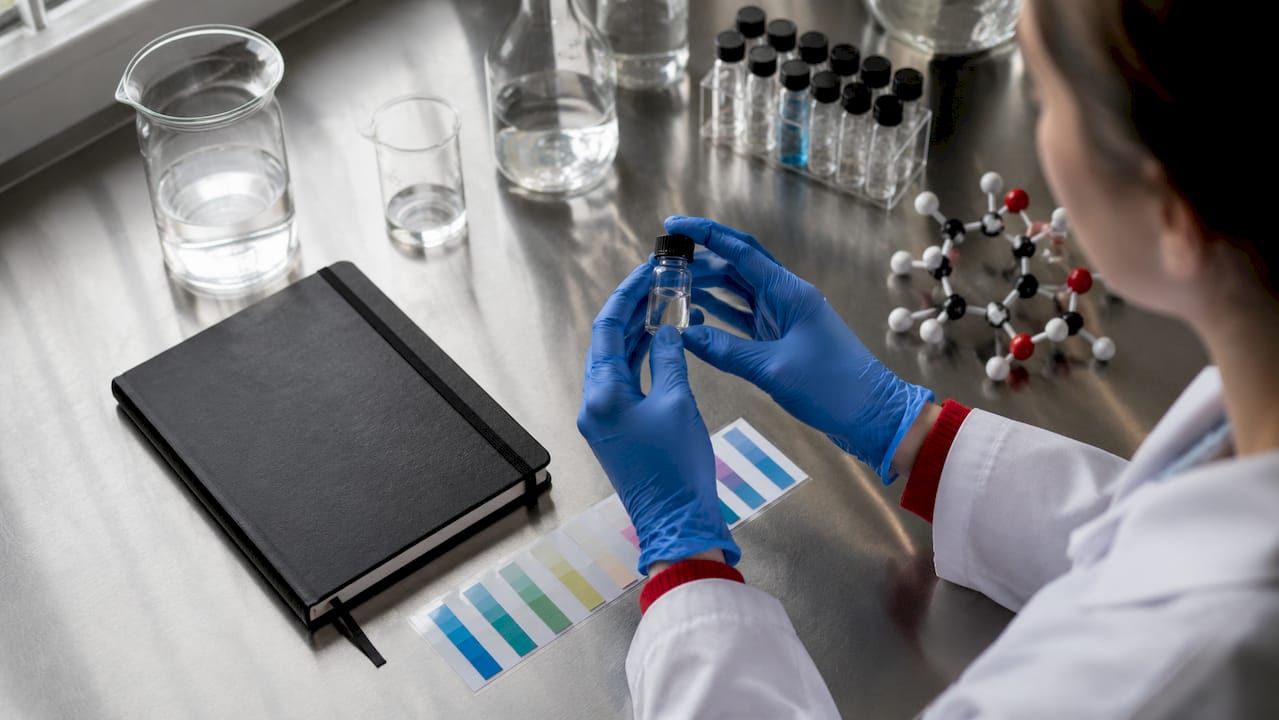
FUJIFILM Ink Solutions Group, one of the most referenced names in UV inkjet technology, documents this curing behavior as the defining advantage of UV printing over conventional methods. The speed is not just a convenience. It eliminates smudging, reduces waste, and allows printers to stack or cut finished pieces immediately after printing.
How does UV resistant ink work chemically?
UV inks are composed of five core chemical groups, each playing a specific role in the final print’s performance:
- Oligomers form the backbone of the cured ink film. They determine hardness, flexibility, and adhesion. Polyurethane acrylate (PUA) oligomers are common in flexible UV ink formulations.
- Monomers act as reactive diluents. They control viscosity during printing and influence how the cured film feels and stretches.
- Photoinitiators absorb UV light and trigger polymerization. Composite systems, such as combining photoinitiator 1173 with TPO, cure ink in as little as 3 seconds under an 80W LED lamp.
- Pigments provide color and opacity. White pigment is the most demanding to cure because titanium dioxide scatters UV light, making complete polymerization harder to achieve.
- Additives fine-tune surface tension, flow, and adhesion for specific substrates.
The balance between these five components determines everything. A formula optimized for rigid glass behaves differently from one built for flexible vinyl. Highly pigmented white UV inks require precise photoinitiator balancing to cure fully, since the pigment itself blocks the UV light needed to drive polymerization.
Pro Tip: When printing white on dark substrates, ask your supplier specifically about the photoinitiator system in their white ink. Undercured white layers are the most common source of adhesion failure in UV printing.
Composite photoinitiator systems also improve energy efficiency. Some formulations save up to 25% energy compared to standard UV curing methods. That matters for production environments running UV lamps for hours each day.
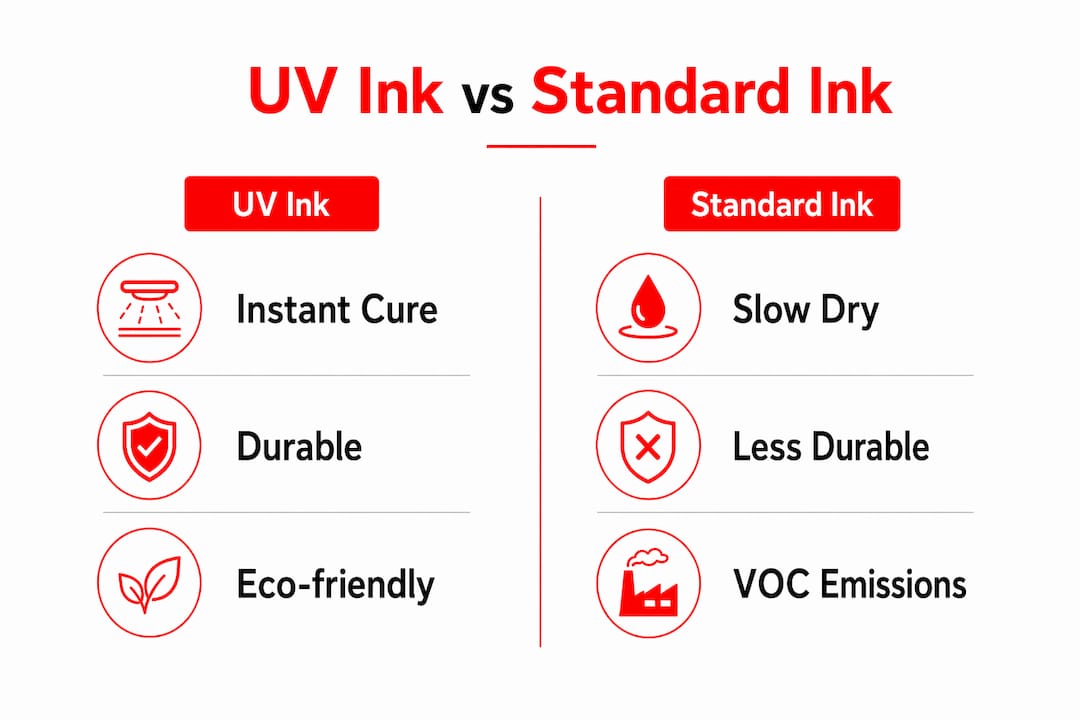
UV ink vs standard ink: key property differences
The gap between UV curable ink and conventional solvent or dye-based ink is not marginal. It covers drying speed, durability, environmental impact, and surface compatibility.
Durability and weather resistance
UV cured inks offer superior scratch resistance, chemical durability, and water resistance compared to solvent-based inks. Solvent inks dry through evaporation, leaving a film that remains somewhat porous and vulnerable to UV degradation over time. UV cured prints form a hard polymer layer that bonds tightly to the substrate, resisting outdoor exposure without requiring a protective overlaminate.
Environmental impact
UV ink formulations contain near-zero VOC emissions, approximately 0.1g/L, compared to solvent inks that release significant volatile organic compounds during drying. That difference matters for businesses operating under EPA air quality regulations or pursuing sustainable production practices. UV printing also requires minimal air handling infrastructure, reducing facility costs.
Surface versatility
UV inks print on non-porous materials including plastics, glass, metal, and ceramic. Standard dye or pigment inks need an absorbent surface to anchor properly. UV ink bonds through polymerization, not absorption, so the substrate’s porosity is irrelevant.
| Property | UV Curable Ink | Solvent Ink | Dye/Pigment Ink |
|---|---|---|---|
| Drying method | UV light polymerization | Solvent evaporation | Absorption or heat |
| Drying speed | Seconds | Minutes to hours | Minutes |
| Scratch resistance | Excellent | Moderate | Low |
| Water resistance | Excellent | Good | Poor to moderate |
| VOC emissions | Near zero | High | Low to moderate |
| Surface compatibility | Porous and non-porous | Mostly porous | Primarily porous |
| Outdoor durability | Excellent | Moderate | Poor |
What are the key benefits and uses of UV resistant ink?
The practical advantages of UV resistant ink show up across a wide range of industries and product types.
- Instant production readiness. Prints cure in seconds, so there is no waiting period before cutting, stacking, or shipping. This directly reduces production time and labor costs.
- Outdoor signage and vehicle wraps. UV cured prints are widely used for long-term outdoor exposure on banners, yard signs, and vehicle graphics because they resist fading, moisture, and temperature swings. For outdoor festival signage, UV resistant prints hold up through rain and direct sun without overlamination.
- Packaging and industrial labels. Vibrant, scratch-resistant, waterproof prints make UV ink the standard for product packaging, pharmaceutical labels, and industrial identification tags that must survive handling, chemicals, and storage.
- Custom and decorative products. Tumblers, phone cases, promotional items, and personalized gifts printed with UV ink maintain sharp detail and color vibrancy far longer than dye-sublimation or standard inkjet alternatives.
- Electronics and specialty printing. UV inks print on circuit boards, control panels, and device housings where chemical resistance and precision are non-negotiable.
For businesses, the eco-compliance benefit is significant. Near-zero VOC output means fewer regulatory hurdles and a cleaner workspace. For small operations, that translates directly to lower overhead. If you are exploring small batch printing for custom products, UV ink’s minimal waste and instant cure make it one of the most cost-efficient options available.
Pro Tip: For outdoor applications, request a lightfastness rating from your ink supplier. Look for a rating of 5 or higher on the standard scale, verified through Xenon Arc testing, which simulates years of sun exposure in a controlled environment.
How to choose the best UV resistant ink for your project
Selecting the right UV ink requires matching the formulation to your substrate, printer, and durability requirements. Here is a practical framework:
- Identify your substrate first. Rigid substrates like glass, acrylic, and aluminum work well with hard UV inks that cure to a firm, glossy finish. Flexible substrates like vinyl, fabric, or thin plastics require flexible UV inks formulated with a high ratio of PUA oligomers. Flexible UV inks withstand repeated bending and folding without cracking, with a 6:4 PUA to toughening monomer ratio common for achieving 100 or more 180-degree folds without failure.
- Confirm printer compatibility. UV inks require specialized printers with piezoelectric printheads designed to handle UV ink viscosity and chemical properties. Running UV ink through a standard inkjet printer will damage the printhead and produce unreliable results.
- Evaluate curing system requirements. LED UV lamps cure at lower temperatures and longer lamp life than mercury vapor lamps. If your printer uses LED curing, confirm the ink’s photoinitiator system is optimized for LED wavelengths, typically 365nm or 395nm.
- Test for lightfastness before committing to outdoor use. Request ink samples and run accelerated weathering tests. A lightfastness rating of 5 or higher on the Blue Wool Scale indicates the ink will resist significant fading under prolonged UV exposure.
- Factor in opacity requirements. If you need opaque white as a base layer for printing on dark or transparent materials, choose an ink specifically engineered for white opacity and confirm the photoinitiator system handles the pigment load without undercuring.
For file preparation that maximizes UV print quality, reviewing artwork file prep guidelines before sending files to production prevents the most common color and resolution issues.
Key takeaways
UV resistant ink outperforms conventional inks in durability, speed, and surface versatility because its photochemical curing process creates a hard polymer bond that resists scratching, water, and UV degradation.
| Point | Details |
|---|---|
| Instant curing mechanism | UV ink polymerizes in seconds under UV light, eliminating drying time and smudging. |
| Five-component formula | Oligomers, monomers, photoinitiators, pigments, and additives must be balanced for each substrate. |
| Superior outdoor durability | UV cured prints resist scratch, water, and UV fading without requiring overlamination. |
| Near-zero VOC output | UV inks emit approximately 0.1g/L of VOCs, supporting eco-compliance and cleaner workspaces. |
| Substrate versatility | UV ink bonds to plastics, glass, metal, and ceramic where standard inks cannot adhere reliably. |
What i’ve learned after years of working with UV ink
Most people assume UV ink is just “better ink.” The reality is more specific than that. UV ink is a system. The ink, the printer, the lamp, and the substrate all have to work together. I have seen beautiful UV prints fail within weeks because someone used a flexible ink on a rigid substrate, or ran a hard ink on a banner that needed to roll up for storage. The ink cracked at the first fold.
The other misconception I run into constantly is that UV printing is automatically waterproof. The cured film is water-resistant, not infinitely waterproof under all conditions. Adhesion to the substrate is the real variable. On a properly prepared surface with the right primer, UV prints hold up remarkably well. On a surface with contamination or the wrong surface energy, even a perfectly cured UV ink will peel.
What I find genuinely underappreciated is the eco-compliance angle. Businesses switching from solvent printing to UV often discover they no longer need expensive ventilation systems or hazardous waste disposal contracts. That operational savings is real and recurring, not a marketing claim.
The trend I am watching in 2026 is low-energy LED UV curing. Newer photoinitiator systems are pushing cure times down while reducing lamp power requirements. For small shops and custom product businesses, that means UV printing is becoming accessible at a price point that was not realistic five years ago.
— Aaron
Custom UV prints from Handmadeohiocrafts
Handmadeohiocrafts produces custom UV DTF decals and sticker transfers using UV resistant ink that delivers sharp detail, vivid color, and long-lasting adhesion on tumblers, apparel, and promotional products. Every order is designed and printed in-house at our Waverly, Ohio shop, with no minimum order requirements and nationwide shipping.
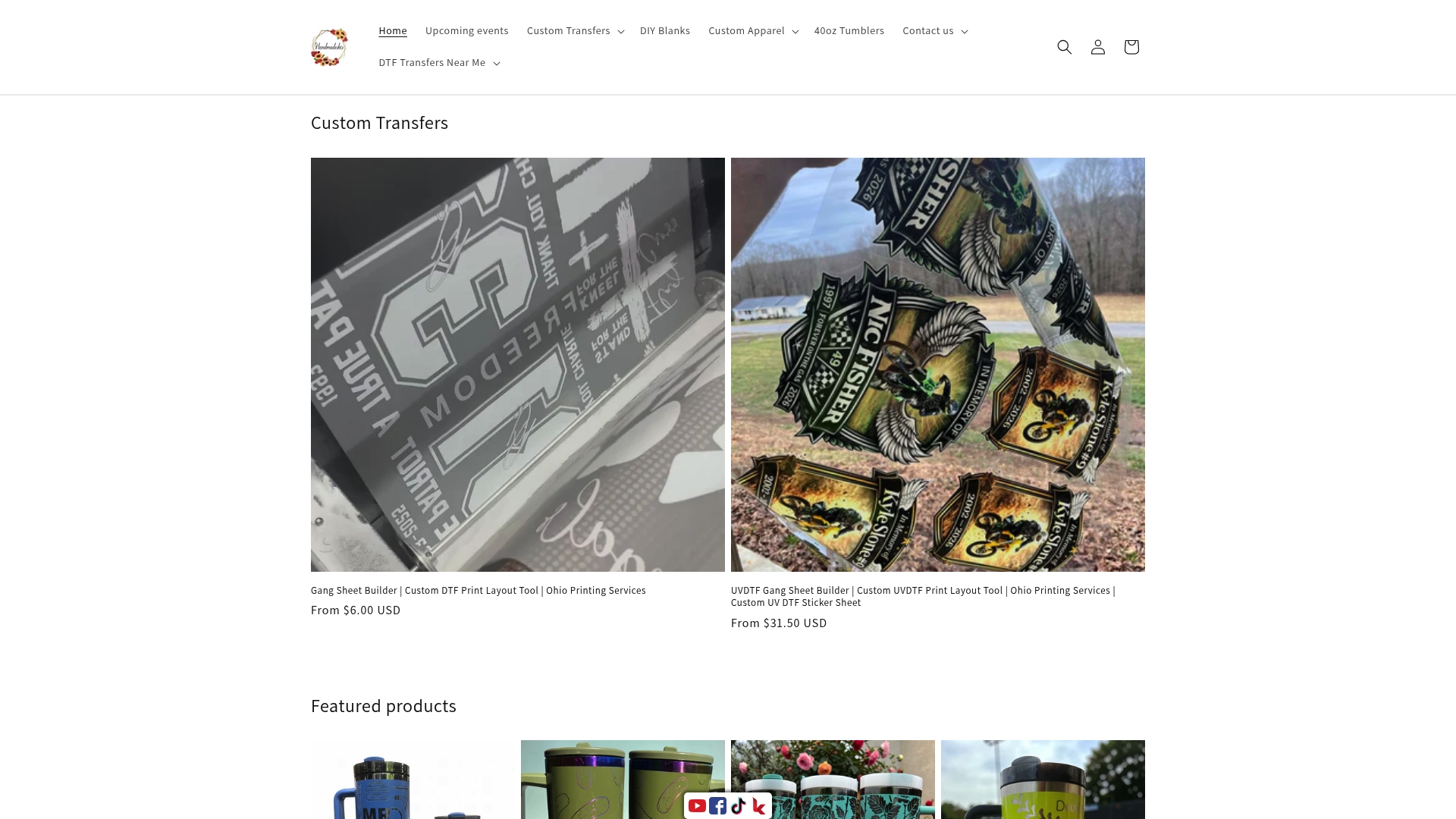
Whether you need a single custom decal or a bulk run for a business event, our UV DTF transfers are built to last. The same UV curable ink technology that makes outdoor signage weather-resistant gives your custom stickers and decals the durability to handle daily use. Browse our full catalog at Handmadeohiocrafts and bring your design to life with professional-quality UV printing.
FAQ
What is UV resistant ink in simple terms?
UV resistant ink is a printing ink that cures instantly when exposed to ultraviolet light, forming a hard, durable layer that resists scratching, water, and fading. It is used across signage, packaging, and custom product printing.
Is UV resistant ink waterproof?
UV cured ink is water-resistant, not unconditionally waterproof. The cured polymer film repels water effectively, but long-term waterproofing depends on proper surface preparation and adhesion to the specific substrate.
How long do UV resistant ink prints last outdoors?
UV cured prints rated at lightfastness 5 or higher on the Blue Wool Scale, verified through Xenon Arc testing, resist significant fading under prolonged outdoor sun exposure, often lasting several years without overlamination.
Can UV ink print on any surface?
UV ink prints on a wider range of surfaces than standard inks, including plastics, glass, metal, and ceramic. Printer compatibility and surface preparation still determine final adhesion quality.
What is the difference between flexible and hard UV ink?
Flexible UV inks use a high ratio of PUA oligomers and withstand repeated bending without cracking, making them suitable for vinyl and fabric. Hard UV inks cure to a rigid finish best suited for glass, acrylic, and metal substrates.