

Custom Logo Product Examples for Startups: 2026 Guide
Custom logo products are branded physical or digital assets that startups use to build recognition, unify teams, and create lasting impressions with customers and investors. The term “branded merchandise” covers the same concept in most professional branding circles. For startup founders, the right custom logo product examples can do more than decorate a hoodie. They signal credibility at demo days, create cohesion among early hires, and put your brand in front of new audiences every time someone wears or uses them. This guide covers the most effective custom logo product examples for startups, from wearables and print collateral to promotional items, with practical advice on choosing what fits your stage and budget.
1. What are the top wearable custom logo products for startups?
Wearable branded products are the fastest way to create visible team identity at startup events. A founder walking into an accelerator cohort or investor meeting with a clean logo hoodie signals professionalism before a single word is spoken.
Custom embroidered patches are one of the most flexible wearable options. According to Mottopatch, embroidered patches suit small batches of around 10 pieces, making them ideal for demo days, startup summits, and accelerator cohorts. You can iron or sew them onto jackets, hoodies, caps, and bags without committing to a full production run.
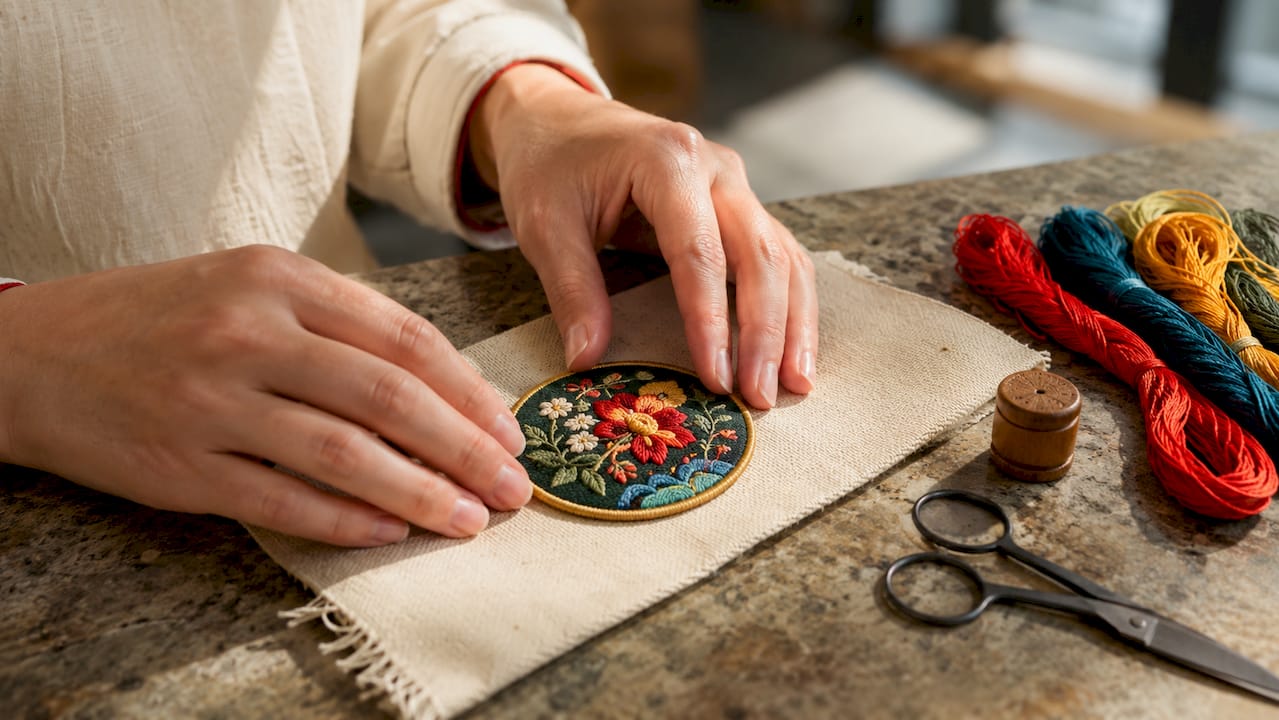
Logo T-shirts with minimal graphics work well as subtle branding tools. A clean wordmark on a quality tee reads as confident rather than promotional. Startups like Dipaliz have used this approach to build brand recognition through everyday wear rather than loud advertising.
Branded hoodies and crewnecks are the most worn items in startup culture. They travel from the office to coffee shops to conferences, giving your logo repeated exposure in varied settings.
Pro Tip: Simplify your logo before sending it to an embroidery vendor. Evoke Studio recommends avoiding heavy gradients and complex details for embroidery, since clean stitching requires bold, simple shapes. A simplified icon-only version of your logo is a best practice for any wearable product.
The main advantage of wearables is passive visibility. Every team member becomes a walking brand touchpoint. The limitation is cost per unit at very small quantities, which is why patches and transfers often make more sense than full custom garment orders for early-stage startups.
2. Which custom logo products work best for digital and print collateral?
Digital and print collateral are the foundation of startup logo design. Before you put your logo on a physical product, you need the right files. Missing or wrong file formats cause the most common and costly branding mistakes.
A complete logo file handoff must include SVG, EPS in CMYK, AI with fonts outlined, and PDF for each logo variant. Evoke Studio specifies that receiving only SVG or PNG is incomplete and can cause unknown printing errors. You also need PNG exports at multiple resolutions and documented color specs.
Here is what a complete digital brand kit should contain:
- Primary logo in SVG, EPS, AI, and PDF formats
- Alternate lockups such as horizontal, stacked, and icon-only versions
- Color variants including full color, single color, black, and white
- PNG exports at 72 dpi for web and 300 dpi for print
- Favicon set sized for browser tabs, app icons, and social media avatars
- Dark and light variants for use on different background colors
- Typography files or documented font names and weights
- Color palette specs in HEX, RGB, and CMYK
BrandForge’s AI logo generator creates 12 logo concepts from a single prompt in under a minute, delivering a full brand kit with logo variants, color palette, typography, and PDF guidelines. That speed matters when you need to ship fast without hiring an agency.
Pro Tip: Organize your files with explicit naming conventions. A folder structure using names like BrandName_Primary_CMYK.eps prevents costly production mistakes and speeds up vendor workflows when you order physical products.
BrandForge also includes favicon kits and accessibility ratings for digital platforms, which saves founders from discovering their logo is unreadable on a dark background after launch. For detailed file preparation guidance specific to apparel printing, Handmadeohiocrafts publishes a clear artwork file prep guide covering the exact formats needed for physical production.
3. How can custom logo products extend into unique promotional items?
Promotional products go beyond apparel and create brand touchpoints in daily life. The most memorable ones are useful, well-made, and carry your logo in a way that feels intentional rather than generic.
-
Laser engraved tumblers are one of the highest-retention promotional items a startup can produce. A 40oz insulated tumbler with your logo engraved into the steel travels with the recipient for years. The engraving does not fade or peel, which means your brand stays visible long after a sticker would have worn off.
-
Custom stickers and UV DTF decals are low-cost, high-distribution items. Founders hand them out at conferences, include them in shipping packages, or use them to brand laptops and water bottles. UV DTF decals in particular produce sharp, full-color results on curved or irregular surfaces.
-
Branded bags and totes give your logo visibility in public spaces. A quality canvas tote with a clean logo print works as both a team gift and a functional marketing tool at events.
-
Mascot-led product graphics add personality to merchandise. Design Week’s coverage of Kit Studio’s work for Birkenstock shows how mascot characters and location cues extend a brand beyond wordmarks into product graphics that feel personal and collectible. Startups with a strong brand character can apply the same thinking to patches, stickers, and apparel graphics.
-
Branded patches for startup events serve a specific purpose. Accelerator cohorts, startup summits, and demo days all benefit from a shared visual identity. A custom patch given to every participant creates a sense of belonging and functions as a keepsake that keeps your brand in circulation.
The key principle across all promotional products is usefulness. A branded item that gets used daily generates far more brand exposure than one that sits in a drawer.
4. How to choose the best custom logo products for your startup’s stage and budget
The right branded product depends on where your startup is in its growth. Early-stage founders need fast, low-cost options. Later-stage companies can invest in higher-quality runs with more complex customization.
| Stage | Best product approach | Tool or method | Cost level |
|---|---|---|---|
| Pre-launch | Digital brand kit only | BrandForge AI generator | Very low |
| MVP / seed | Stickers, patches, basic tees | DTF transfers, small batch | Low |
| Series A | Full apparel line, tumblers, bags | In-house print vendor | Medium |
| Growth | Custom packaging, engraved gifts | Laser engraving, full kits | Medium-high |
LOGO.com reports that over 163,000 logos were created on its platform in Q1 2026 alone. That volume reflects how many founders are choosing AI and online tools over agencies at the early stage. The tradeoff is that AI tools produce solid foundations but may need refinement before going on physical products.
Kitnex recommends that startups test logos on key surfaces including websites, social avatars, packaging, decks, and physical applications before launch. A logo that looks sharp on a screen can lose detail when embroidered at a small size or printed on a dark fabric.
Start with one or two product types and validate them before expanding. Order a small batch of stickers or patches first. Wear the hoodie yourself for a week. Get feedback from your team before committing to a larger run. This approach keeps costs low and prevents the common mistake of ordering 200 units of a product that does not work in practice.
For startups exploring custom merch ideas beyond apparel, a broader product range becomes relevant once your logo is locked and tested across surfaces.
Key takeaways
Custom logo products deliver the most value when your logo is properly prepared, tested across surfaces, and matched to products that fit your startup’s current stage.
| Point | Details |
|---|---|
| Start with a complete file kit | Deliver SVG, EPS, AI, PDF, and PNG versions before ordering any physical product. |
| Simplify logos for wearables | Remove gradients and fine details so embroidery and DTF transfers reproduce cleanly. |
| Test before full production | Apply your logo to digital and physical mockups to catch problems before committing to a large order. |
| Match products to your stage | Use stickers and patches at early stages, then expand to tumblers and full apparel as your brand matures. |
| Use AI tools to move fast | Platforms like BrandForge generate complete brand kits in minutes, giving founders a solid starting point without agency costs. |
What I’ve learned from startup branding projects
Most founders underestimate how much the physical product teaches you about your logo. A design that looks perfect in Figma often reveals its weaknesses the first time it gets embroidered on a cap or printed on a dark hoodie. Fine lines disappear. Gradients turn muddy. The icon that looked bold at 500 pixels becomes unreadable at one inch.
The fix is not a better vendor. The fix is a simpler logo. Every startup I have seen succeed with branded merchandise had one thing in common: a logo with a strong, clean icon that worked at any size. That icon becomes the patch, the favicon, the embossed detail on a tumbler, and the sticker people actually put on their laptops.
The other mistake I see constantly is skipping the file organization step. Founders generate a logo, download a PNG, and then scramble six months later when a vendor needs an EPS file they do not have. A proper file kit takes 30 minutes to organize once and saves hours of frustration every time you order something new.
My honest recommendation: use an AI tool to get your brand kit started, then spend one afternoon organizing your files correctly. Order a small batch of patches or stickers first. Wear the product. Show it to people outside your team. The feedback you get from a $50 test run is worth more than any brand strategy document.
Physical products make your brand real in a way that a website never quite does. The moment someone picks up your tumbler or puts on your hoodie, your startup stops being an idea and starts being something they can hold.
— Aaron
Custom apparel and branded products from Handmadeohiocrafts
Handmadeohiocrafts produces custom apparel, laser engraved tumblers, DTF transfers, UV DTF decals, and promotional products from its Waverly, Ohio facility. Everything is designed and produced in-house, which means faster turnaround times and direct quality control on every order.
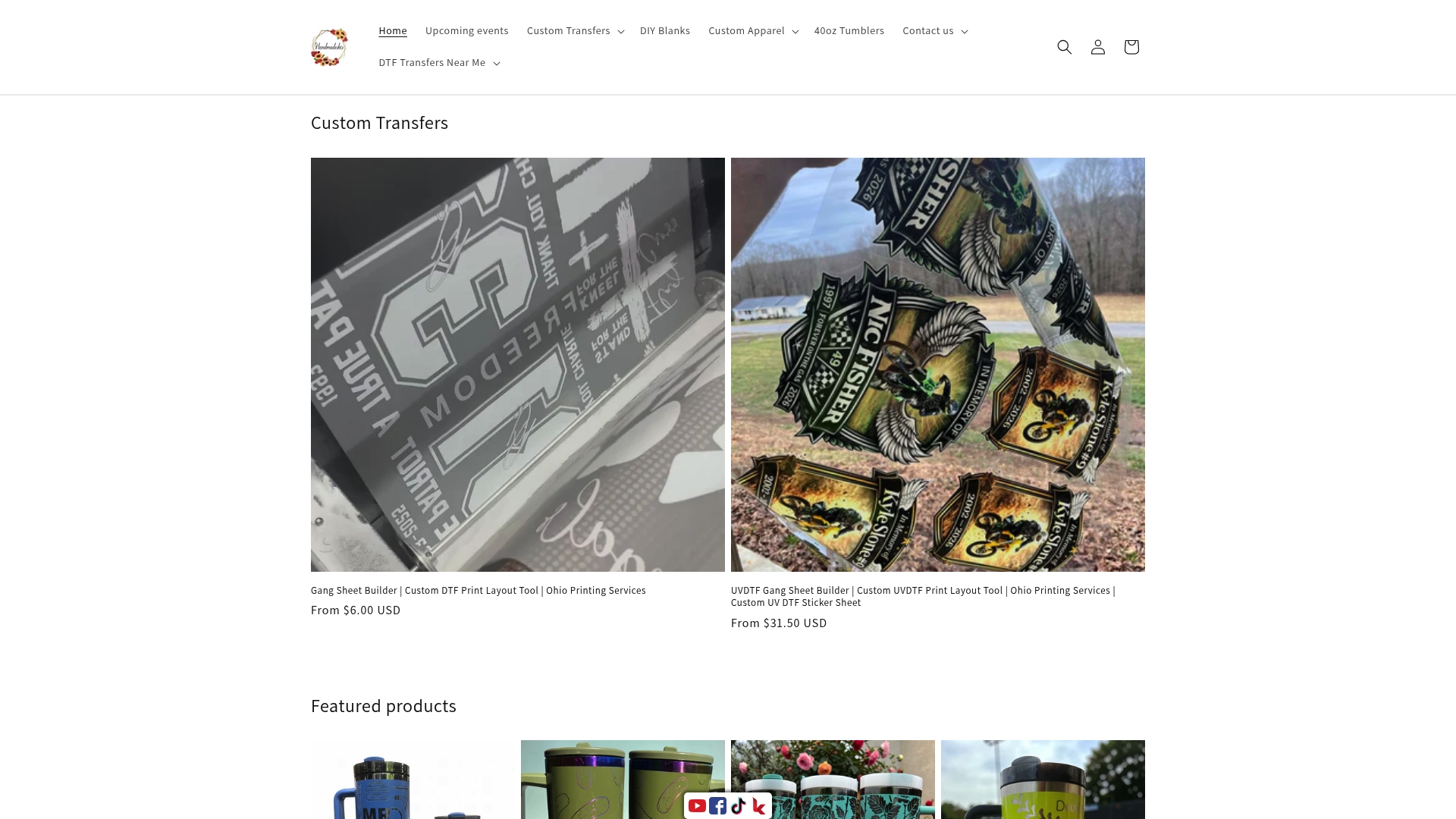
There are no minimum order requirements, so you can start with a small batch of branded hoodies, hats, or laser engraved tumblers to test your logo on real products before scaling up. Handmadeohiocrafts ships nationwide, making it a practical option for startup teams across the country. Browse the full custom apparel collection to find the right branded products for your next team event, investor meeting, or product launch.
FAQ
What are the most popular custom logo products for startups?
Custom embroidered patches, branded hoodies, logo tees, stickers, and laser engraved tumblers are the most widely used branded products among startups. These items balance low cost, high visibility, and practical daily use.
How do I prepare my logo file for custom product printing?
A complete logo file package includes SVG, EPS in CMYK, AI with fonts outlined, PDF, and PNG exports at both 72 dpi and 300 dpi. Submitting only a PNG or JPG file is the most common cause of production errors.
Can I order custom logo products in small quantities?
Yes. Products like embroidered patches are available in batches as small as 10 pieces, and many vendors including Handmadeohiocrafts have no minimum order requirements for custom apparel and promotional items.
Should I use an AI logo generator or hire a designer?
AI tools like BrandForge generate a full brand kit in under five minutes and work well for early-stage startups that need to move fast. Hiring a designer makes sense once your brand identity is validated and you need custom refinements for specific product applications.
How do I know if my logo will work on physical products?
Test your logo on digital mockups of the specific products you plan to order before committing to a production run. Kitnex recommends checking your logo across websites, social avatars, packaging, and physical applications to confirm it reads clearly at every size and on every surface.