

Custom Products for Band Merchandise: A Musician's Guide
Custom products for band merchandise are personalized items, from printed t-shirts to engraved accessories, that help bands build a recognizable brand and deepen fan loyalty. Merchandise is one of the most direct revenue streams available to independent musicians. A well-designed merch line turns casual listeners into walking billboards and gives fans a tangible way to support the music they love. This guide covers product selection, design, production methods, and sales strategies so you can build a merch program that actually works.
What types of custom band merchandise are most effective for engaging fans?
The best custom merchandise for bands falls into three categories: wearables, accessories, and promotional items. Each serves a different purpose, and the strongest merch tables include all three.
Wearables: the foundation of any merch line
Wearables are the highest-visibility category. Popular band merch items include t-shirts, hoodies, hats, and socks, reflecting a broad range of fan preferences. Fans wear these items in public, which extends your band’s reach far beyond the venue. A well-printed hoodie with a bold graphic becomes a conversation starter every time someone wears it to a coffee shop or a college campus.
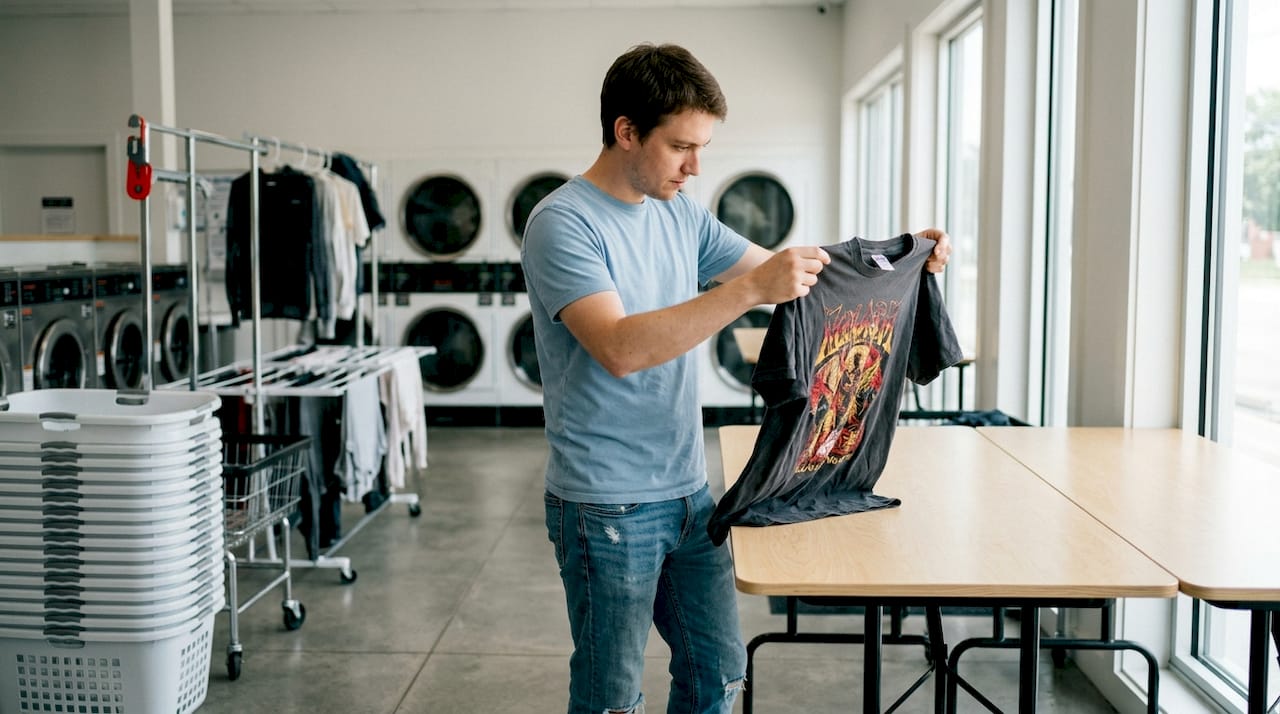
Fabric quality matters as much as the print. High stitch density and quality fabric such as 100% combed ringspun cotton enhance printed garment durability and comfort. A shirt that fades or shrinks after two washes reflects poorly on your band. Fans associate product quality with the band’s professionalism.
Accessories and promotional items
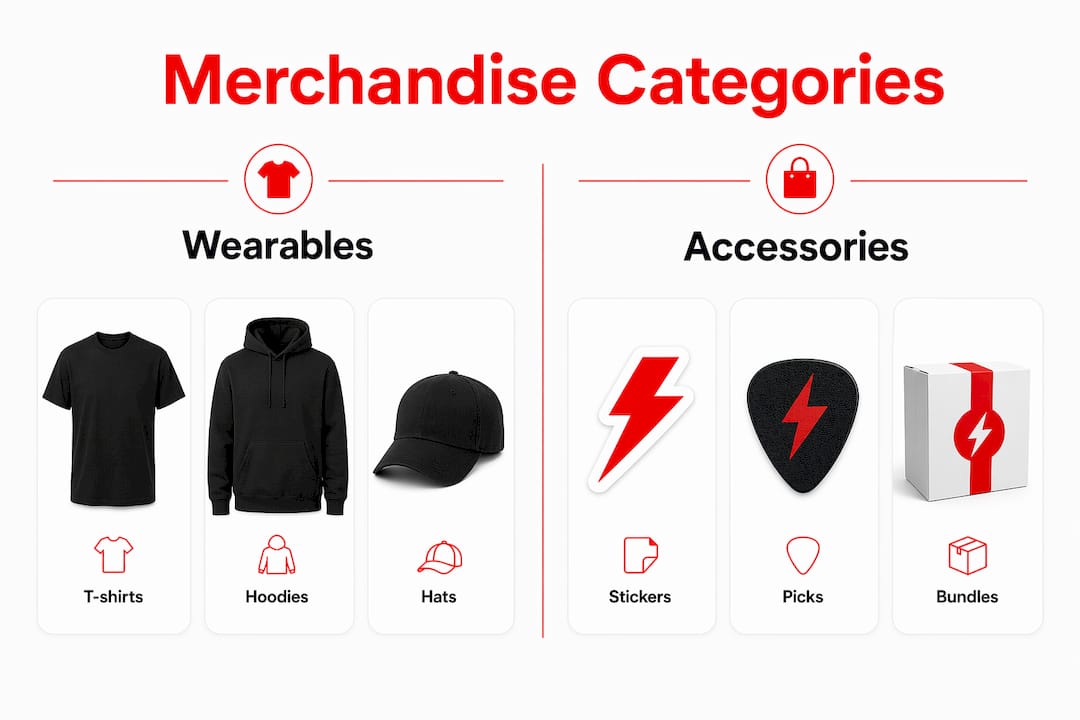
Accessories like custom guitar straps, hats, and phone cases give fans something functional and unique. Personalized engraved leather guitar straps vary in engraving visibility depending on leather color, with lighter tones like whiskey offering more contrast than darker shades. That detail matters if you want the band name to read clearly from a distance on stage.
Promotional items like stickers, mugs, and posters fill the lower price point on your merch table. They are affordable for fans and easy to produce in bulk. Stickers in particular travel everywhere: laptops, water bottles, guitar cases, and car bumpers all become free advertising.
- T-shirts and hoodies: High visibility, strong profit margins, and broad fan appeal across all age groups.
- Hats: Low production cost, easy to ship, and popular at outdoor shows.
- Stickers: The lowest price point on any merch table, ideal for younger fans or first-time buyers.
- Mugs and tumblers: Great for fans who want something functional and display-worthy at home.
- Engraved accessories: Guitar straps, picks, and keychains add a premium feel to your merch lineup.
Pro Tip: Offer a bundle deal at shows, such as a t-shirt plus a sticker pack at a slight discount. Bundles increase average transaction value without requiring more inventory variety.
What are the essential steps to design custom band merchandise?
Good merch design starts with your band’s visual identity, not with what looks cool on a generic template. Your logo, color palette, and overall aesthetic should drive every design decision.
-
Define your visual identity first. Identify the two or three colors most associated with your band. Pull from album artwork, stage lighting, or your social media aesthetic. Consistency across all merch items creates a cohesive look that fans recognize instantly.
-
Choose artwork that works at multiple sizes. A design that looks great on a laptop screen may fall apart when printed on a 4XL hoodie or shrunk down to a 2-inch sticker. Test your artwork at small, medium, and large scales before committing to a print run.
-
Select print placement strategically. Front chest, back full-print, and sleeve prints each communicate a different energy. Front chest prints are classic and readable. Back full-prints are bold and work well for tour dates or album art. Sleeve prints feel current and are popular with younger audiences.
-
Match the print method to the product. Screen printing works well for large runs with simple designs. Direct-to-film (DTF) transfers handle complex, full-color artwork on smaller runs without sacrificing detail. Embroidery adds a premium texture to hats and hoodies. Consulting with merchandising experts helps bands select the right ink type and print placement to maintain brand integrity.
-
Prioritize durability in your material choices. A print that cracks after five washes destroys the fan experience. Ask your print partner about ink cure temperatures and washing instructions. UV-protective laminates on stickers prevent fading from sunlight and daily friction.
Pro Tip: Before finalizing any design, print a single sample and wash it three times. If the print holds, you have a production-ready design. If it fades or cracks, adjust the ink type or fabric weight before ordering in bulk.
How do quantity, ordering methods, and production options affect cost?
Production decisions directly control your profit margin and your ability to deliver merch on time. Understanding the tradeoffs between methods and quantities is non-negotiable for any band manager.
Bulk ordering and per-unit cost
Ordering larger volumes reduces per-unit costs significantly. Bulk ordering can cut per-unit costs by up to 75% when scaling from 100 to 5,000 units. For example, 100 sticker units may cost around $73, while 5,000 units drop to roughly $723, or about $0.14 per unit. That math changes your entire pricing strategy at the merch table.
Production method comparison
| Method | Best for | Run size | Detail level |
|---|---|---|---|
| Screen printing | Simple designs, large runs | 50+ units | Low to medium |
| DTF transfers | Full-color, complex art | 1–500 units | High |
| Embroidery | Hats, polos, premium apparel | Any size | Medium |
| Print-on-demand | No inventory, online sales | 1 unit | High |
Print-on-demand services allow bands to sell merch with no upfront investment, handling printing and shipping directly to fans. This eliminates inventory risk entirely. The tradeoff is a lower profit margin per item compared to bulk production.
- Fast turnaround printing benefits bands with tight tour schedules. Reliable print partners can meet tight deadlines without sacrificing output quality, which directly improves profit opportunities and fan satisfaction at events.
- Dropshipping works well for online stores but adds fulfillment time. Factor in 5–10 business days for most orders when planning a merch launch around an album release.
- In-house production providers like Handmadeohiocrafts offer faster turnaround because design and printing happen under one roof, reducing back-and-forth delays.
How to effectively sell and distribute your custom band merchandise?
Selling merch well requires a plan for both live shows and online channels. Most bands leave money on the table by treating the merch table as an afterthought.
At live shows, placement and staffing matter. Position your merch table near the venue entrance or exit, not tucked in a corner. Staff it with someone who knows the band and can answer questions. Announce the merch table from the stage at least twice during the set. Fans who are emotionally engaged right after a great song are far more likely to buy.
Online, an integrated store connected to your social media profiles removes friction from the buying process. Platforms like Instagram and Facebook allow direct product tagging in posts and stories. A fan who sees the band’s hoodie in a post should be able to purchase it in three taps or fewer.
- Set up a dedicated online store with clear product photos, size guides, and shipping timelines.
- Use social media giveaways to generate buzz around new merch drops. Ask fans to tag a friend for a chance to win a free item. This expands your reach without paid advertising.
- Bundle merch with digital products such as exclusive downloads or early access to new music. Fans perceive higher value, and you move more physical inventory.
- Track inventory carefully. Running out of size medium t-shirts mid-tour is a missed revenue opportunity. Use a simple spreadsheet or a point-of-sale app to monitor stock levels in real time.
Understanding band merch printing basics helps you make smarter decisions about which products to reorder and when.
What common challenges arise in creating custom band merchandise?
Most merch problems are predictable and preventable. The bands that struggle most are the ones who rush the process.
“The biggest mistake bands make is ordering merch without a sample. One bad print run can cost hundreds of dollars and leave you with boxes of unsellable inventory. Always request a physical proof before committing to a full order.”
Poor print durability is the most common complaint from fans. Durable vinyl with UV-protective laminates on stickers ensures resistance to scratches, water, and sunlight, which is critical for fans who put them on instruments and gear. The same principle applies to apparel: the print method and fabric must be compatible for the design to survive regular washing.
Branding inconsistency across merch items confuses fans and weakens your visual identity. Coordinated garment selections, ink types, and print placements across a merch package ensure consistent brand representation. Ordering a hoodie from one supplier and a hat from another often results in slightly different logo colors, which looks unprofessional side by side.
Overstock is a real financial risk, especially for newer bands. Start with smaller quantities on new designs and reorder what sells. A custom apparel ordering checklist helps you think through quantities, sizes, and product mix before placing an order.
Pro Tip: Retire designs that have not sold in six months. Holding dead inventory ties up cash and clutters your merch table. Replace slow sellers with limited-edition items tied to a specific tour or album.
Key Takeaways
Custom band merchandise succeeds when product selection, design quality, and production planning work together to create a consistent brand experience that fans want to buy and wear.
| Point | Details |
|---|---|
| Start with visual identity | Use your band’s existing colors, logo, and artwork to drive every design decision. |
| Match method to run size | DTF transfers suit small, complex runs; screen printing cuts costs on large orders. |
| Bulk ordering saves money | Scaling from 100 to 5,000 units can reduce per-unit cost by up to 75%. |
| Sell at shows and online | Staff your merch table, announce it from stage, and connect your online store to social media. |
| Request samples before bulk orders | A physical proof prevents costly print errors and protects your brand reputation. |
Why cohesive merch matters more than most bands realize
I have seen bands with genuinely great music sell almost nothing at the merch table, and I have seen mid-tier acts move hundreds of units per show. The difference is almost never the music. It is the merch.
The bands that sell well treat their merchandise like a product line, not an afterthought. They think about how a t-shirt, a hat, and a sticker look together on a table. They pick one strong design per tour cycle instead of printing six mediocre ones. They invest in fabric quality because they know a fan who gets a great shirt tells three friends about it.
What I find most interesting is how merch functions as a feedback loop. The items that sell fastest tell you what your audience actually connects with visually. A band that sells out of a specific graphic tee has real data about what resonates. That information should feed back into album art, social media, and stage design.
My honest advice: do not try to cover every product category in your first merch run. Pick two or three items, execute them at the highest quality you can afford, and build from there. Fans reward specificity and quality far more than variety.
— Aaron
Custom apparel for your band, made in-house at Handmadeohiocrafts
Handmadeohiocrafts produces custom band apparel and promotional products entirely in-house from Waverly, Ohio, which means faster turnaround and direct quality control on every order.
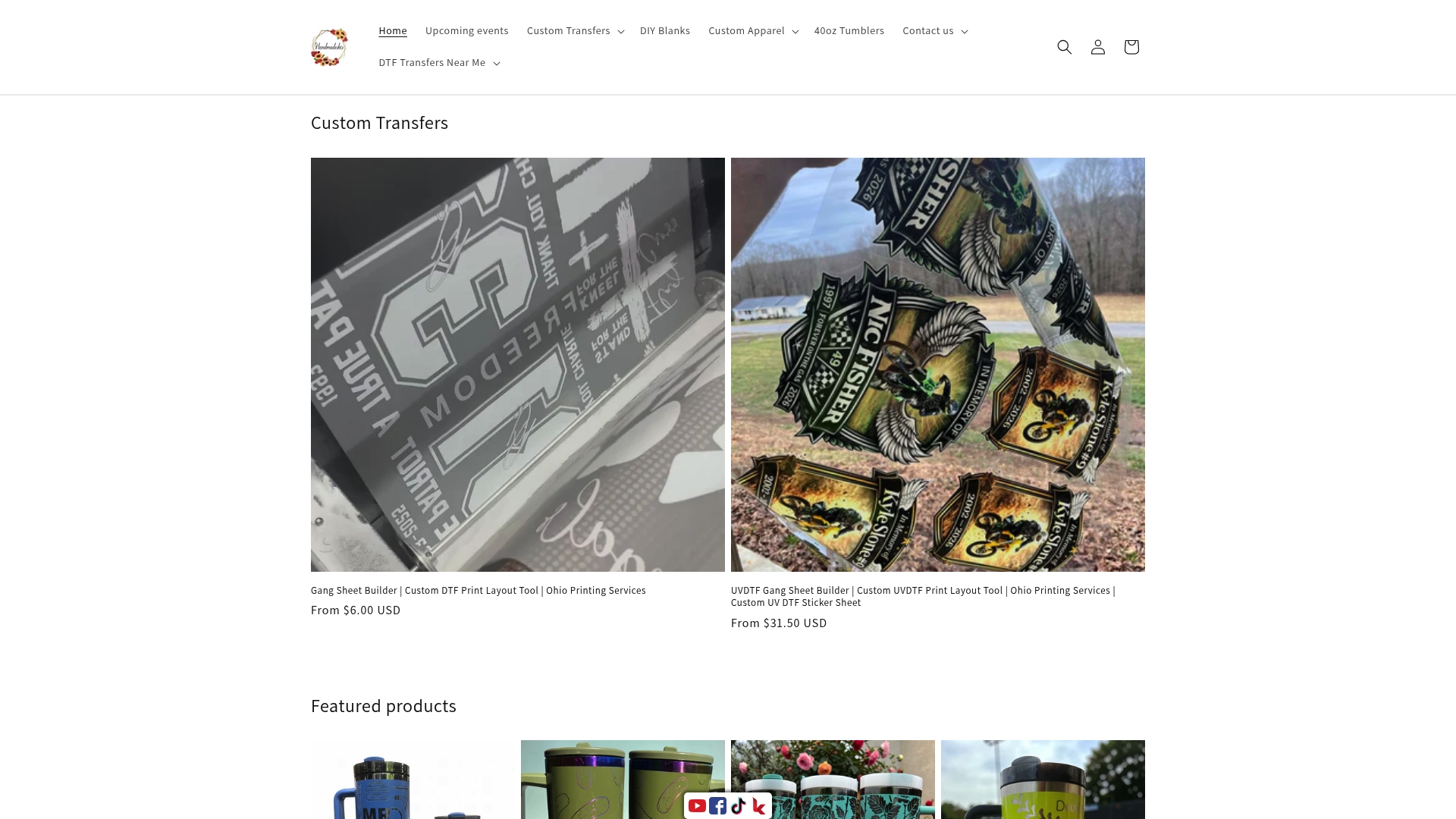
The custom apparel collection includes t-shirts, hoodies, hats, and crewnecks with options for DTF printing, screen printing, and embroidery. There are no minimum order requirements, so you can start with a small test run and scale up as demand grows. Nationwide shipping means your merch reaches fans and bandmates regardless of where you are based. If you need DTF transfers for complex full-color artwork, Handmadeohiocrafts handles those in-house as well, with artwork support included.
FAQ
What are the best custom products for band merchandise?
T-shirts, hoodies, hats, stickers, and engraved accessories are the most effective band merch items. Wearables offer the highest visibility, while stickers and promotional items serve fans at lower price points.
How do I create band merchandise with no upfront cost?
Print-on-demand services handle printing and shipping directly to fans with no inventory required. The tradeoff is a lower profit margin per item compared to bulk production runs.
What print method works best for custom band apparel?
DTF transfers work best for small runs with complex, full-color artwork. Screen printing is more cost-effective for large runs with simpler designs. Embroidery adds a premium finish to hats and structured garments.
How many units should a band order for a first merch run?
Starting with smaller quantities on new designs reduces financial risk. Test two or three core items, track what sells, and reorder based on actual demand rather than guessing upfront.
How do I keep my band’s merch looking consistent across products?
Use the same logo file, color codes, and artwork across all items. Ordering from a single supplier with in-house production, like Handmadeohiocrafts, reduces color variation between products and keeps your brand looking unified.