

UV Decals for Product Branding: A Small Business Guide
UV decals for product branding are high-quality, pressure-sensitive transfers that bond directly to product surfaces and deliver a professional, finished look without expensive equipment. The industry standard term for the most advanced version of this technology is UV DTF (UV Direct to Film) transfer, which uses ultraviolet-cured ink to produce a glossy, raised 3D surface with full-color clarity and no visible background. For small business owners who want their products to stand out on shelves, at markets, or in subscription boxes, UV DTF decals offer a level of finish that vinyl labels simply cannot match. They are waterproof, scratch-proof, and fade-resistant, making them one of the most durable branding tools available at any production scale.
What are UV decals for product branding?
UV decals are transfers printed with ultraviolet-cured ink onto a film carrier, then applied by hand to a clean product surface. They differ from standard vinyl labels in one critical way: spot UV coating and lamination create a raised, tactile effect that makes logos and design elements pop visually and physically. That texture signals quality to customers before they even read your brand name.
The distinction between a basic vinyl sticker and a UV DTF transfer matters for branding decisions. Vinyl labels sit flat and can look printed-on. UV transfers carry a high-relief embossed texture and glossy varnish that gives your logo an industrial-grade, luxury feel. Customers notice the difference, and that perception directly affects how they value your product.
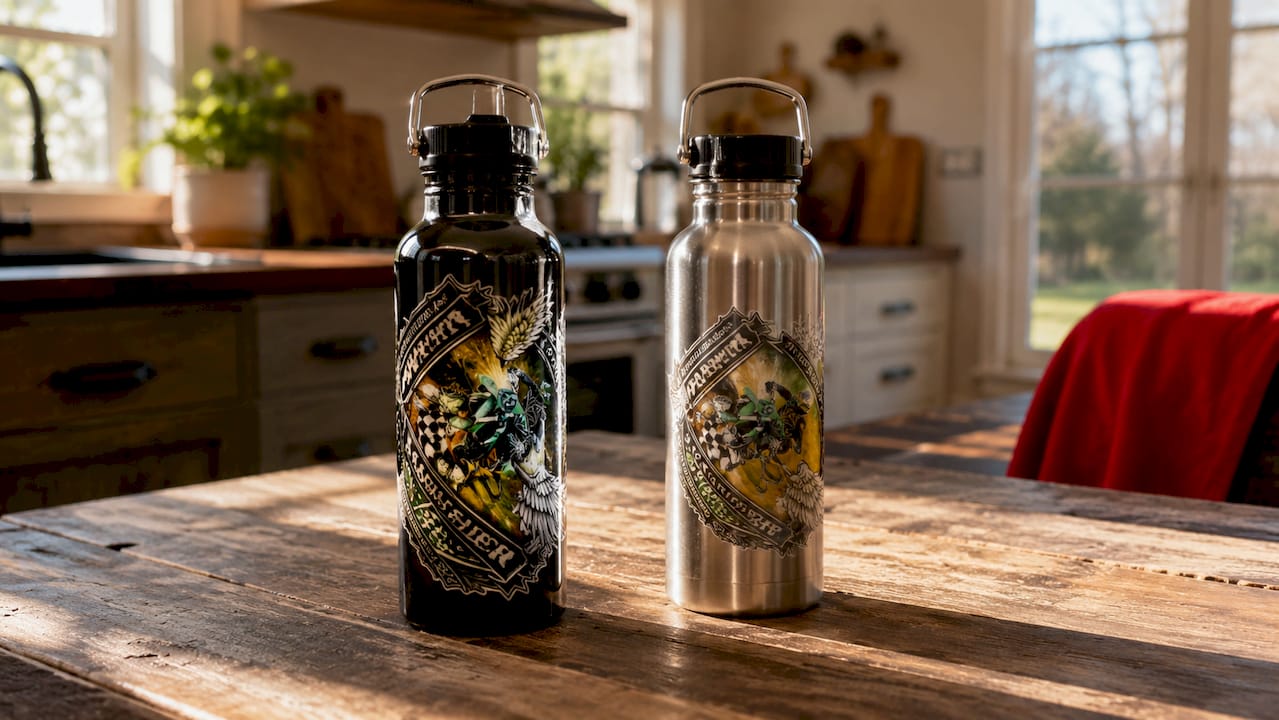
UV DTF transfers also work on surfaces that standard labels struggle with. Glass, metal, ceramic, hard plastic, and powder-coated finishes all accept UV decals well. That range makes them useful across product categories, from handmade candles in glass jars to custom tumblers and branded merchandise. If you want to understand the full technical picture before ordering, the UV DTF decals explained guide from Handmadeohiocrafts covers the technology in plain language.
What tools and surfaces do you need before applying UV decals?
Successful UV decal application starts with the right setup. You do not need a heat press or industrial equipment. Most UV DTF transfers are designed for no-heatpress application, which means a small business owner can apply them at a workbench with basic supplies.
Required tools
- UV DTF decals sized and shaped for your product
- Isopropyl alcohol (70% or higher) and lint-free cloths for surface cleaning
- A squeegee or credit card for pressing out air
- Tweezers for precise placement on small items
- A flat, well-lit work surface
Surface compatibility and prep methods
| Surface | Prep method | Adhesion tip |
|---|---|---|
| Glass (tumblers, jars) | Wipe with isopropyl alcohol, let dry fully | Apply firm, even pressure from center outward |
| Metal (tins, flasks) | Degrease with alcohol, avoid touching after cleaning | Press edges down firmly to prevent lifting |
| Hard plastic | Clean with alcohol, avoid textured finishes | Use a squeegee for full contact |
| Ceramic (mugs, tiles) | Wipe clean, allow to reach room temperature | Avoid applying in cold or humid conditions |
| Powder-coated items | Light alcohol wipe, do not scrub coating | Press slowly to conform to any texture |
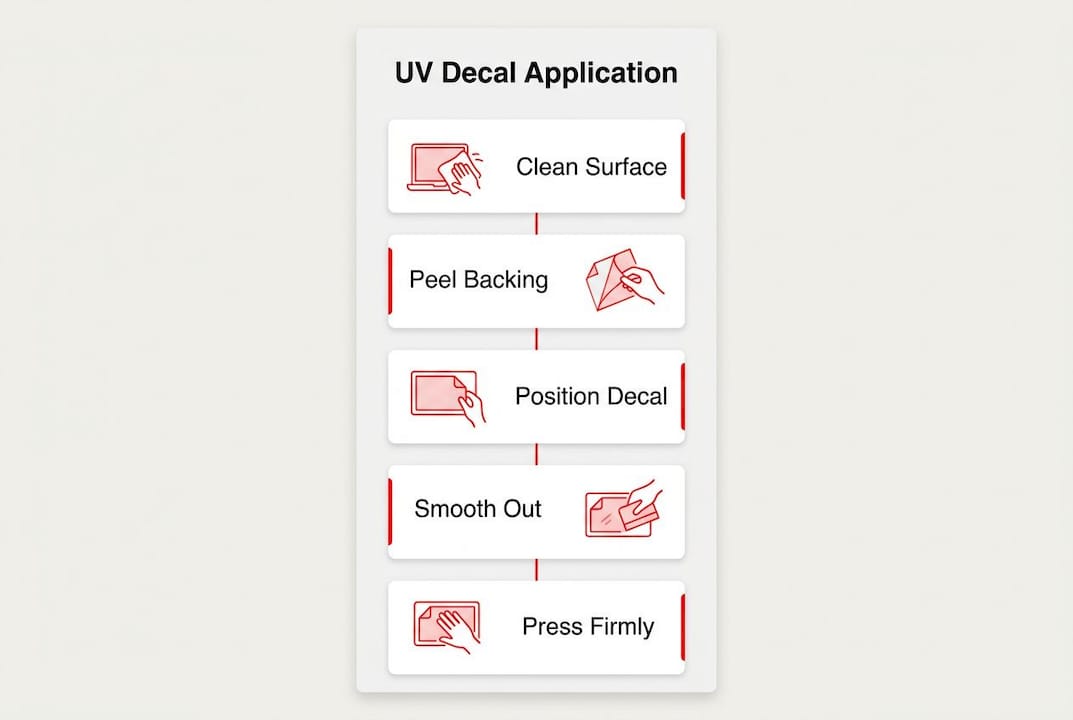
Proper surface cleaning before application is the single most important preparation step. Oils from handling, dust, and moisture all reduce adhesion and shorten the life of your decal. Skipping this step is the most common reason decals peel early.
Adhesive type also matters. Digital die-cutting and tailored adhesive options, such as removable versus permanent, affect both the lifespan of the decal and its appearance on different surfaces. Permanent adhesive works best for product labels you want to stay put through shipping and handling. Removable adhesive suits promotional items or packaging where customers may want to peel the decal off cleanly.
How do you apply UV decals step by step?
UV DTF transfers are straightforward to apply once you know the sequence. Follow these steps for a clean, professional result every time.
-
Clean the surface. Wipe the product with isopropyl alcohol using a lint-free cloth. Let it dry completely before touching the area where the decal will go.
-
Measure and mark placement. Use a ruler or tape to mark the center point or corner guides for your decal. Consistent placement across a product run looks professional and intentional.
-
Peel the carrier film. UV DTF transfers come on a clear carrier sheet. Peel the carrier back slowly at a low angle, about 30 degrees, to keep the decal flat and avoid stretching.
-
Position the decal. Place the decal face-down onto the surface. Do not press yet. Adjust position while the decal is still lightly resting on the surface.
-
Apply firm, even pressure. Use a squeegee or the edge of a credit card to press from the center outward. Work in overlapping strokes to push out any air pockets.
-
Remove the transfer film. Peel the top film back slowly at a low angle. If any part of the decal lifts with the film, press it back down and wait 30 seconds before trying again.
-
Final press. Run your fingertip or squeegee over the entire decal one more time to seal the edges. Pay extra attention to corners and curves.
-
Allow to cure. Let the product sit undisturbed for at least one hour before handling. For items that will be washed or submerged, wait 24 hours before the first wash.
Pro Tip: For curved or cylindrical products like tumblers and bottles, UV DTF decals conform to curved surfaces without wrinkling when you apply pressure gradually from the center of the decal outward toward both edges. Work slowly on curves. Rushing causes air pockets that are hard to remove after the adhesive sets.
Air bubbles are the most common mistake. If a small bubble appears, use a pin to pierce it at an angle, then press the air out with your fingertip. Large bubbles usually mean the surface was not clean or the decal was pressed too quickly.
How do you maintain UV decals and fix common problems?
UV DTF decals are built to last, but they perform best with basic care. Waterproof, fade-resistant, and scratch-proof construction means they hold up through daily use, but a few habits extend their life significantly.
Do’s and don’ts for decal care
Do:
- Hand wash branded items when possible, using mild soap and cool water
- Store products away from prolonged direct sunlight if they will sit in inventory for months
- Use permanent adhesive decals on items that will be shipped or handled frequently
- Apply a clear topcoat over decals on items that will see heavy abrasion, like tool handles or outdoor gear
Don’t:
- Run decal-branded items through a dishwasher on high heat cycles repeatedly
- Use abrasive scrubbers directly on the decal surface
- Apply decals to surfaces that are damp, oily, or below room temperature
- Stretch or flex the product surface after application, as this can crack the decal
Pro Tip: If a decal edge begins to lift, press it back down with a clean fingertip and apply firm pressure for 30 seconds. Catching edge lift early prevents full peeling. A small drop of clear craft adhesive under the lifted edge also works as a quick fix on non-food-contact surfaces.
Fading is rare with UV DTF transfers because the UV-cured ink is shielded against ultraviolet light. If fading appears on a product that sits in a sunny window display, move it or add a UV-protective film over the display area. Peeling almost always traces back to surface preparation, not decal quality.
Creative ways to use UV decals in your branding strategy
UV decal uses in business branding go well beyond a simple logo on a product. The no-background finish creates a “no-label” look that mimics direct printing, which is a detail that high-end brands pay a premium to achieve through screen printing or pad printing. Small businesses can get the same result at a fraction of the cost.
Candle makers use UV transfers on glass jars to create a clean, boutique look that photographs well for social media. Food and beverage brands apply them to bottles and tins for a premium shelf presence. Apparel brands use them on packaging inserts, hang tags, and branded tissue paper to create an unboxing experience that customers share online. Sports teams and schools use them on water bottles, helmets, and equipment bags for consistent visual identity across gear. The custom apparel branding strategies that work for clothing translate directly to product branding with UV decals.
Limited edition runs are another strong use case. A seasonal colorway or event-specific design applied as a UV decal lets you update your product’s look without changing the product itself. You print a new decal, apply it to existing inventory, and your product feels fresh. That flexibility is something traditional label printing cannot offer at small quantities.
Customization options include shape, finish (matte or gloss), and interactive effects like color-shifting or metallic accents. These details make your brand logo decals feel intentional and premium rather than generic.
Key Takeaways
UV DTF decals are the most cost-effective way for small businesses to achieve a premium, durable product finish without industrial printing equipment.
| Point | Details |
|---|---|
| UV DTF vs. vinyl labels | UV transfers produce a raised, glossy finish that vinyl labels cannot replicate at any price point. |
| Surface prep is non-negotiable | Clean every surface with isopropyl alcohol before application to prevent peeling and extend decal life. |
| No heat press required | Most UV DTF transfers apply by hand, making them accessible for home studios and small workshops. |
| Curved surfaces work well | UV decals conform to tumblers, bottles, and jars without wrinkling when pressure is applied from center outward. |
| Maintenance extends lifespan | Hand washing and avoiding abrasive scrubbers keep UV decals vibrant through repeated use. |
What I’ve learned from watching small businesses get UV decals wrong
Most small business owners I talk to make the same mistake: they treat UV decals as an afterthought. They finalize their product, then scramble to find a label that fits. The brands that get the most out of UV printing for branding do the opposite. They design the decal at the same time they design the product, treating the label as part of the product’s form rather than a tag stuck on at the end.
The second thing I see consistently is underestimating surface prep. Business owners apply decals to products straight out of a box, not realizing that manufacturing oils and dust are invisible to the eye but deadly to adhesion. A 30-second wipe with isopropyl alcohol is the difference between a decal that lasts two years and one that peels in two weeks.
The third overlooked factor is adhesive selection. Permanent adhesive is not always better. If you sell a product where customers might want to remove or replace the label, a removable adhesive gives them that option without leaving residue. That small detail affects customer satisfaction in ways that show up in reviews. Experiment with both types before committing to a full production run. The gang sheet builder at Handmadeohiocrafts lets you mix decal sizes and designs on one sheet, which makes testing multiple options affordable.
— Aaron
Custom UV DTF decals from Handmadeohiocrafts
Handmadeohiocrafts produces UV DTF decals in-house at their Waverly, Ohio facility, with no minimum order requirements and nationwide shipping. Every decal ships with the full-color clarity, waterproof finish, and raised texture that product branding demands.
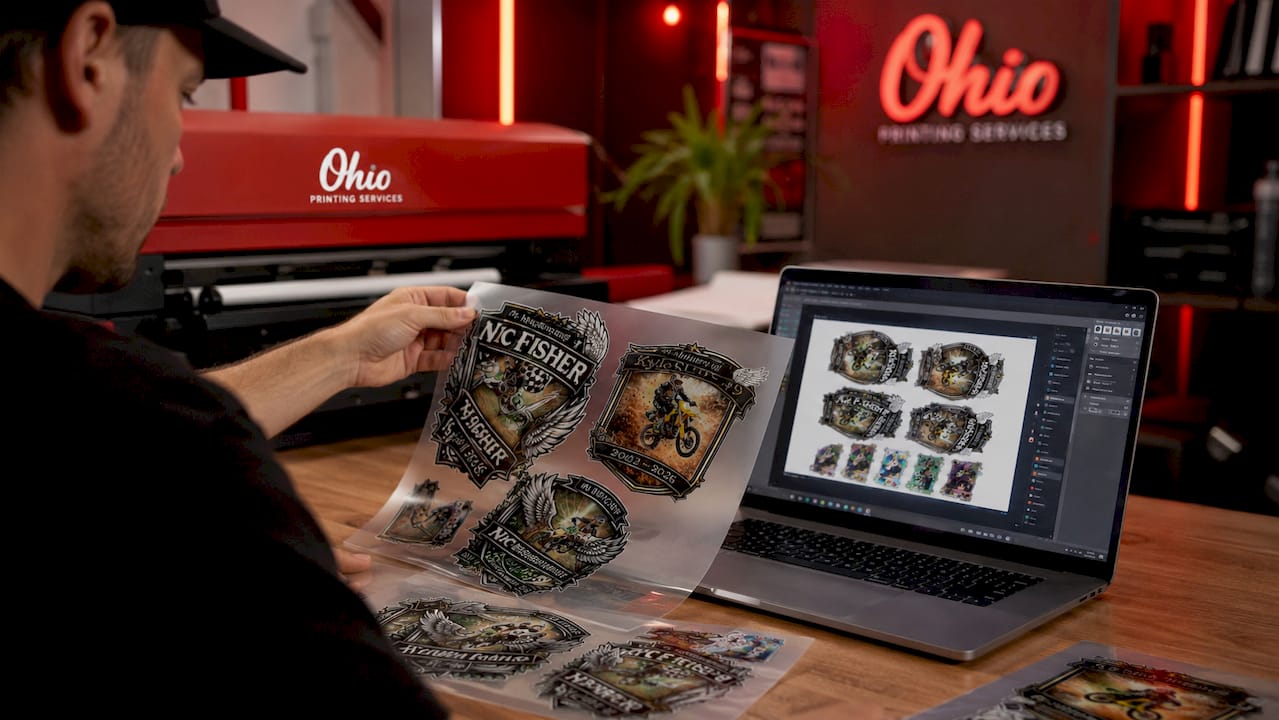
The UV DTF gang sheet builder lets you arrange multiple designs, sizes, and shapes on a single print sheet, so you can test different logo decals, seasonal designs, or product variations in one order. That flexibility is built for small business owners who need professional results without committing to large print runs. Upload your artwork, set your layout, and get production-quality decals shipped directly to your door.
FAQ
What is a UV DTF decal?
A UV DTF decal is a transfer printed with ultraviolet-cured ink that bonds to hard surfaces like glass, metal, and ceramic. It produces a raised, glossy finish with no visible background, mimicking the look of direct printing.
Do UV decals require a heat press to apply?
No. Most UV DTF transfers apply with hand pressure and a squeegee, making them accessible for small businesses without specialized equipment.
How long do UV decals last on products?
UV DTF decals are waterproof, scratch-proof, and fade-resistant, and they hold up through regular use and hand washing. Lifespan depends on surface prep and care, but properly applied decals on clean surfaces last well over a year under normal conditions.
What surfaces work best for UV decals?
Glass, metal, hard plastic, and ceramic are the best surfaces for UV decals. Textured, flexible, or porous surfaces reduce adhesion and are not recommended.
Can I use UV decals for limited edition product runs?
Yes. UV DTF decals are ideal for small-batch or limited edition runs because they require no plate setup or minimum quantities, letting you update your product’s look without changing the product itself.