

What Is Vinyl Printing? A Guide for Custom Products
Vinyl printing is the process of applying detailed, durable designs onto vinyl substrates using specialized printers and inks to create customizable, long-lasting products. The technique covers everything from vehicle wraps and storefront signage to custom apparel and personalized gifts. Understanding how vinyl printing works, which materials to use, and where it excels gives you a real advantage whether you are a first-time crafter or a business owner ordering branded merchandise.
What is vinyl printing and how does the process work?
Vinyl printing starts with a digital file and ends with a finished, press-ready design on a vinyl substrate. The workflow has five distinct stages, and skipping any one of them produces visible defects.
1. Design preparation. Your artwork must be high resolution, typically 300 DPI or higher, with colors set to CMYK for accurate output. A digital proof covering color layout and spelling is required before production to avoid costly reprints. Catching errors at this stage costs nothing. Catching them after printing costs everything.
2. Printer selection and ink application. Four printer types dominate professional vinyl printing: eco-solvent, UV, laser, and inkjet. Each interacts with vinyl differently. UV printers cure ink instantly with ultraviolet light, while eco-solvent printers use mild solvents that bond with the vinyl surface. White ink underprints are essential for opacity on clear or colored vinyl. Without a white base layer, colors appear muddy and washed out against the substrate.
3. Curing and drying. Professional roll-to-roll vinyl printers operate at 10–25 meters per minute with UV-LED curing energy of 0.6–1.2 J/cm² to stabilize ink immediately after application. That curing speed is what makes commercial vinyl printing so fast compared to air-dry methods. Solvent-based prints need additional dwell time before the next step.
4. Lamination. A minimum of 24 hours post-print drying before lamination is required to avoid defects like bubbling and smudging. Lamination adds a protective film over the printed surface, extending outdoor life and protecting against scratches and UV fading.
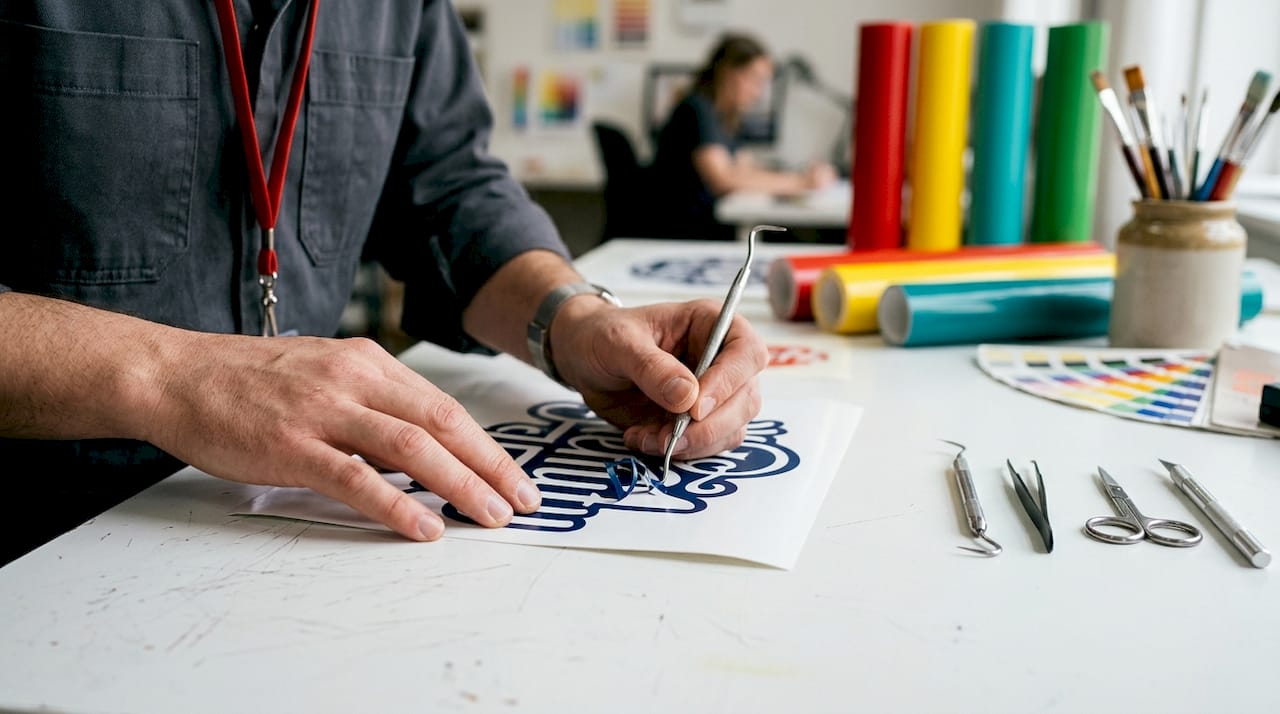
5. Cutting and weeding. Die-cutting machines follow a digital cut path to trim the design to its final shape. Sharp knife settings during die-cutting reduce edge burring and liner strike-through. Weeding removes the excess vinyl around the design, leaving only the finished graphic.
Pro Tip: Always prepare your artwork files with bleed and crop marks before sending to print. Missing bleed causes white edges on finished cuts.
| Stage | Key requirement | Common failure |
|---|---|---|
| Design prep | 300 DPI, CMYK color mode | Low-res files, RGB color shift |
| Ink application | Correct ink type for vinyl finish | Wrong ink causes smearing |
| Curing | UV-LED at 0.6–1.2 J/cm² | Under-cured ink scratches easily |
| Lamination | 24-hour dry time before applying | Bubbling, delamination |
| Cutting | Calibrated blade depth | Edge burring, liner damage |
What types of vinyl and printing methods should you use?
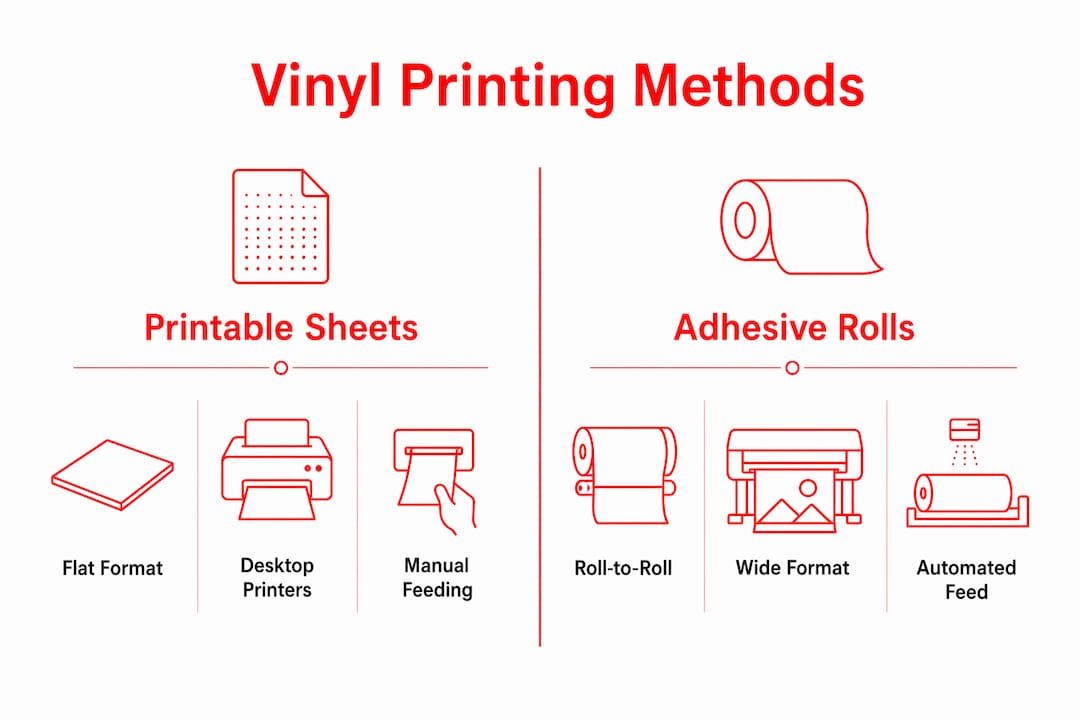
Vinyl printing is not one single method. The substrate, finish, and ink system you choose determine the final result.
Printable vinyl sheets vs. self-adhesive rolls. Printable vinyl sheets are flat, cut to size, and fed through desktop inkjet printers. Self-adhesive rolls run through wide-format printers for large-format output like banners and vehicle graphics. Sheets suit small-batch, detailed work. Rolls suit high-volume or oversized applications.
Glossy vs. matte finishes. Glossy vinyl pairs best with dye inks, while matte vinyl performs better with pigment inks. Incorrect pairings lead to smudges, cracks, or peeling within days. This single compatibility rule eliminates the majority of DIY failures.
Heat transfer vinyl (HTV) vs. printable vinyl. HTV is designed for fabric. You cut a design from colored HTV sheets and press them onto a garment with heat. Printable vinyl, by contrast, bonds to hard surfaces like glass, plastic, metal, and wood. Using standard printable vinyl on fabric without HTV produces a stiff, peeling result that washes out quickly.
- Clear vinyl works for window decals and product labels where the background needs to show through.
- Colored vinyl suits solid-color designs and lettering without printing.
- Removable vinyl uses a lower-tack adhesive for temporary applications like seasonal displays.
- Permanent vinyl bonds aggressively and resists moisture, heat, and UV exposure for outdoor use.
Pro Tip: When printing at home, avoid front-loading cassettes that bend vinyl sheets. Feed sheets manually through the rear straight path to prevent jams and adhesive separation.
What are the main applications and benefits of vinyl printing?
Vinyl printing applications range widely, including banners, vehicle wraps, wall decals, custom apparel, and product labels. Vinyl is waterproof, UV resistant, and suited for both indoor and outdoor use. That combination of durability and visual clarity is why businesses return to it for branding year after year.
The core benefits of vinyl printing include:
- Durability. Outdoor-grade vinyl resists rain, sun, and temperature swings without fading or cracking.
- Color vibrancy. Wide-format UV and eco-solvent printers reproduce photographic detail and saturated color that screen printing cannot match on complex designs.
- Short-run cost efficiency. Unlike screen printing, vinyl printing requires no screens or setup plates. One unit costs nearly the same per piece as a hundred units, making it ideal for small batch printing and custom orders.
- Versatility. The same printer and vinyl stock can produce a vehicle wrap, a retail shelf label, and a personalized gift item in the same afternoon.
- Speed. UV-cured vinyl prints are ready to handle within seconds of leaving the printer.
One limitation is worth knowing: standard printable vinyl does not bond well to fabric. For custom apparel, heat transfer vinyl or DTF (direct-to-film) transfers are the correct methods. Applying the wrong vinyl type to a T-shirt produces a stiff, cracking result after the first wash.
Adhesive bonds strengthen over 24–48 hours, so full adhesion should not be expected immediately after application. Pressing a vinyl decal onto a surface and then testing its peel strength right away gives a false reading. Wait the full dwell time before judging the bond.
How do you avoid the most common vinyl printing mistakes?
Over 60% of first-time DIY printable vinyl projects fail due to incorrect printer settings or incompatible material combinations. That failure rate drops sharply when you follow a short checklist before every print run.
- Match your vinyl finish to your ink type. Glossy finish needs dye ink. Matte finish needs pigment ink. Mixing them causes the ink to sit on the surface instead of bonding.
- Allow full drying time before laminating. Rushing lamination traps outgassing solvents under the film, which creates bubbles that cannot be fixed.
- Control your environment. Professional print rooms maintain temperature between 68–75°F and humidity between 45–55% to prevent static buildup and liner release problems. Home printers benefit from the same conditions.
- Request a digital proof before any production run. Color shifts between screen and print are common, and a proof catches them before they cost you material.
- Check blade depth before cutting. A blade set too deep cuts through the liner. A blade set too shallow leaves the design attached to the waste vinyl during weeding.
Pro Tip: When designing custom shirts at home with HTV, mirror your design before cutting. Heat transfer vinyl is applied face-down, so an unmirrored design prints backward on the garment.
White ink underprint depth and curing controls directly influence opacity and gloss level, requiring trade-offs between color vibrancy and print durability. Increasing white ink density boosts opacity but can reduce flexibility in the finished print. Professional operators test these settings on each new vinyl stock before committing to a full run.
Key Takeaways
Vinyl printing delivers durable, full-color designs on a wide range of surfaces, but the result depends entirely on matching the right vinyl, ink, and process to the job.
| Point | Details |
|---|---|
| Match ink to vinyl finish | Glossy vinyl needs dye ink; matte vinyl needs pigment ink to prevent peeling. |
| Allow 24-hour dry time | Laminating too soon causes bubbling and smudging that cannot be corrected. |
| Use HTV for fabric | Standard printable vinyl does not bond to textiles; heat transfer vinyl does. |
| Control your environment | Keep print room temperature at 68–75°F and humidity at 45–55% for consistent results. |
| Proof before production | A digital proof catches color and layout errors before they waste material and time. |
Why vinyl printing rewards preparation more than talent
Aaron here. After working with custom printed products for years, the single thing I see trip people up most is treating vinyl printing like it is forgiving. It is not. It rewards preparation the way woodworking rewards measuring twice. The people who get great results are not necessarily more creative. They are more methodical.
The technology has genuinely improved. UV-LED curing systems that used to cost tens of thousands of dollars are now accessible to small shops. The materials are better too. Modern outdoor vinyl holds color for years without the chalking and cracking that plagued earlier products. But better tools do not replace process discipline.
What I find most interesting is how vinyl printing sits at the intersection of graphic design and materials science. You can have a stunning design and still get a poor result if your ink system does not match your substrate. That is not a creative problem. It is a chemistry problem. Understanding that distinction changes how you approach every project.
My honest advice: start with the material spec sheet before you start with the design file. Know your vinyl, know your ink, and then let the creative work follow. Experimentation is worth doing, but do it on small test pieces, not on a full production run. Preparation is not the boring part of vinyl printing. It is the part that makes the creative part actually work.
— Aaron
Custom vinyl printed products from Handmadeohiocrafts
Handmadeohiocrafts produces custom apparel, decals, tumblers, and promotional products from its Waverly, Ohio facility, with all work done in-house for consistent quality and fast turnaround.
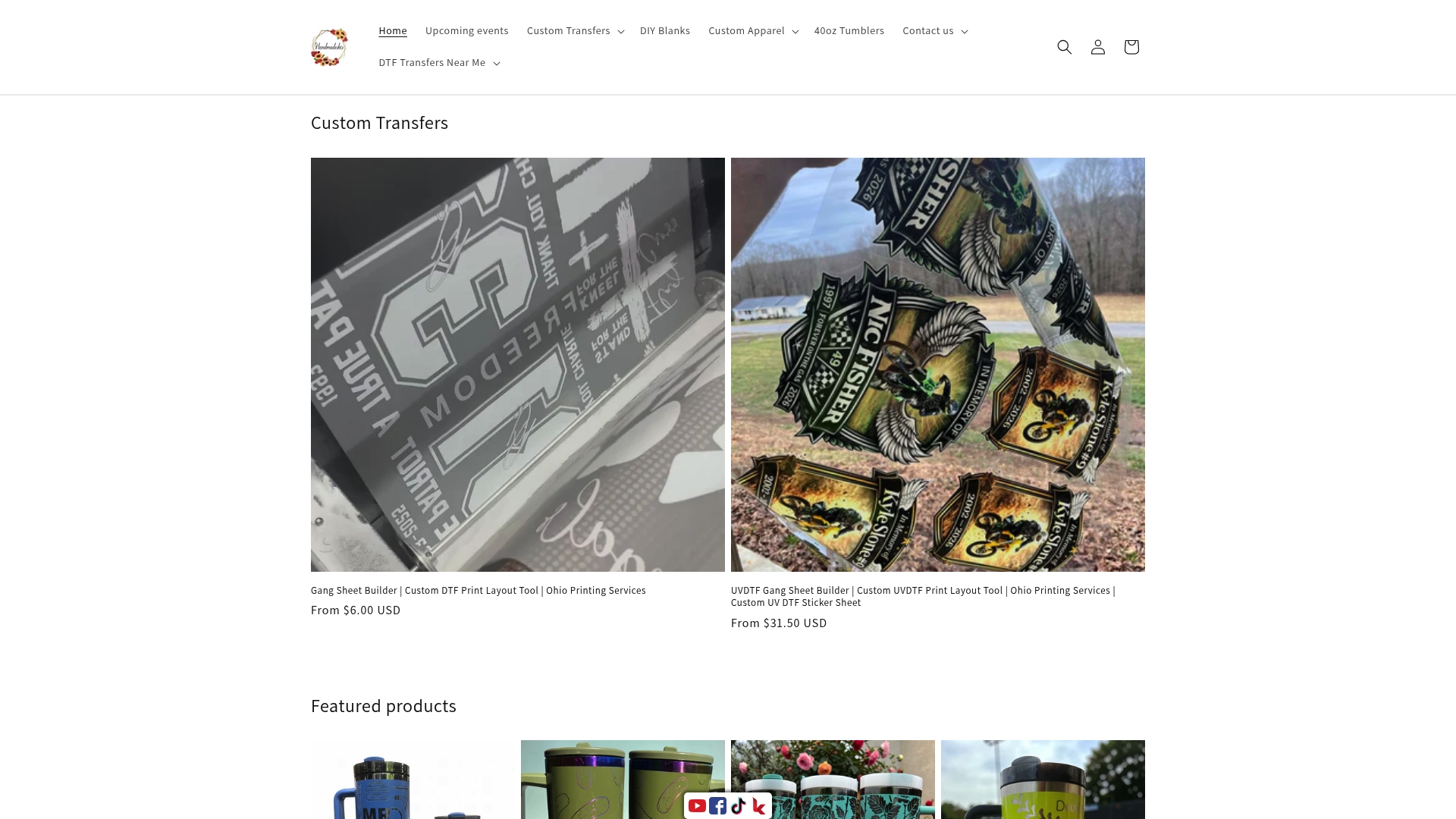
Whether you need branded gear for a sports team, personalized gifts for an event, or custom merchandise for your business, the custom apparel collection covers a wide range of options with no minimum order requirement. Nationwide shipping means your order arrives wherever you need it. Handmadeohiocrafts also offers DTF transfers for customers who want professional-grade prints applied to their own garments. Every order includes direct communication with the production team, so your specs are right before anything goes to print.
FAQ
What is vinyl printing used for?
Vinyl printing is used for banners, vehicle wraps, wall decals, window graphics, custom apparel, and product labels. It suits both indoor and outdoor applications because vinyl is waterproof and UV resistant.
Is vinyl printing durable?
Outdoor-grade vinyl resists rain, UV exposure, and temperature changes for years when properly laminated. Adhesive bonds reach full strength after 24–48 hours of dwell time.
What is the difference between vinyl printing and digital printing?
Digital printing deposits ink directly onto a substrate like paper or fabric. Vinyl printing applies ink to a vinyl film that is then cut, laminated, and applied to a surface, adding a physical transfer step that increases durability.
What vinyl is best for printing at home?
Printable inkjet vinyl sheets work best for home use. Match glossy sheets to dye-based inks and matte sheets to pigment-based inks, and always feed sheets through the rear straight path to prevent jams.
How much does vinyl printing cost?
Cost varies by print size, quantity, vinyl type, and finishing. Small-batch vinyl printing costs more per unit than screen printing at high volumes, but it requires no setup fees or minimum orders, making it more affordable for short runs and one-off custom pieces.