

What Is Washability in Custom Print? A Clear Guide
Washability in custom printing is the measure of how well a printed design resists fading, cracking, peeling, and distortion through repeated washing cycles. The industry term for this property is wash fastness, defined as a print’s ability to retain color and structural integrity during laundering. For anyone ordering custom t-shirts, hoodies, or branded apparel, wash fastness determines whether a design looks sharp after 50 washes or falls apart after five. Handmadeohiocrafts builds every custom order around printing methods and inks chosen specifically for long-term wash performance.
What is washability in custom print and why does it matter?
Wash fastness is the product’s ability to resist color fading and dye transfer to other fabrics during laundering. A wash fastness rating of 4–5 on the standard scale is generally acceptable for daily-use textiles. Ratings below 3 signal a print that will visibly degrade within a handful of wash cycles.
The stakes are real for businesses. A sports team that orders 50 custom jerseys expects them to survive a full season of weekly washing. A nonprofit selling branded hoodies at a fundraiser needs prints that still look professional six months later. Wash fastness is the technical guarantee behind that expectation.
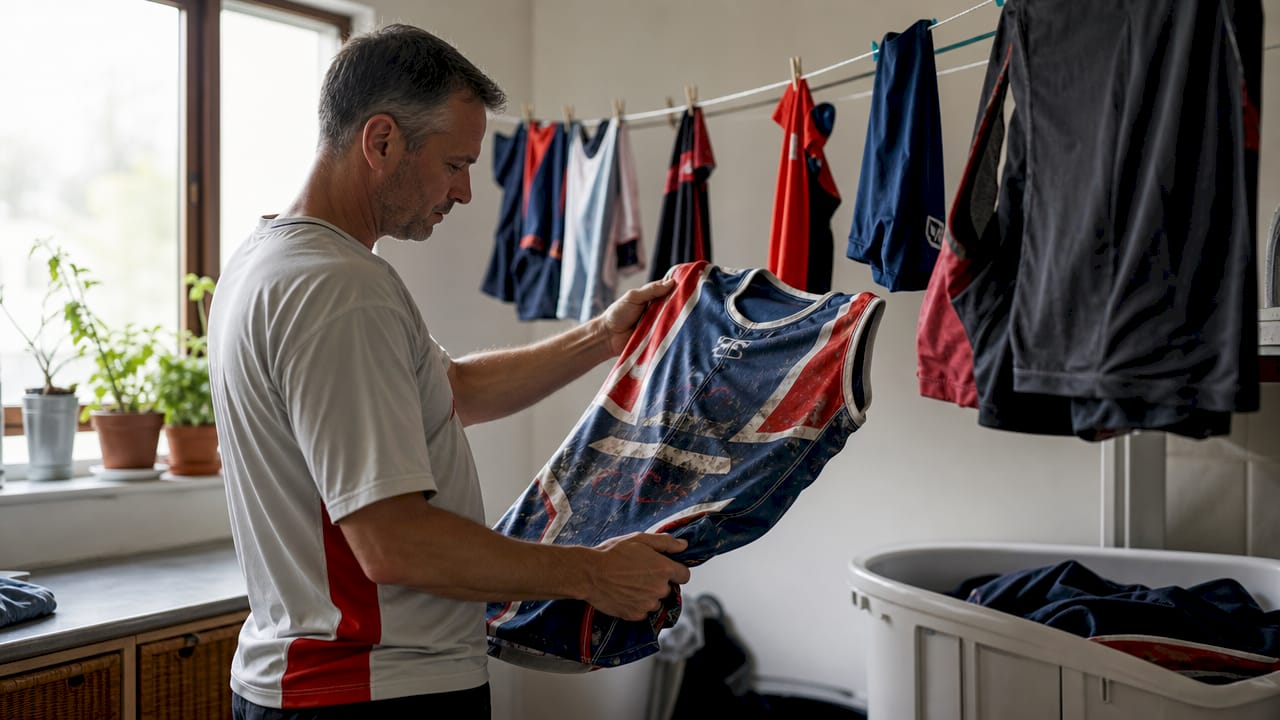
Two metrics define wash fastness: color change retention and staining resistance. Color change measures how much the print itself fades. Staining resistance measures whether dye bleeds onto adjacent fabrics in the wash. Both metrics must meet commercial thresholds before a product is ready for retail or bulk distribution.
How do different printing methods affect custom print durability?
Printing method is the single biggest variable in wash durability. Each technique bonds ink to fabric differently, and that bond determines how many wash cycles a design survives.
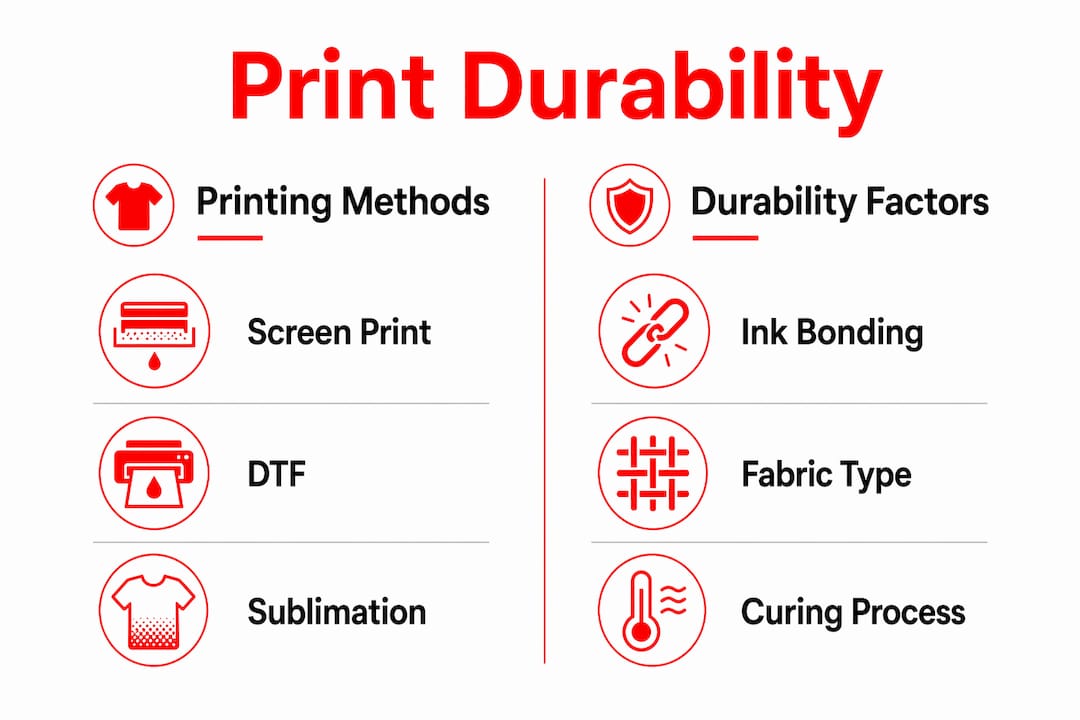
| Printing method | Typical wash cycle durability | Key durability factor |
|---|---|---|
| Screen printing (plastisol on cotton) | 40–50 cycles before edge cracking | Ink thickness and cure temperature |
| DTF (Direct to Film) transfers | 50+ cycles with proper pressing | Adhesive film bonding to fabric |
| Sublimation (on polyester) | Can outlast the garment | Dye bonds at molecular level |
| Heat transfer vinyl | 25–40 cycles | Edge adhesion and application pressure |
| Embroidery | Effectively unlimited | Thread, not ink |
Screen-printed plastisol on cotton withstands 40–50 commercial laundry cycles before edge cracking begins. Well-made DTF transfers can survive 50+ washes, and sublimation on polyester can outlast the garment itself. Embroidery sits in a category of its own because thread does not fade or peel the way ink does.
Fabric substrate matters as much as the printing method. Cotton accepts plastisol and DTF well. Polyester is the natural home of sublimation. Blended fabrics introduce complications. A 60/40 cotton-polyester blend, for example, limits sublimation vibrancy because the dye only bonds to the polyester portion. Textured fabrics like piqué or waffle knit create uneven surfaces where DTF adhesive film bridges across recesses rather than bonding fully. DTF on textured fabrics can peel early because of incomplete adhesion in those recesses, creating shear points that lift after 10–30 wash cycles.
Pro Tip: When ordering custom prints on stretch fabrics like spandex blends, always ask your printer whether they use substrate-specific ink formulations. Standard plastisol inks crack on stretch fabrics due to mechanical movement, not poor printing technique.
What factors influence the washability of printed fabrics?
Several technical variables determine whether a print lasts or fails prematurely.
- Ink chemistry. Pigment printing binders formulated with advanced polymers create durable films that resist wash and abrasion stress. Binders enhance adhesion across printing methods and fabrics. Without the right binder, even a well-applied print degrades quickly.
- Fabric texture and fiber content. Smooth, tightly woven cotton gives ink the best surface to bond to. Piqué, waffle knit, and spandex blends all reduce adhesion quality. High-stretch garments need special ink formulations. Using standard plastisol inks on spandex blends causes early cracking from mechanical movement rather than any flaw in the printing process itself.
- Curing and pre-treatment. Heat curing locks ink into fabric fibers. Under-cured prints feel tacky and fail within a few washes. Pre-treatment on DTG (Direct to Garment) printing activates cotton fibers to accept water-based inks. Skipping or rushing either step produces prints that wash out fast.
- Washing temperature and detergent type. Digital prints washed at 40°C with liquid detergents without optical brighteners retain color and integrity far better than prints washed with powder detergents. Powder detergents cause abrasion in early washes, physically scrubbing pigment layers off the fabric surface.
- Wash cycle agitation. Heavy agitation cycles create mechanical stress on print edges. Delicate or gentle cycles reduce that stress significantly.
Common failure modes follow predictable patterns. Edge cracking starts at the perimeter of a design where ink film is thinnest. Peeling occurs when adhesive bonding fails, most often on textured surfaces or improperly pressed DTF transfers. Color fading results from UV exposure, heat, or chemical attack from harsh detergents. Color transfer, where dye migrates to other garments in the wash, signals a wash fastness rating below acceptable commercial thresholds.
Pro Tip: Request a wash fastness data sheet from your printer before placing a bulk order. Any reputable supplier can provide color change and staining ratings for their specific ink and substrate combinations.
How to test print washability before committing to production
Testing print durability before a full production run saves money and protects your brand reputation.
Industry-standard lab tests
- AATCC TM61 (wash fastness test). This test simulates multiple home laundry cycles in a compressed timeframe. It evaluates both color change in the print and staining on adjacent white fabric. AATCC TM61 and ASTM D751 define minimum performance thresholds for commercial durability. A score of 4–5 on the gray scale passes for most commercial applications.
- ASTM D751 (peel adhesion test). This measures how strongly a transfer or applied print bonds to the fabric surface. Low peel adhesion scores predict early lifting and edge separation in real-world washing.
- Crocking test (AATCC TM8). Crocking measures color transfer from a print to another surface through rubbing, both dry and wet. High crocking values indicate dye that will bleed onto other garments or skin.
DIY testing for small businesses and individuals
Lab testing is not always practical for small orders. A simple home test gives useful directional data.
| Test step | What to do | What to look for |
|---|---|---|
| Baseline photo | Photograph the print in natural light before washing | Reference point for color comparison |
| Wash cycle 1 | Machine wash inside out, cold water, gentle cycle, liquid detergent | Any immediate fading, cracking, or peeling |
| Wash cycle 10 | Repeat and photograph again | Significant color shift or edge lifting |
| Wash cycle 25 | Final check for long-term durability | Structural integrity of the full design |
Replicate tests across different substrates if you plan to print on multiple fabric types. A DTF transfer that performs well on a 100% cotton t-shirt may behave differently on a polyester-blend hoodie. Substrate specificity is not optional when testing for commercial production.
Best practices for caring for custom printed apparel
Proper care extends print life significantly. These practices apply to screen-printed, DTF, DTG, and sublimation garments.
- Wash inside out. Washing garments inside out reduces friction on the print surface, preventing shear stress and extending print life. This protects properly bonded prints from physical agitation damage. It does not fix poor initial curing or bonding.
- Use cold or warm water, not hot. Hot water accelerates dye migration and weakens adhesive bonds. Wash at 30°C or 40°C maximum for printed apparel.
- Choose liquid detergent without optical brighteners. Optical brighteners are UV-reactive chemicals that physically abrade pigment layers over time. Liquid detergents without brighteners preserve print integrity through more wash cycles.
- Use a gentle or delicate wash cycle. High agitation cycles stress print edges. Gentle cycles reduce mechanical wear on the design.
- Air dry or tumble dry on low heat. High dryer heat degrades ink films and adhesive bonds. Air drying is the safest option. If using a dryer, keep the heat setting low.
- Never iron directly on a print. Iron on the reverse side of the garment, or place a pressing cloth between the iron and the design.
The most common cause of premature print failure is not the printing method itself. It is the combination of hot water, powder detergent, and high-heat drying applied repeatedly from the first wash. Following these care steps from day one preserves the design through far more wash cycles than ignoring them.
Key takeaways
Wash fastness is the core measure of custom print durability, and the printing method, fabric type, ink chemistry, and care routine all determine how long a design lasts.
| Point | Details |
|---|---|
| Wash fastness rating | A score of 4–5 on the standard scale is the minimum acceptable for daily-use custom apparel. |
| Method durability ranking | Sublimation on polyester outlasts the garment; DTF and screen printing reach 40–50+ wash cycles with proper technique. |
| Fabric substrate matters | Textured and stretch fabrics reduce adhesion; always request substrate-specific ink data before ordering. |
| Detergent choice is critical | Liquid detergents without optical brighteners preserve print integrity far better than powder alternatives. |
| Inside-out washing protects prints | Washing inside out reduces friction damage but cannot compensate for poor curing during production. |
What I’ve learned about print washability that most guides skip
Working with custom apparel long enough, you start to notice a pattern. Customers come back frustrated about a print that cracked or faded, and almost every time, the problem started before the garment ever went into a washing machine.
The most overlooked factor is curing. A print that was not fully heat-cured during production will fail in the first few washes no matter how carefully you launder it. Washing inside out and using gentle detergent are good habits, but they cannot save an under-cured print. This is why I always tell people to ask their printer about cure temperatures and dwell times, not just the ink brand.
The second thing most guides miss is the difference between a print that looks fine after one wash and one that holds up after 30. Cotton samples maintained color fastness ratings of 4–5 up to 10 washes under optimum conditions, dropping to 3–4 at 20 cycles. That drop is normal and expected. What is not acceptable is a print that hits a rating of 2 by wash 15 because the wrong ink was used on the wrong fabric.
For businesses ordering in bulk, I strongly recommend requesting a DTF transfer setup guide from your supplier and asking for wash test data specific to your chosen substrate. Generic wash durability claims mean nothing without substrate-specific numbers behind them. The suppliers who can provide that data are the ones worth working with.
— Aaron
Custom apparel built to last from Handmadeohiocrafts
Handmadeohiocrafts produces every custom order in-house at its Waverly, Ohio facility, which means direct control over ink selection, cure temperatures, and pressing parameters. Every DTF transfer and screen-printed garment goes through production steps designed to meet commercial wash durability standards.
Whether you need branded shirts for a business, custom hoodies for a school team, or personalized apparel for an event, Handmadeohiocrafts offers custom apparel with no minimum order requirements and nationwide shipping. For customers specifically interested in DTF printing, the DTF transfers page covers method details, pressing instructions, and substrate compatibility. Prints that hold up through real-world washing start with production decisions made before the garment ships.
FAQ
What is wash fastness in custom printing?
Wash fastness is a print’s ability to resist color fading and dye transfer to other fabrics during laundering. A rating of 4–5 on the standard gray scale is the accepted minimum for commercial daily-use apparel.
Which custom printing method has the best washability?
Sublimation on polyester offers the highest wash durability because the dye bonds at a molecular level and can outlast the garment itself. DTF transfers and screen printing on cotton follow closely, surviving 50+ and 40–50 wash cycles respectively with proper technique.
How do I test print washability at home?
Photograph the print before washing, then wash inside out on a gentle cycle with cold water and liquid detergent. Repeat at wash cycles 1, 10, and 25, comparing photos each time for fading, cracking, or edge lifting.
Does washing temperature affect custom print longevity?
Yes. Washing at 40°C or below with liquid detergent without optical brighteners significantly extends print life. Hot water and powder detergents accelerate fading and physically abrade pigment layers.
Why do prints crack on stretch fabrics?
Standard plastisol inks lack the flexibility to move with spandex or stretch blends. Mechanical movement from wearing and washing causes the rigid ink film to crack. Substrate-specific ink formulations designed for stretch fabrics prevent this failure mode.