

What Is Custom Hat Printing? Methods and Tips
Custom hat printing is the process of applying personalized logos, text, or artwork onto hats using techniques like embroidery, screen printing, or heat transfer vinyl. Individuals use it for personal expression, while small businesses rely on it for promotional branding, event giveaways, and team uniforms. The decoration area on a standard cap includes the front panel, side panels, back, and brim. Each zone requires a different approach depending on the printing method and design complexity. Handmadeohiocrafts produces custom hats in-house with no minimum order requirement, making professional-quality cap decoration accessible to everyone from solo buyers to growing brands.
What are the main methods used in custom hat printing?
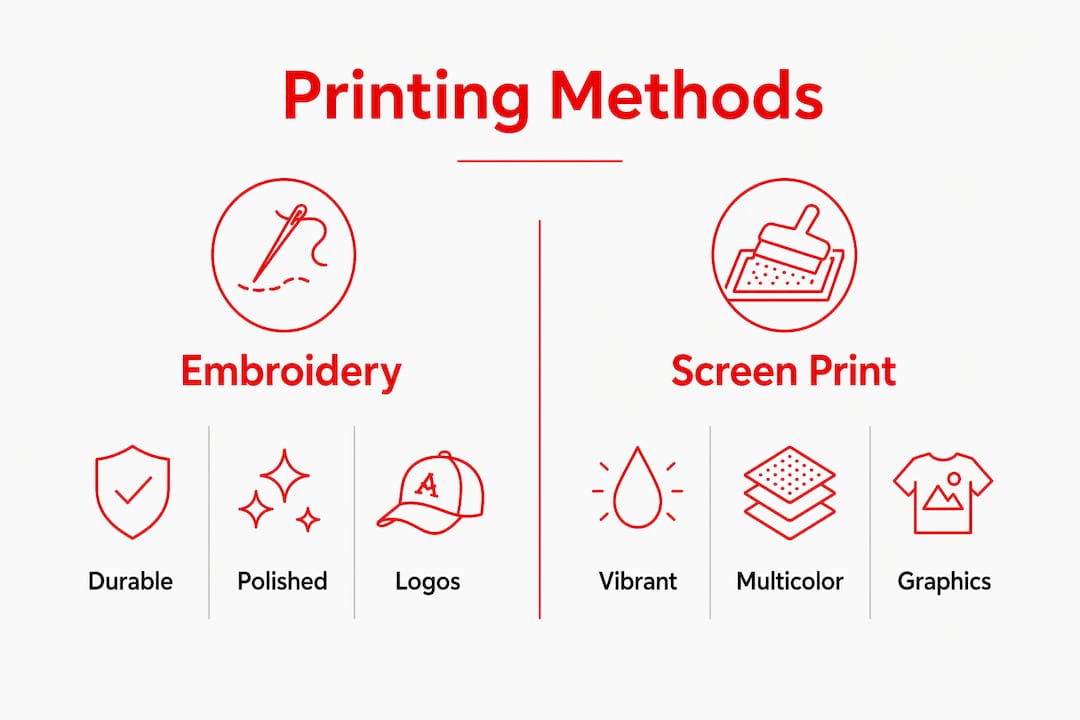
Three core techniques cover the vast majority of customized cap printing services: embroidery, screen printing, and heat transfer vinyl. Each method suits a different set of goals, budgets, and design styles.
Embroidery
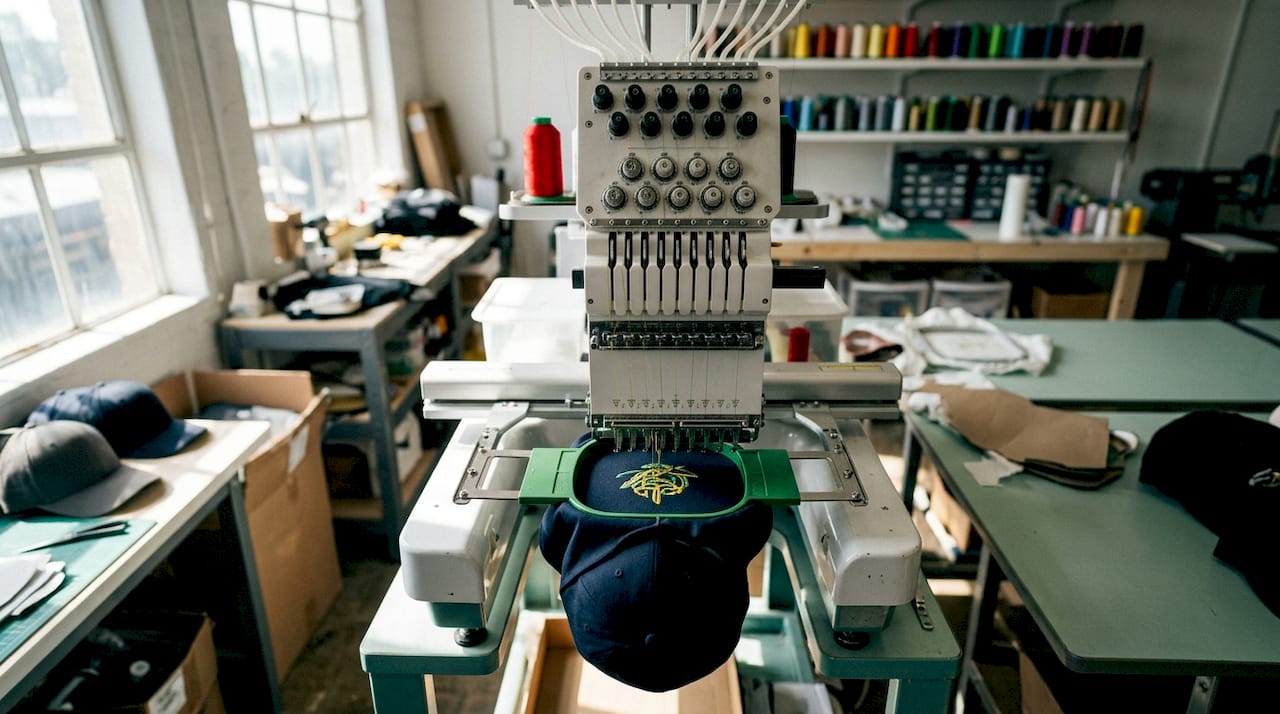
Embroidery is the standard choice for brand logos that need a polished, long-lasting finish. Thread is stitched directly into the fabric, creating a raised, textured look that holds up through repeated washing without cracking or fading. The result reads as premium because it is premium. Embroidery works best for logos with clean lines and limited color detail, since fine gradients and tiny text are difficult to reproduce in thread. Sports teams, corporate brands, and nonprofits consistently choose embroidery when they want a hat that looks professional for years.
Screen printing
Screen printing pushes ink through a mesh stencil to produce vibrant, detailed, multicolor graphics. It works best on the relatively flat front panel of a structured cap and delivers bright color that stands out at a distance. After printing, hats go through a heat-curing process that bonds ink to the fabric and prevents cracking over time. Screen printing becomes cost-efficient at higher quantities because setup costs are spread across the full run. If you need bold graphics on 50 or more hats, screen printing is the most economical path.
Heat transfer vinyl
Heat transfer vinyl bonds cut vinyl designs to the hat surface using a heat press. The method is flexible and fast, making it the right choice for small batches, personalized names, numbers, or simple graphics. You can produce a single custom hat just as easily as a dozen. The tradeoff is that vinyl sits on top of the fabric rather than becoming part of it, so it requires careful application to last.
Method comparison
| Method | Best for | Durability | Minimum quantity |
|---|---|---|---|
| Embroidery | Logos, brand marks | Excellent | Low |
| Screen printing | Bold multicolor graphics | Very good | Medium to high |
| Heat transfer vinyl | Names, small runs | Good | One piece |
| Patches | Hybrid branding | Excellent | Low |
Patches deserve a brief mention as a hybrid option. A design is embroidered or printed onto a separate piece of fabric, then sewn or ironed onto the hat. Patches let you apply complex artwork to hats that would otherwise be difficult to decorate directly.
How does hat structure affect printing and design choices?
A hat is not a flat canvas. The biggest design mistake is treating the curved, seamed front panel as if it were a T-shirt chest. Crown curvature, front panel seams, and the button at the top all create zones where artwork can distort, lose legibility, or simply look wrong once the hat is on a head.
Seams run vertically through the center of most six-panel caps. A design that crosses that seam will split or pucker unless the printing method and artwork are specifically planned for it. Screen printing on a seamed panel requires the printer to work around the seam or accept a slight break in the image. Embroidery handles seams better because thread can bridge small gaps, but thread density and stitching direction still need adjustment to maintain clarity across the curve.
Professional designers split artwork or use defined decoration zones that stay clear of seams and structural features. This approach protects design clarity and prevents the finished hat from looking amateurish. The front panel of a standard structured cap offers a usable decoration area of roughly 2 to 3 inches in height, which limits how much vertical detail a design can carry.
Viewing angle and crown curvature change how embroidered designs read from a distance. A design that looks balanced on a flat proof can appear top-heavy or cramped once it wraps around the crown. Digital proofs that simulate the hat’s profile catch these problems before production begins.
Pro Tip: Always request a digital proof that shows your design on a 3D hat mockup, not just a flat layout. What looks centered on paper often reads off-balance on a curved surface.
What factors should you consider when choosing a hat printing method?
Choosing the right printing method depends on your goals: embroidery for premium brand logos, screen printing for color-rich bulk orders, and vinyl transfers for personalized small batches. Matching the method to the purpose reduces production costs and increases satisfaction with the final product.
Work through these factors before placing an order:
- Purpose. A corporate giveaway hat needs a different finish than a personalized birthday gift. Embroidery signals quality for business branding. Heat transfer vinyl works well for one-off personal items.
- Quantity. Screen printing setup costs make it inefficient for fewer than 24 to 36 pieces. Embroidery and heat transfer vinyl scale down to single units without a cost penalty.
- Design complexity. Photographic images and fine gradients do not translate well into embroidery thread. Screen printing handles complex multicolor graphics better. Simple text and bold shapes work with all three methods.
- Color count. Screen printing charges per color in many cases. A four-color logo costs more to screen print than a two-color version. Embroidery thread colors add cost too, but the pricing structure differs.
- Durability expectations. Embroidery outlasts both screen printing and vinyl in heavy-use situations. If the hat will be worn daily and washed frequently, embroidery is the safest investment.
- Budget per unit. Heat transfer vinyl has the lowest entry cost for small runs. Embroidery carries a digitizing fee upfront but becomes cost-competitive at moderate quantities.
Pro Tip: Ask your printer about production turnaround before committing to a method. Embroidery digitizing can add 24 to 48 hours to the timeline. If you need hats fast, heat transfer vinyl often ships sooner.
Business owners gain cost efficiency by aligning their method choice tightly with expected use cases and batch sizes. A school ordering 200 spirit hats gets a better result and a better price from screen printing than from vinyl. A boutique ordering 10 personalized hats for a pop-up shop gets the opposite result.
For more ideas on how custom hats fit into a broader promotional strategy, the custom merch guide for local businesses covers practical applications across product categories.
What are the typical custom hat design options?
Custom hat design options fall into four standard placement areas and several distinct visual styles. Understanding both helps you plan artwork that works with the hat rather than against it.
Standard placement areas
- Front panel. The primary decoration zone on any cap. Most logos, text, and graphics live here. The usable space is limited by the panel height and seam position.
- Side panels. Left and right side panels accept smaller secondary graphics or text. Common uses include a secondary logo, a website URL, or a team number.
- Back panel. Often used for text such as a tagline, year, or website. The back panel is flatter than the front on most structured caps, which makes screen printing and heat transfer vinyl easier to apply cleanly.
- Brim underside. A growing trend in custom hat design. The underside of the brim accepts printed graphics and adds a surprise detail that shows when the brim is lifted.
Design styles and their printing compatibility
Logos with clean edges and solid fills work with embroidery, screen printing, and heat transfer vinyl. Text-only designs are the most versatile and reproduce cleanly in all three methods. Photographic or gradient-heavy graphics require screen printing or a direct-to-film transfer process. Patches give you the most design freedom because the artwork is produced separately before being applied to the hat.
Multi-area printing adds complexity and cost. A hat with front embroidery and a back screen-printed URL requires two separate production steps. Plan for that in your timeline and budget. For a deeper look at how text-based designs translate across decoration methods, the text customization printing guide covers the key variables.
Treating a hat as a unique 3D object rather than a flat surface opens real creative opportunities. Blending embroidery on the front with a printed patch on the side, for example, creates a layered look that flat printing alone cannot achieve.
Key Takeaways
Custom hat printing delivers the best results when the decoration method matches the design, quantity, and intended use of the hat.
| Point | Details |
|---|---|
| Method drives outcome | Embroidery, screen printing, and heat transfer vinyl each suit different goals and batch sizes. |
| Hat structure shapes design | Seams, crown curvature, and panel height must inform artwork placement before production begins. |
| Proofs prevent costly errors | Digital proofs on a 3D hat mockup catch legibility and placement problems early. |
| Quantity determines cost efficiency | Screen printing is most economical at medium to high quantities; vinyl and embroidery scale to single units. |
| Design placement expands options | Front, side, back, and brim each offer distinct decoration opportunities for creative hat customization. |
Why hat structure is the detail most people ignore
Most people researching custom hat printing focus entirely on method and price. I get it. Those are the obvious variables. But after working with hundreds of custom apparel orders, the single biggest source of disappointment I see is not a bad printing method. It is a design that ignores the hat’s physical structure.
A client once brought me a detailed logo with thin diagonal lines and small text. It looked sharp on screen. On the hat, the front panel seam split the design, and the crown curvature compressed the text into an unreadable strip. We had to rebuild the artwork from scratch. That delay cost time and money that a proper proof would have prevented.
The trend I find genuinely exciting right now is the combination of embroidery and patches. Brands are using embroidered patches applied to the front panel to get complex, full-color artwork onto hats that would otherwise resist direct printing. The patch is produced flat, where design complexity is not a constraint, and then applied to the hat. The result looks high-end and holds up better than most direct printing methods.
My honest advice: order a sample before committing to a bulk run. Even a single prototype hat reveals placement issues, color accuracy problems, and structural surprises that no digital proof fully captures. The cost of one sample is always less than the cost of reprinting 100 hats.
— Aaron
Custom hat printing from Handmadeohiocrafts
Handmadeohiocrafts handles custom hat printing in-house at its Waverly, Ohio facility, which means faster turnaround and direct quality control on every order. The team works with embroidery, heat transfer vinyl, and DTF transfers to cover the full range of hat decoration needs, from single personalized caps to bulk promotional orders for businesses, schools, and sports teams.
There are no minimum order requirements, so you can order one hat or one hundred without a pricing penalty. Nationwide shipping means location is never a barrier. Browse the full range of decoration options and start your order through the custom apparel collection to see current hat styles, pricing, and customization choices available right now.
FAQ
What is custom hat printing?
Custom hat printing is the process of applying personalized designs, logos, or text onto hats using methods such as embroidery, screen printing, or heat transfer vinyl. Each method suits different design styles, quantities, and budgets.
How does hat printing work?
The process depends on the method chosen. Embroidery stitches thread directly into the fabric, screen printing pushes ink through a stencil and heat-cures it, and heat transfer vinyl bonds a cut design to the hat surface using a heat press.
What is the most durable hat printing method?
Embroidery offers the best durability, lasting for years without cracking or fading. It is the standard choice for brand logos and professional applications that require a long-lasting finish.
Can I order just one custom hat?
Yes. Methods like heat transfer vinyl and embroidery work for single-unit orders. Handmadeohiocrafts requires no minimum order, so one personalized hat is as straightforward to produce as a bulk run.
What should I know before submitting a hat design?
Keep artwork within the usable decoration zone of the front panel, avoid designs that cross seams, and always request a digital proof on a 3D hat mockup. Pre-pressing the hat before heat transfer application also improves adhesion and prevents peeling after washing.