

How to Care for Printed Apparel Gifts That Last
Proper care for printed apparel gifts is defined as the set of washing, drying, and storage practices that protect both the fabric and the printed design from premature damage. Skip these steps, and even a high-quality custom shirt can crack, fade, or peel within a handful of washes. Follow them, and industry experts confirm that 50 or more washes are achievable without visible print loss. The core principles are straightforward: wash inside out in cold water, use a mild liquid detergent, avoid direct heat, and store garments flat in a cool, dry place. Handmadeohiocrafts builds every custom tee and hoodie with durability in mind, but the care you give at home determines how long that print stays sharp.
How to care for printed apparel gifts: the right washing method
Washing is where most print damage happens. Heat, agitation, and harsh chemistry are the three forces that break down ink bonds, and every washing decision either controls or amplifies those forces. Get the wash right, and everything else becomes easier.
Follow these steps every time you wash a printed garment:
-
Turn the garment inside out. This single step puts the print face away from the drum, zippers, and other fabrics. Washing inside out in cold water on a gentle cycle prevents the majority of cracking and fading.
-
Set the water temperature to cold. Cold means 30°C (86°F) or below. Warm or hot water softens the ink bond and causes plastisol or DTF layers to lift. Cold water also reduces fabric shrinkage, which matters for maintaining fit.
-
Select a gentle or delicate cycle. High-spin cycles create mechanical stress on the print surface. A gentle cycle with a low spin speed keeps agitation to a minimum and extends print life noticeably.
-
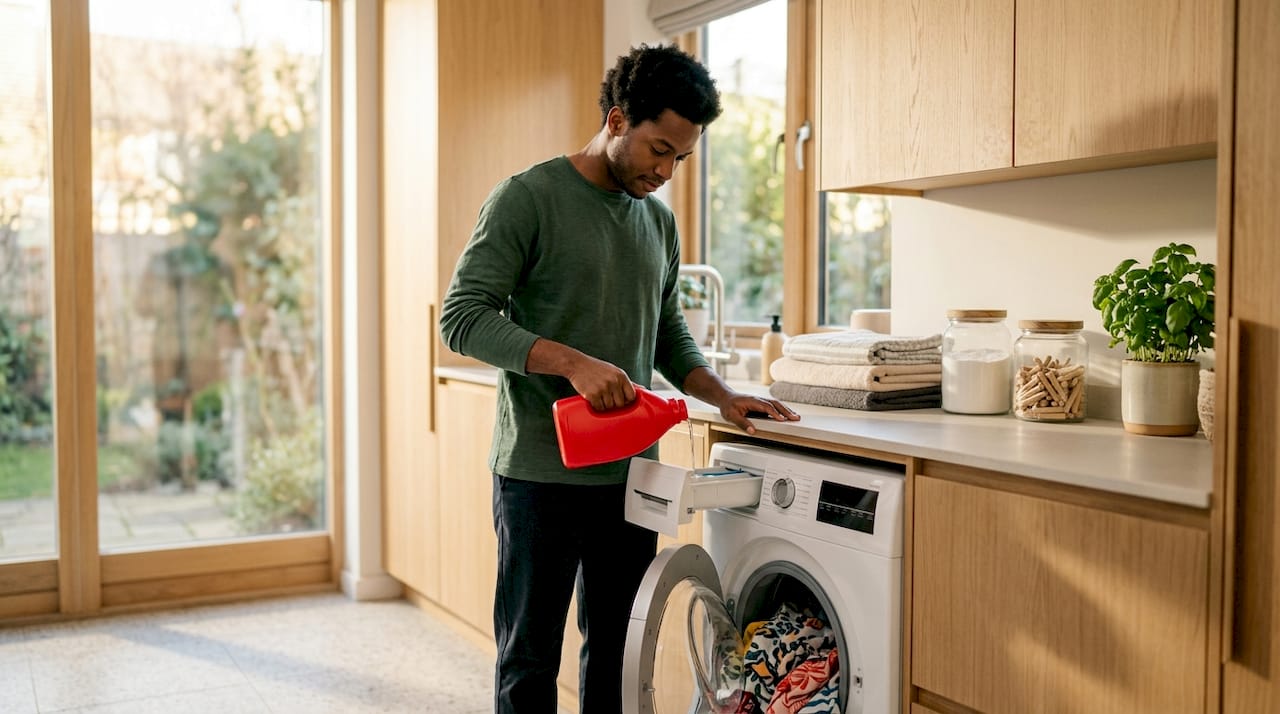
Choose a mild, liquid detergent. Liquid detergents without bleach, optical brighteners, or fabric softeners protect ink bonds and fabric quality better than heavy-duty alternatives. Avoid anything labeled “ultra-concentrated” with enzyme boosters, as those formulas attack ink layers.
-
Skip fabric softener entirely. Fabric softeners leave a waxy film that reduces print adhesion and accelerates wear. This applies to both screen prints and heat transfer prints.
-
Wash with similar fabrics. Avoid throwing a printed tee in with jeans, towels, or anything with metal hardware. Abrasive fabrics grind against the print surface and cause micro-tears in the ink layer.
-
Hand wash prized or delicate items. For a one-of-a-kind personalized hoodie or a gift you want to preserve for years, hand washing in a basin of cold water with a small amount of mild liquid detergent is the safest option. It eliminates mechanical agitation entirely.
Pro Tip: Always use liquid detergent rather than powder when washing printed garments in cold water. Powder detergents often do not dissolve fully in cold water, leaving granules that act like sandpaper against the print surface.
Understanding print washability before you wash also helps you set realistic expectations for different print types, from screen printing to DTF transfers.
What drying and ironing methods protect printed designs?
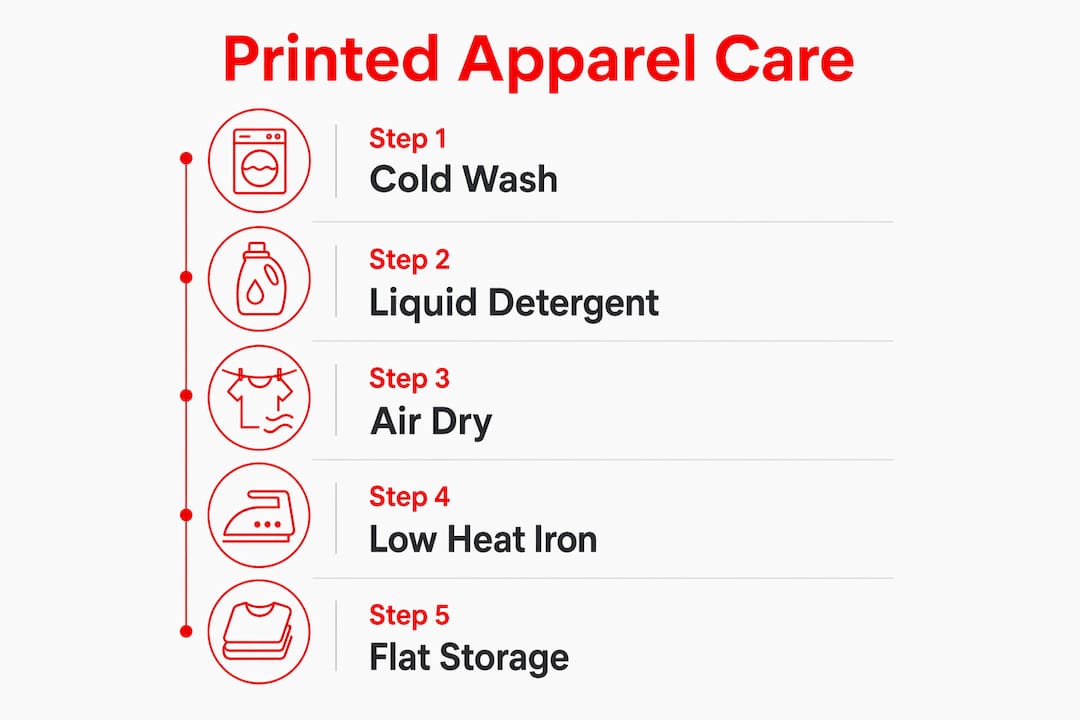
Heat is the fastest way to destroy a printed design. Air drying is the safest method for printed garments because it removes both the heat risk and the mechanical tumbling that weakens ink bonds over time.
Key drying and ironing practices to follow:
- Hang or lay flat to air dry. Hanging works for lighter garments like tees. Lay heavier items like hoodies flat to prevent shoulder stretching and uneven drying.
- Keep garments out of direct sunlight. Sunlight exposure during drying fades fabric and prints. A shaded, well-ventilated area is the right spot.
- Use the dryer only on the lowest heat setting. If air drying is not possible, tumble dry on low and remove the garment while it is still slightly damp. Finish drying flat or on a hanger.
- Spread hood openings when drying hoodies. Moisture trapped in hood areas softens ink bonds and causes premature cracking or peeling. Lay the hood open to improve airflow.
- Never place printed garments on a radiator. Direct contact with a heat source degrades ink faster than almost any other mistake. The localized heat is far more intense than a dryer on low.
- Iron inside out or use a pressing cloth. Ironing directly on printed areas risks melting or distorting plastisol and vinyl layers. Always iron the reverse side on low heat, or place a thin cotton cloth between the iron and the print.
Pro Tip: Set a timer when using the dryer for printed garments. Removing them at the 80% dry mark and finishing with air drying gives you the convenience of the dryer without the heat damage that comes from a full cycle.
How should you store printed apparel gifts to maintain quality?
Storage is the most overlooked part of caring for personalized clothing. A garment can survive dozens of careful washes and then lose print quality simply from being stored incorrectly for a season.
- Fold, do not hang. Hanging printed garments on wire hangers stretches the shoulders and can crease the print over time. Folding keeps the print flat and the fabric in shape.
- Store in a cool, dry place. Heat and humidity accelerate ink degradation even when the garment is not being worn. A drawer or shelf away from exterior walls works well.
- Keep away from moisture. Mold and mildew form quickly on fabric stored in damp conditions, and they damage both the print and the base fabric. This is especially true for hooded items where moisture can collect in seams.
- Use garment bags for seasonal storage. A breathable cotton garment bag protects against dust, light, and accidental abrasion without trapping moisture the way plastic bags do.
- Handle cracked prints carefully. If a print has already started to crack, avoid folding it along the crack line. Store it flat or rolled loosely to prevent the crack from spreading further.
Knowing how print placement affects durability also helps you understand which areas of a garment need the most careful handling during storage.
Common mistakes that shorten the life of printed apparel gifts
Most print failures are predictable. Controlling temperature, avoiding harsh detergents, and handling garments gently prevents the vast majority of avoidable damage. The mistakes below account for most of the cracked, faded, and peeling prints you see on graphic tees after just a few months of wear.
- Skipping the inside-out step. This is the most common mistake. Without it, the print rubs directly against the drum and other fabrics on every wash cycle.
- Using hot water or heavy-duty detergents. Hot water breaks down the chemical bond between ink and fabric. Heavy-duty detergents contain enzymes and bleaching agents that attack ink layers.
- Tumble drying on high heat. High heat accelerates cracking and shrinkage simultaneously. The print contracts at a different rate than the fabric, which causes the ink layer to split.
- Adding fabric softener. Fabric softeners coat the fabric fibers with a waxy film that weakens ink adhesion with every wash. The effect is cumulative and not reversible.
- Drying hoodies without opening the hood. Trapped moisture in the hood area sits against the print for hours, softening the ink bond and setting up peeling.
- Ironing directly on the print. Even a brief touch of a hot iron on a plastisol or DTF print can melt the surface layer and permanently distort the design.
Print failure is not random. Heat, agitation, and chemistry are the three variables that determine whether a print lasts 10 washes or 100. Every care decision you make either protects or attacks one of those three variables. The readers who understand this stop treating garment care as a chore and start treating it as a simple system.
One factor outside your control is print curing quality. Under-cured prints wash out or crack quickly regardless of how carefully you wash them, because the ink never bonded properly to the fabric in the first place. Proper curing during production is the printer’s responsibility. Choosing a printer who takes curing seriously, like Handmadeohiocrafts, means your care efforts actually pay off. You can learn more about DTF printing durability to understand how different print methods respond to washing and heat.
Key Takeaways
Proper care for printed apparel gifts requires cold water washing, air drying, gentle detergents, and flat storage to protect both the ink bond and the fabric over dozens of washes.
| Point | Details |
|---|---|
| Wash inside out in cold water | Turning garments inside out before washing prevents friction damage to the print surface. |
| Use liquid detergent only | Powder detergents leave abrasive granules in cold water; liquid formulas dissolve cleanly and protect ink. |
| Air dry away from heat and sun | Direct heat from dryers, radiators, or sunlight degrades ink bonds faster than any other factor. |
| Fold and store in cool, dry conditions | Hanging printed garments stretches fabric and creases prints; flat storage in a dry space preserves both. |
| Avoid fabric softener | Softeners leave a waxy film that weakens print adhesion with every wash cycle. |
What I’ve learned from years of watching prints fail too soon
The most common question I hear from people who receive a custom hoodie or graphic tee as a gift is some version of: “Why did it crack so fast?” Nine times out of ten, the answer is the dryer. People assume that because the garment survived the wash, the dryer is fine too. It is not. The dryer is where most of the damage actually happens, and it happens invisibly at first. You do not see the cracking until three or four cycles in, by which point the damage is already done.
The second thing I have learned is that care labels are underused. Most people glance at them once and forget them. But a care label on a quality printed garment tells you exactly what the printer tested and approved. Following it is the single easiest thing you can do to extend print life, and it costs nothing.
The third insight is about consistency. You do not need a perfect laundry routine. You need a consistent one. Washing inside out every single time, even when you are in a hurry, matters more than any other single habit. The readers who build that one habit into their routine see dramatically better results than those who follow every other tip but skip the inside-out step half the time.
My honest opinion: the investment in a quality custom print, whether it is a personalized tee from a birthday or a team hoodie from a fundraiser, only pays off if the care matches the quality of the print. A $40 custom shirt that lasts two years with proper care is a better value than a $40 shirt that fades in six months because it went through the dryer on high heat every week.
— Aaron
Handmadeohiocrafts custom apparel: printed to last
Every custom apparel item from Handmadeohiocrafts is produced in-house in Waverly, Ohio, with print curing and quality control built into the process. That means the garments you receive are ready to hold up to careful washing from day one.
Handmadeohiocrafts offers custom printed apparel for individuals, businesses, schools, sports teams, and nonprofits, with no minimum order requirements and nationwide shipping. Whether you are ordering a single personalized gift or a run of team hoodies, every item is made with the same attention to print quality. When you pair that quality with the care practices in this guide, you get apparel that stays vibrant wash after wash.
FAQ
How do I wash a graphic tee without ruining the print?
Turn the tee inside out, wash in cold water on a gentle cycle, and use a mild liquid detergent with no bleach or fabric softener. Cold water and gentle cycles prevent the majority of cracking and fading.
Can I put printed apparel gifts in the dryer?
Yes, but only on the lowest heat setting, and remove the garment while it is still slightly damp. Air drying is always the safer option for maintaining print quality long term.
Why do printed shirts crack after washing?
Cracking is caused by heat, agitation, and harsh detergents breaking down the ink bond. Under-cured prints also crack quickly regardless of care, which is why print quality at production matters as much as washing habits.
Does fabric softener damage printed apparel?
Yes. Fabric softeners leave a waxy film on fabric fibers that weakens print adhesion over time. Skip fabric softener entirely on any garment with a printed design.
How should I store a custom hoodie between seasons?
Fold it flat and store it in a cool, dry place inside a breathable garment bag. Keep it away from direct sunlight and moisture, and spread the hood open before storing to prevent trapped humidity from softening the print.