

Screen Printing for Business: A Small Business Guide
Screen printing for business is defined as a stencil-based process that pushes ink through a mesh screen onto garments, bags, and promotional products to create durable, high-color branded merchandise. Each color in a design requires its own screen, making the method ideal for bulk runs where setup costs spread across volume. Screen printing dominates apparel decoration for orders exceeding 25 units due to unmatched vibrancy, Pantone color accuracy, and print durability. Manual presses produce 40–90 pieces per hour, while automatic presses reach several hundred. For small business owners building a brand through uniforms, event merchandise, or corporate giveaways, screen printing delivers consistent quality at a scale no other method matches.
What is screen printing for business, and how does it work?
Screen printing, also called serigraphy in fine art contexts, is the recognized industry term for this process. The screen printing business definition covers both the technical method and its commercial application: producing large, consistent print runs on fabric and hard goods for branding purposes. Understanding the mechanics helps you make smarter decisions about when to use it and when to choose something else.
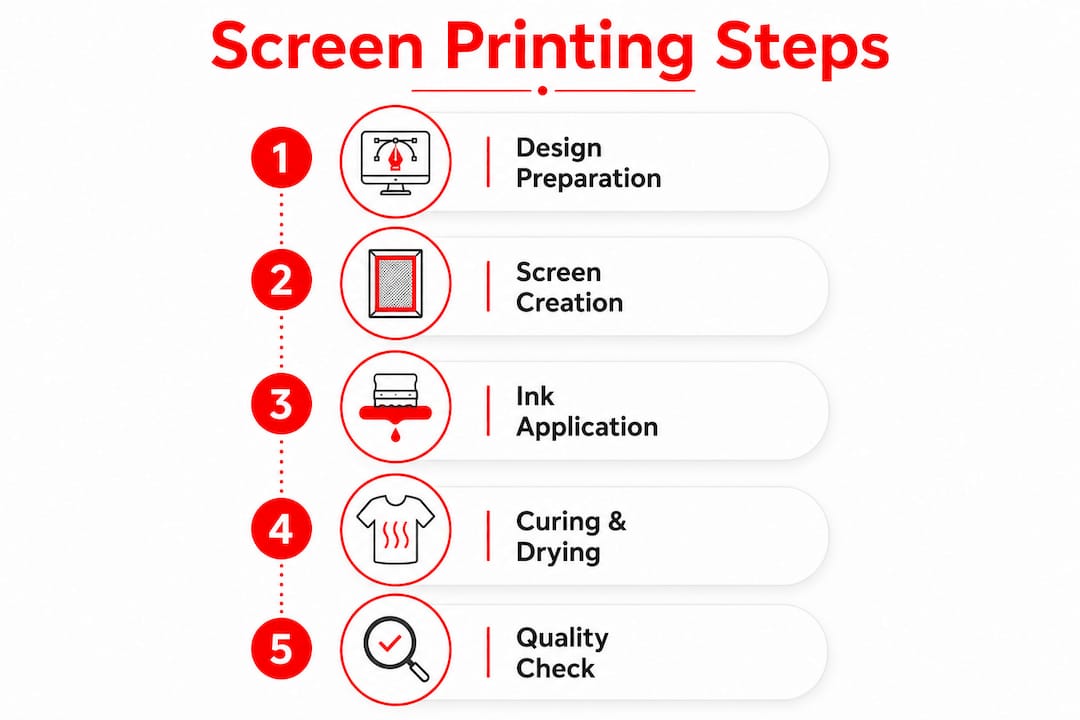
The process follows a clear sequence:
- Artwork separation. Your design gets split into individual color channels. Each color becomes its own film positive. A design with four colors requires four separate films.
- Screen preparation. Each film is used to expose a mesh screen coated with light-sensitive emulsion. Where light hits the emulsion, it hardens. The unexposed areas wash away, leaving open mesh where ink will pass through.
- Press setup and registration. Screens are mounted on the press and aligned precisely so each color layer lands in the correct position. Misregistration causes blurry edges and color overlap.
- Ink application. A squeegee pushes ink across the screen and through the open mesh onto the substrate below. Each color prints in a separate pass.
- Curing. Printed garments pass through a conveyor dryer or heat tunnel. Ink cures at approximately 160°C, bonding permanently to the fabric fibers.
- Quality check and fulfillment. Finished pieces are inspected, folded, and prepared for shipping or pickup.
Automatic presses hold 8–16 screens and can print several hundred pieces per hour with 6–14 color stations running simultaneously. That throughput is what makes screen printing the right choice for bulk branded apparel orders.
What equipment and materials do you need to start?
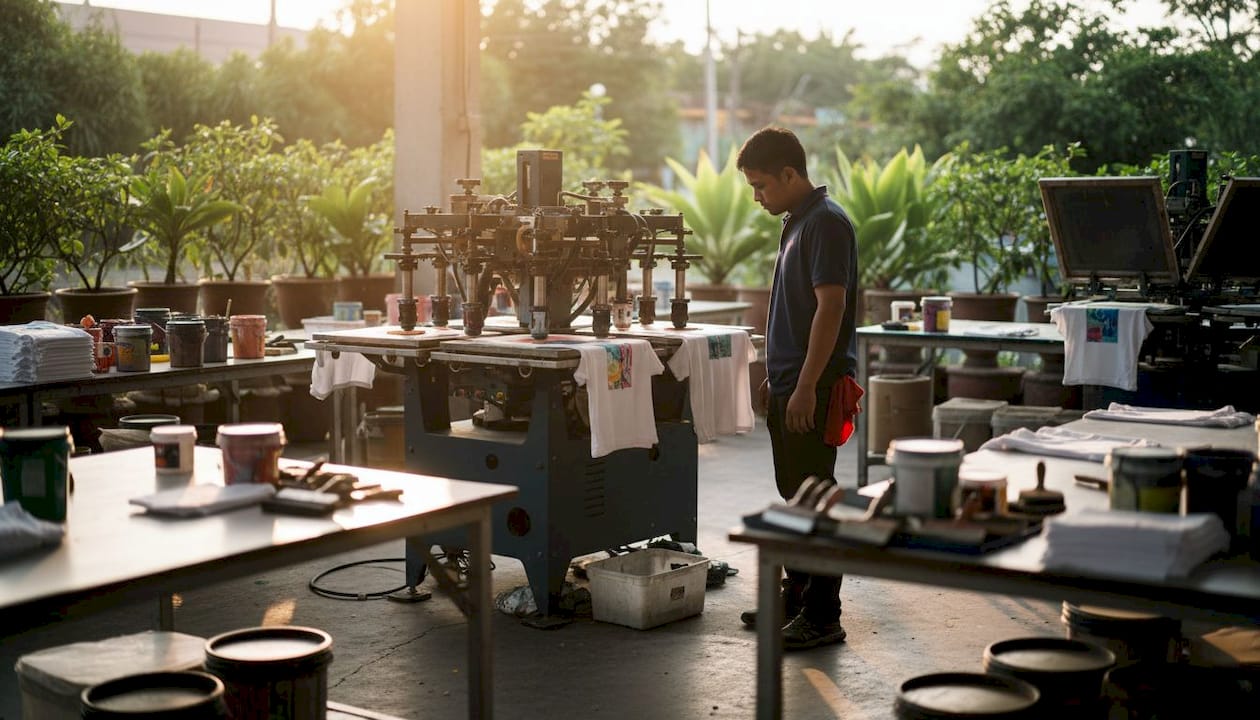
Starting a screen printing operation requires a specific set of tools. Buying the wrong equipment early is the most common and costly mistake new entrepreneurs make.
Core equipment and materials:
- Screens and frames. Aluminum frames with stretched mesh are the standard. Mesh count affects ink deposit and detail level.
- Squeegees. Available in different durometers (hardness ratings). Softer squeegees deposit more ink; harder ones give sharper edges.
- Printing table or press. A single-color tabletop unit works for testing. A 4-color, 4-station manual press handles most small business production.
- Registration tools. Micro-registration systems on the press hold screens in precise alignment across a full run.
- Inks. Plastisol inks bond permanently and survive 100+ washes. Water-based inks absorb into fabric for a softer hand feel but offer slightly less longevity. Plastisol is the industry default for business apparel.
- Exposure unit. A UV light source hardens emulsion on screens during the screen-making step.
- Curing equipment. A flash dryer works for small runs. A conveyor dryer is the production standard and handles high volume without bottlenecks.
- Darkroom space. Screen coating and exposure require a light-controlled environment. Workspace must include a darkroom for screen preparation and proper ventilation for ink fumes.
Pro Tip: Buy a conveyor dryer before you think you need one. Flash dryers create production bottlenecks fast, and upgrading mid-run disrupts your workflow and your client relationships.
What does screen printing cost, and what are the profit margins?
The economics of screen printing reward volume and discipline. Setup costs are fixed per job, so the more units you print, the lower the cost per piece.
Year 1 startup investment ranges from $8,000 to $60,000 depending on whether you start with a manual or automatic press. That range reflects the wide gap between a basic manual setup and a production-ready automatic system with a conveyor dryer and proper exposure equipment. Gross margins run 38–55%, with first-year profits typically landing between $20,000 and $70,000. Established shops reach $250,000 to $900,000 in annual revenue by years 2–4.
| Cost Factor | Details |
|---|---|
| Screen setup fee | Fixed per job, typically $15–$25 per screen, amortized across the run |
| Labor | Tied directly to prints per hour and reject rate |
| Ink and materials | Variable per piece, lower at higher volumes |
| Equipment depreciation | Spread across the life of the press and dryer |
| Reject rate | Undercured or misregistered prints reduce effective output and margin |
Screen printing is most cost-effective above 25 pieces per order. Below that threshold, the fixed screen setup cost makes the per-unit price uncompetitive with digital methods. This is the single most important number to communicate to clients when quoting jobs.
Pro Tip: Track your prints per hour, not just your order count. Throughput is the real profitability metric. A shop printing 80 pieces per hour at 2% reject rate outperforms one printing 120 pieces at 15% reject rate every time.
What are the benefits and limitations compared to other printing methods?
Screen printing excels in specific conditions. Knowing where it wins and where it loses helps you build a smarter product offering.
Where screen printing leads:
- Durability. Plastisol prints survive repeated washing without cracking or fading. This matters for uniforms, workwear, and branded merchandise that gets daily use.
- Color vibrancy. Pantone-matched spot colors produce results that digital methods cannot replicate on dark fabrics.
- Cost efficiency at scale. Above 25–30 units, the per-piece cost drops well below digital alternatives.
- Consistency. Every piece in a 500-unit run looks identical. That consistency is what corporate clients and event organizers require.
Screen printing remains the preferred method for large-volume runs, while digital printing suits low-volume jobs with photorealistic or gradient-heavy designs. This distinction matters when you are advising clients on which method fits their project.
Where digital methods win:
Screen printing requires a separate screen for every color, which limits complexity on small budgets. A 10-color photorealistic design on a 12-piece order makes no economic sense with screen printing. DTF (direct-to-film) and DTG (direct-to-garment) printing handle those jobs better. You can read a full breakdown of DTF vs. screen printing to understand where each method fits your client mix.
Hybrid business models combine both methods to cover the full market. A shop that screen prints bulk uniform orders and uses DTF for small custom runs captures more revenue without turning away clients.
How do you start and manage a screen printing business?
Building a screen printing business around branding and promotional products requires more than good equipment. Operations, pricing, and client relationships determine whether the business grows or stalls.
- Match your press to your volume. Manual presses produce 40–90 prints per hour; automatic presses reach 400–900+. Start manual if your monthly volume is under 500 pieces. Move to automatic when labor costs on the manual press exceed the payment on an automatic.
- Price jobs to cover setup. Charge a screen fee per color on every job. Never absorb setup costs into the per-piece price. Clients who understand the model respect it.
- Build B2B relationships. Repeat customers from schools, nonprofits, sports leagues, and local businesses create predictable revenue. One corporate uniform account can anchor an entire month’s production schedule.
- Manage workflow in stages. Art approval, screen preparation, printing, curing, and shipping are separate stages. Each needs a clear handoff point. Screen printing businesses require detailed workflow management to avoid costly errors at any stage.
- Use production management software. Platforms like InkSoft and Printavo handle quotes, art approval, and production scheduling in one place. They reduce back-and-forth with clients and keep jobs moving on schedule.
Check the custom apparel ordering checklist for a practical framework you can adapt to your own intake process.
Pro Tip: Art approval is where most jobs go wrong. Build a written approval step into every order before you burn a single screen. One unapproved change after screen prep costs you time, materials, and client trust.
Key Takeaways
Screen printing is the most cost-effective method for bulk branded apparel when orders exceed 25 units, with gross margins of 38–55% and startup costs ranging from $8,000 to $60,000.
| Point | Details |
|---|---|
| Minimum order threshold | Screen printing becomes cost-effective above 25 units due to fixed setup costs. |
| Ink choice matters | Plastisol inks outlast 100+ washes; water-based inks offer a softer feel with slightly less durability. |
| Press selection drives profit | Manual presses suit startups; automatic presses are needed above 500 monthly pieces. |
| Hybrid models expand revenue | Combining screen printing with DTF or DTG captures both bulk and small-run clients. |
| Throughput is the real metric | Prints per hour at an acceptable reject rate determines profitability more than design skill. |
What I’ve learned running a print operation that most guides skip
Most articles about screen printing for business focus on the creative side. The reality is that screen printing is a manufacturing operation. It rewards discipline, not artistry.
The single biggest mistake I see new shop owners make is treating reject rate as an afterthought. Undercured prints wash out; overcured ones damage the substrate. Both outcomes cost you money twice: once in wasted materials and again in reprints or refunds. Curing temperature and belt speed on your conveyor dryer are not set-and-forget settings. They need to be verified with a temperature gun on every ink color and every fabric weight you run.
The second thing nobody tells you: your best clients are boring. The school that orders 200 spirit wear shirts every september, the restaurant that reorders staff uniforms every spring, the nonprofit that runs the same fundraiser shirt every year. Those accounts are worth more than a one-time 1,000-piece order from a client you will never hear from again. Build your sales effort around locking in repeat B2B accounts, not chasing one-off volume.
On equipment: buy the best conveyor dryer you can afford before you upgrade your press. A great press with a bad dryer produces bad prints. The dryer is the quality control checkpoint for every single piece that leaves your shop.
The industry is moving toward hybrid models, and that is the right direction. Screen printing handles your bulk, consistent-color work. Digital methods like DTF handle the rest. A shop that can say yes to both types of jobs wins more clients and keeps them longer.
— Aaron
Custom apparel and print services from Handmadeohiocrafts
Screen printing knowledge is most useful when you have a production partner who can fill the gaps your own setup cannot cover yet.
Handmadeohiocrafts produces custom apparel for businesses, schools, sports teams, and nonprofits from its facility in Waverly, Ohio. Every order is designed and produced in-house, which means faster turnaround and direct quality control on every piece. For businesses that need print-ready layouts or want to test designs before committing to a full run, the UV DTF gang sheet builder gives you a flexible, low-minimum option to complement your screen printing workflow. No minimum order requirements and nationwide shipping make it practical for any business size.
FAQ
What is the minimum order for screen printing?
Screen printing becomes cost-effective at 25 units or more. Below that threshold, fixed screen setup costs make the per-piece price higher than digital alternatives like DTF or DTG printing.
How long do screen printed designs last?
Plastisol screen prints survive 100+ washes without cracking or significant fading when properly cured. Correct curing temperature and care instructions extend print life considerably.
How does screen printing differ from digital printing?
Screen printing uses physical mesh screens and spot-color inks, making it ideal for large runs with consistent colors. Digital methods like DTG and DTF print directly from a file, which suits small runs and photorealistic designs better.
What startup investment does a screen printing business require?
Year 1 startup costs range from $8,000 to $60,000 depending on press type and equipment level. Manual press setups sit at the lower end; automatic press systems with conveyor dryers sit at the higher end.
Can a small business use screen printing for branding?
Screen printing is one of the most effective branding tools for small businesses ordering uniforms, event shirts, or promotional merchandise in quantities above 25 pieces. The custom apparel benefits for brand visibility are well established across industries.