

What Is Print on Demand? A 2026 Guide for Entrepreneurs
Print on demand (POD) is a business model where products are manufactured only after a customer places an order, eliminating the need to hold inventory or invest upfront in stock. The global POD market reached approximately $11 billion in early 2026 and is growing at 23.6% annually. That growth rate signals a fundamental shift in how entrepreneurs and creatives launch product businesses. With no warehouse, no bulk orders, and no unsold stock risk, POD has become the entry point of choice for thousands of e-commerce startups. Handmadeohiocrafts works within this same on-demand production philosophy, producing custom apparel and personalized products only when ordered.
What is print on demand and how does the model work?
Print on demand is defined as a fulfillment method where a third-party provider prints, packs, and ships a product directly to the customer on behalf of the seller. The seller never touches the product. This model sits within the broader category of dropshipping but differs because the seller controls the design and branding on each item. Digital printing technology advances have made single-copy production economically viable, which was impossible with traditional offset printing that required large minimum runs.
The POD definition covers a wide range of product types. Apparel, mugs, posters, phone cases, and books all fall under the POD umbrella. What connects them is the same core mechanic: no product exists until someone buys it.

How does print on demand work step by step?
The POD fulfillment process follows four primary steps that happen largely without manual intervention once the store is set up.
- Customer places an order on the seller’s online store, paying the retail price set by the seller.
- The order transmits automatically to the POD provider through an integration with platforms like Shopify or Etsy.
- The provider prints and packs the item using the seller’s uploaded design, applying it to a blank product from their inventory.
- The provider ships directly to the customer, often with the seller’s branding on the packaging.
Turnaround times vary by provider and geography. Domestic orders typically ship within 2–7 business days after production. International orders can take significantly longer depending on customs and carrier routing.
Automation is the backbone of this model. Once a seller connects their store to a POD provider, orders flow through without manual processing. That automation is what makes POD attractive for solo entrepreneurs who cannot staff a fulfillment operation.
Pro Tip: Set up order notification emails from your POD provider so you catch any production errors or delays before your customer notices them.
What are the key benefits of print on demand?
The financial case for POD centers on one fact: no upfront inventory investment is required. You pay the production cost only after a customer pays you. That structure removes the single biggest financial risk in product businesses, which is buying stock that never sells.
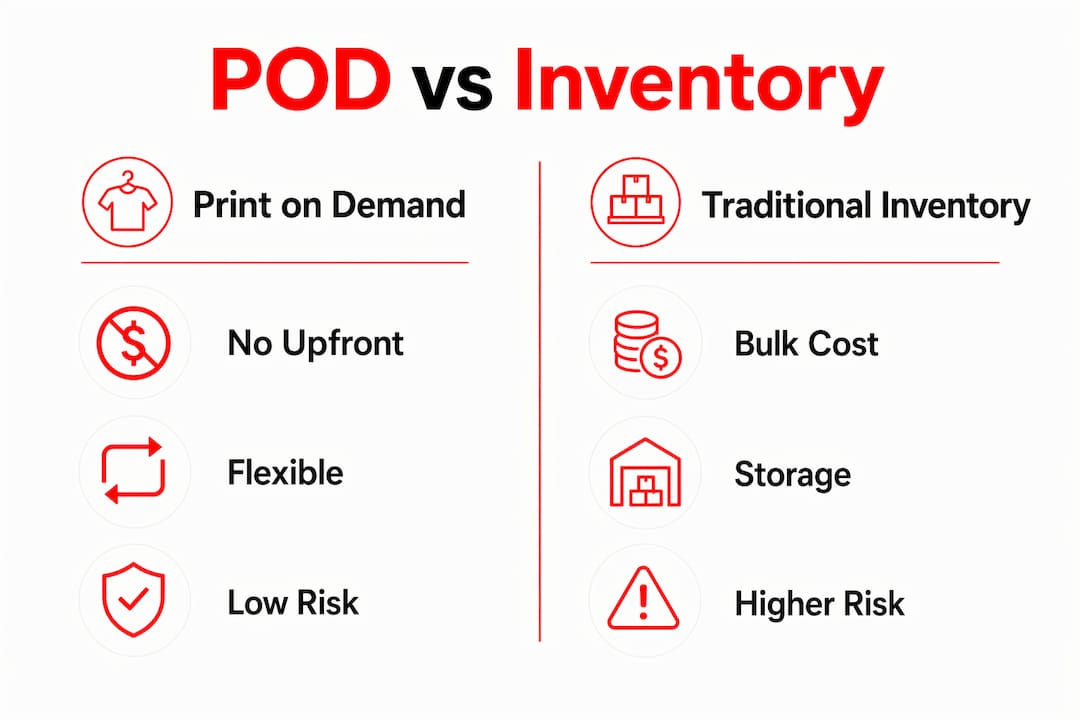
Beyond cash flow, POD gives entrepreneurs the ability to test and iterate designs based on real demand rather than guesswork. A traditional retailer ordering 500 units of a graphic tee is locked into that design. A POD seller can swap a design overnight with zero financial penalty.
The table below compares POD to traditional inventory models across the factors that matter most to early-stage entrepreneurs.
| Factor | Print on demand | Traditional inventory |
|---|---|---|
| Upfront cost | None beyond design | Bulk purchase required |
| Inventory risk | Zero | High (unsold stock) |
| Design flexibility | Change anytime | Locked to existing stock |
| Profit margin | Lower per unit | Higher per unit at scale |
| Setup speed | Days | Weeks to months |
| Production control | Limited | Full |
The creative freedom POD offers is also underrated. A single seller can offer dozens of product variations, colorways, and designs without any additional cost. That range would be impossible to stock physically at a small business scale.
Pro Tip: Start with 5–10 designs across 2–3 product types rather than launching 50 products at once. A focused catalog is easier to market and easier to quality-check.
What are the challenges and pitfalls of print on demand?
POD is not without real drawbacks. Understanding them before you launch saves significant frustration later.
- Lower profit margins. Higher per-unit production costs reduce margins compared to bulk manufacturing. A shirt that costs $8 to produce in bulk might cost $18 through a POD provider. Pricing strategy becomes critical.
- Limited fulfillment control. POD sellers have less control over shipping speed and packaging quality. If a provider ships late or packs poorly, the customer blames the brand, not the provider.
- Quality inconsistency. Since sellers do not directly oversee production, print quality can vary. Ordering samples before scaling any product is the only reliable way to verify what customers will actually receive.
- Hidden costs add up. E-commerce platform fees, design software subscriptions, and paid advertising spend all reduce net profit. POD eliminates inventory costs but does not eliminate business operating costs.
- Customer service still falls on you. Refund requests, lost packages, and print complaints all land in the seller’s inbox. The provider handles production; the seller handles the customer relationship.
The low-risk structure of POD comes with a trade-off: limited influence over the customer experience. Strong brand management and responsive communication are what separate successful POD stores from abandoned ones. For a deeper look at how to maintain quality standards in custom printing, the quality control guide from Handmadeohiocrafts covers the key checkpoints.
What products and niches work best for print on demand?
Popular POD products include apparel, mugs, posters, and books. These categories work because they are easy to customize, widely desired, and straightforward to print. But the sellers who build real businesses go deeper than the obvious categories.
Niche selection is where POD businesses win or lose. A generic “funny quotes” t-shirt store competes with thousands of identical stores. A store selling custom apparel for competitive bass fishing tournaments competes with almost no one. Specificity drives discoverability and loyalty.
Strong niche ideas for POD entrepreneurs include:
- Occupation-specific apparel. Nurses, teachers, welders, and first responders all have strong identity around their work. Designs that speak directly to that identity convert well.
- Local pride merchandise. City-specific or state-specific designs tap into community identity. They also perform well in local Facebook groups and community marketplaces.
- Pet breed communities. Golden retriever owners, French bulldog fans, and dachshund enthusiasts are passionate and spend freely on breed-specific products.
- Sports parent gear. Custom apparel for sports parents, like personalized team hoodies or game-day shirts, fills a gap that mass retailers cannot serve at the individual level.
- Event-based merchandise. Family reunions, school fundraisers, and charity runs all need custom products on short timelines. POD handles small batch orders without minimums.
Design quality determines whether a browser becomes a buyer. Clean, high-resolution artwork that prints well across product types is non-negotiable. The artwork file prep guide from Handmadeohiocrafts explains exactly how to set up files for professional print results.
Marketing for POD stores works best when it targets a specific community rather than a broad audience. Pinterest, Instagram, and TikTok all favor visual products. A single viral video of a product being unboxed can generate more orders than weeks of paid advertising.
For entrepreneurs interested in custom apparel for small businesses, the branding advantages extend well beyond the POD model itself. Custom products build brand recognition in ways that digital-only marketing cannot replicate.
Key Takeaways
Print on demand is a viable, low-risk business model for entrepreneurs, but profitability requires deliberate niche selection, strong branding, and active daily management rather than passive setup.
| Point | Details |
|---|---|
| No inventory required | POD eliminates upfront stock costs by producing items only after a sale is made. |
| Margins are lower | Higher per-unit costs mean pricing strategy is critical to maintaining profit. |
| Quality control matters | Always order samples before scaling a product to verify print and material quality. |
| Niche specificity wins | Targeted niches outperform broad catalogs in discoverability and customer loyalty. |
| Active management required | Successful POD stores need daily attention to customer service, branding, and design. |
What I’ve learned after years of watching POD businesses succeed and fail
Most people who ask “is print on demand profitable?” are really asking whether they can set it up once and walk away. The honest answer is no. Successful POD stores require daily attention to customer service, branding, and design optimization. The automation handles fulfillment. It does not handle the business.
The entrepreneurs I’ve seen build real revenue with POD share three traits. They pick a niche narrow enough to dominate. They treat design quality as a non-negotiable standard, not an afterthought. And they show up for their customers when something goes wrong, because something always goes wrong with a third-party fulfillment chain at some point.
The misconception that POD is a get-rich-quick model is the single biggest reason stores fail in the first six months. The model removes inventory risk. It does not remove the work of building a brand. Profitability depends on retail pricing discipline and production efficiency, not just listing products and hoping for traffic.
One thing I find genuinely underappreciated: POD is one of the best testing environments that exists for product entrepreneurs. You can validate whether a design or a niche has real demand before committing a dollar to bulk production. That feedback loop is worth more than the margin difference between POD and wholesale.
The market is growing fast. That means more competition, but also more customers comfortable buying custom products online. The window to build a recognizable brand in a specific niche is still open. It will not stay open indefinitely.
— Aaron
Custom printing made easy with Handmadeohiocrafts
Handmadeohiocrafts produces custom apparel and personalized products in-house from Waverly, Ohio, with no minimum order requirements and nationwide shipping. That structure makes it practical for entrepreneurs who want professional-quality results on small runs without committing to bulk quantities.
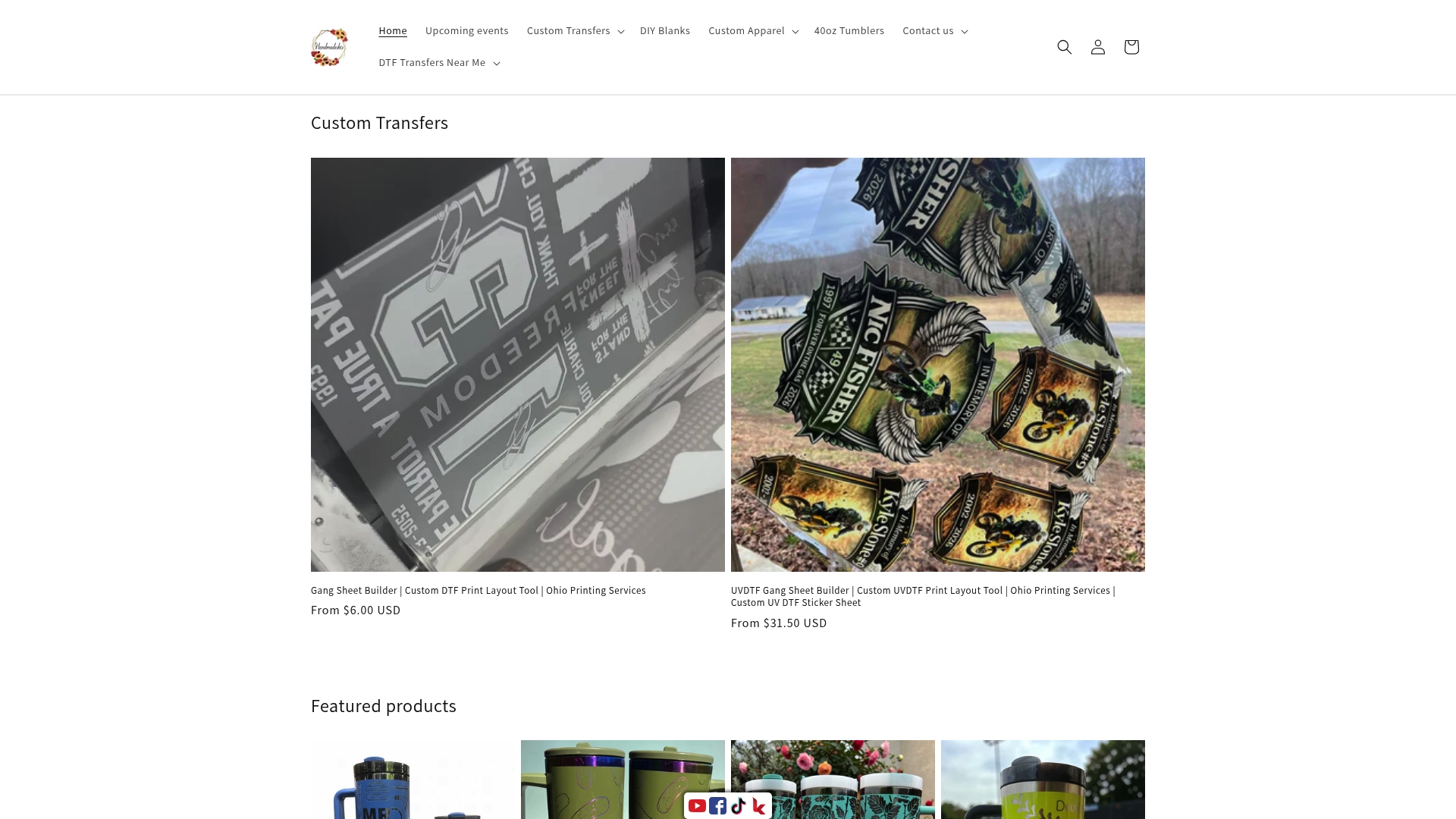
Whether you need branded t-shirts for a fundraiser, custom hoodies for a sports team, or personalized gifts for an event, Handmadeohiocrafts handles design and production under one roof. Browse the full custom apparel collection to see product options, or explore DTF transfer printing for high-detail custom designs on apparel and accessories. Fast turnaround, no minimums, and direct customer service make it a practical starting point for any entrepreneur testing a product idea.
FAQ
What is the print on demand definition?
Print on demand is a fulfillment model where products are printed and shipped only after a customer places an order, with no inventory held by the seller.
How does print on demand differ from dropshipping?
Both models use third-party fulfillment, but POD specifically involves custom-designed products printed on demand, while standard dropshipping typically resells existing manufacturer stock.
Is print on demand profitable?
POD can be profitable, but margins are lower than bulk manufacturing due to higher per-unit costs. Profitability depends on pricing strategy, niche selection, and active brand management.
What products sell best with print on demand?
Apparel, mugs, posters, and books are the most popular POD product categories. Niche-specific designs within these categories consistently outperform generic options.
Do I need to order samples before selling POD products?
Ordering samples before scaling is critical. Since sellers do not control production directly, samples are the only reliable way to verify print quality and product standards before customers receive orders.